


Orientation and dynamics of transmembrane peptides: the power of simple models
- PMID: 20020122
- PMCID: PMC2841270
- DOI: 10.1007/s00249-009-0567-1
Orientation and dynamics of transmembrane peptides: the power of simple models
Abstract
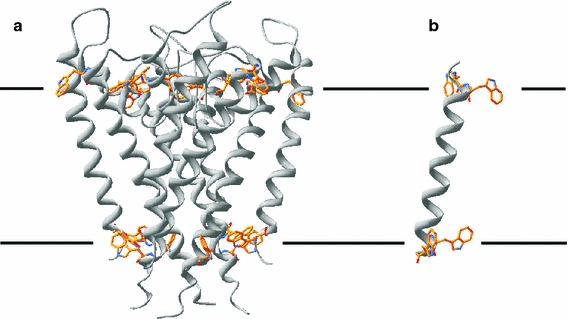
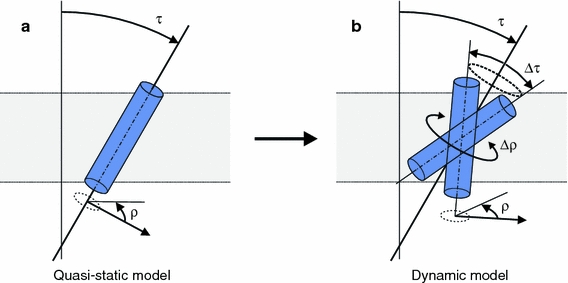
In this review we discuss recent insights obtained from well-characterized model systems into the factors that determine the orientation and tilt angles of transmembrane peptides in lipid bilayers. We will compare tilt angles of synthetic peptides with those of natural peptides and proteins, and we will discuss how tilt can be modulated by hydrophobic mismatch between the thickness of the bilayer and the length of the membrane spanning part of the peptide or protein. In particular, we will focus on results obtained on tryptophan-flanked model peptides (WALP peptides) as a case study to illustrate possible consequences of hydrophobic mismatch in molecular detail and to highlight the importance of peptide dynamics for the experimental determination of tilt angles. We will conclude with discussing some future prospects and challenges concerning the use of simple peptide/lipid model systems as a tool to understand membrane structure and function.
Figures

References
-
- Andersen OS, Koeppe RE., II Bilayer thickness and membrane protein function: an energetic perspective. Annu Rev Biophys Biomol Struct. 2007;36:107–130. - PubMed
-
- Andronesi OC, Pfeifer JR, Al-Momani L, Özdirekcan S, Rijkers DTS, Angerstein B, Luca S, Koert U, Killian JA, Baldus M. Probing membrane protein orientation and structure using fast magic-angle-spinning solid-state NMR. J Biomol NMR. 2004;30:253–265. - PubMed
-
- Arkin IT, Brunger AT. Statistical analysis of predicted transmembrane alpha-helices. Biochim Biophys Acta. 1998;1429:113–128. - PubMed
Publication types
MeSH terms
Substances
LinkOut - more resources
Full Text Sources
