


A cancer-causing gene is positively correlated with male aggression in Xiphophorus cortezi
- PMID: 20021547
- PMCID: PMC2901164
- DOI: 10.1111/j.1420-9101.2009.01914.x
A cancer-causing gene is positively correlated with male aggression in Xiphophorus cortezi
Abstract
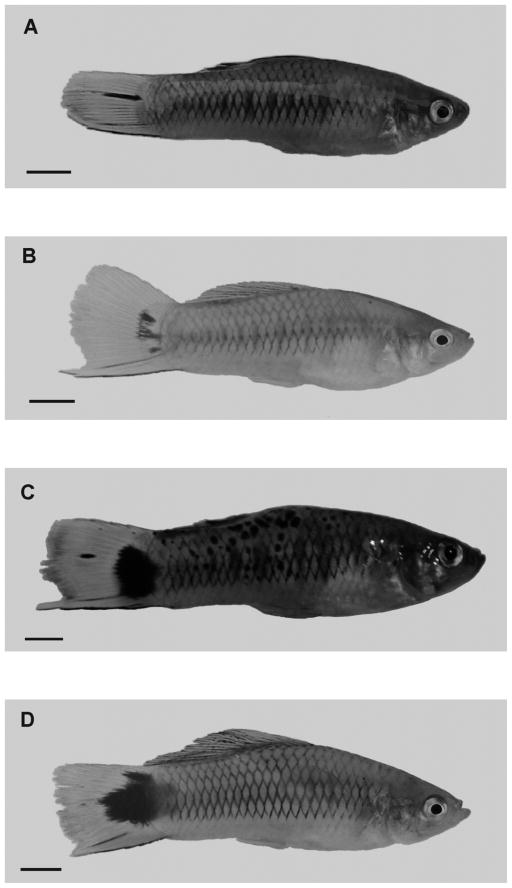
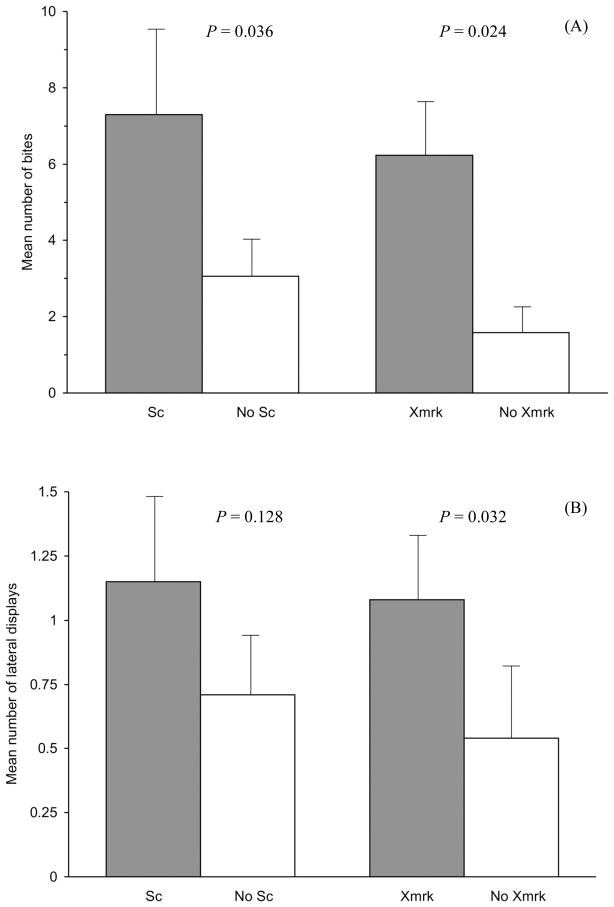
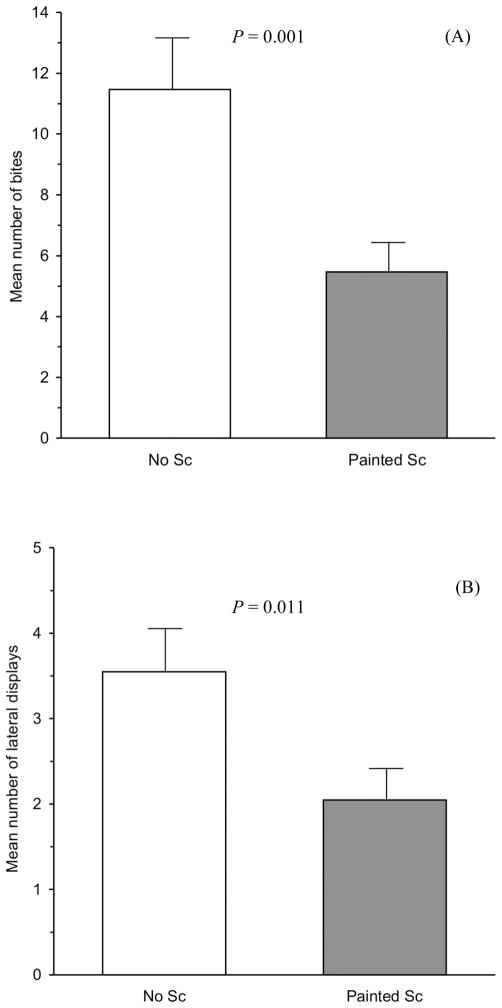
The persistence of seemingly maladaptive genes in organisms challenges evolutionary biological thought. In Xiphophorus fishes, certain melanin patterns form malignant melanomas because of a cancer-causing gene (Xiphophorus melanoma receptor kinase; Xmrk), which arose several millions years ago from unequal meiotic recombination. Xiphophorus melanomas are male biased and induced by androgens however male behaviour and Xmrk genotype has not been investigated. This study found that male X. cortezi with the spotted caudal (Sc) pattern, from which melanomas originate, displayed increased aggression in mirror image trials. Furthermore, Xmrk males (regardless of Sc phenotype) bit and performed more agonistic displays than Xmrk deficient males. Male aggressive response decreased when males viewed their Sc image as compared with their non-Sc image. Collectively, these results indicate that Xmrk males experience a competitive advantage over wild-type males and that intrasexual selection could be an important component in the evolutionary maintenance of this oncogene within Xiphophorus.
Figures
References
-
- Basolo AL. Female preference for male sword length in the green swordtail, Xiphophorus helleri (Pisces: Poeciliidae) Anim Behav. 1990;40:332–338.
-
- Basolo AL. A further examination of a pre-existing bias favouring a sword in the genus Xiphophorus. Anim Behav. 1995;50:365–75.
-
- Basolo AL, Trainor BC. The conformation of a female preference for a composite male trait in green swordtails. Anim Behav. 2002;63:469–474.
-
- Benson KE, Basolo AL. Male-male competition and the sword in male swordtails, Xiphophorus helleri. Anim Behav. 2006;71:129–134.
-
- Bergero R, Charlesworth D. The evolution of restricted recombination in sex chromosomes. Trends Ecol Evol. 2008;24:94–102. - PubMed
