


Binary fate decisions in differentiating neurons
- PMID: 20022236
- PMCID: PMC2827633
- DOI: 10.1016/j.conb.2009.11.002
Binary fate decisions in differentiating neurons
Abstract
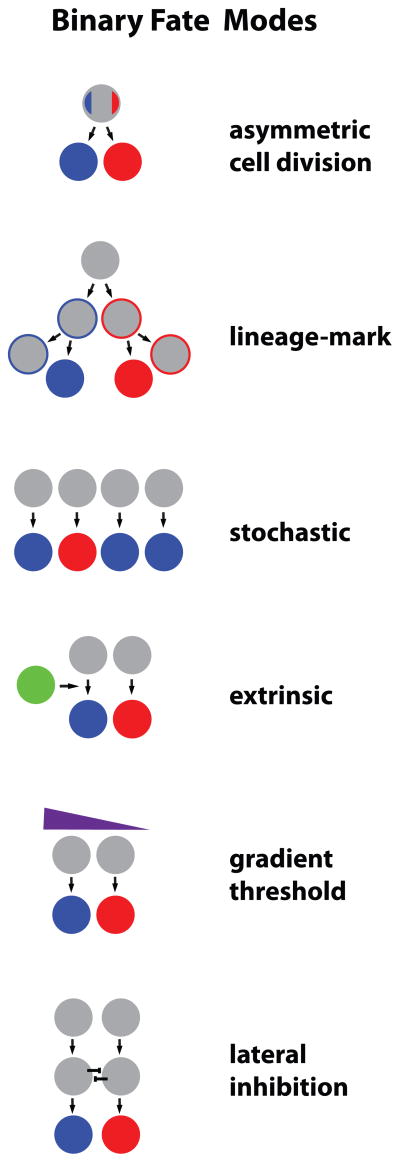
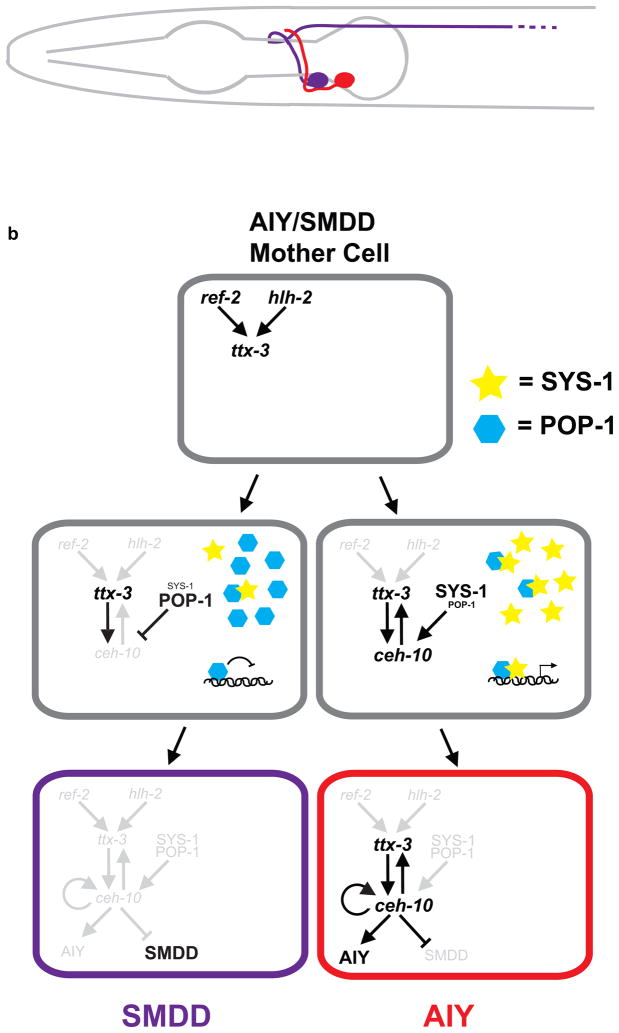
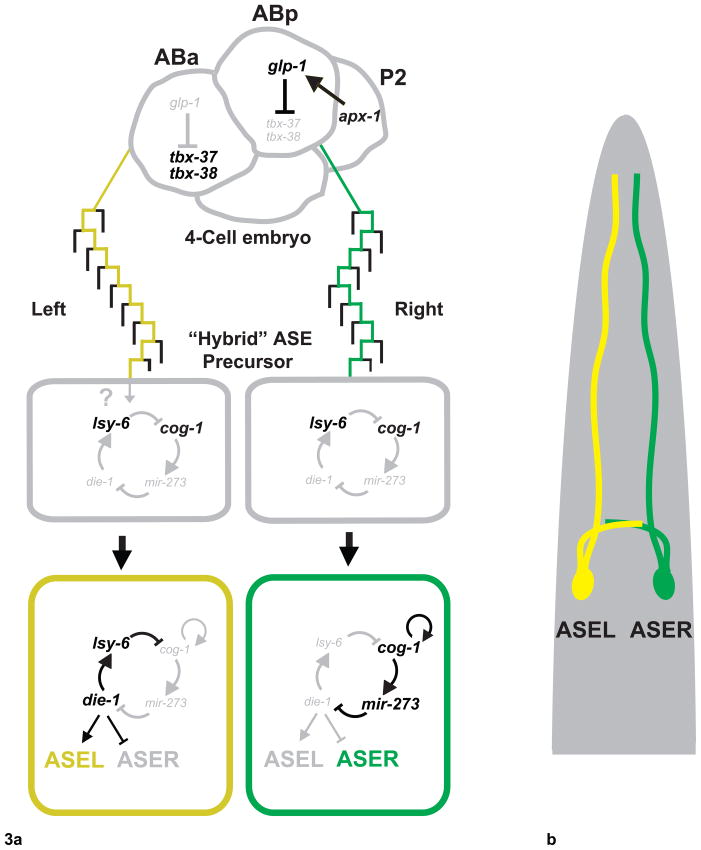
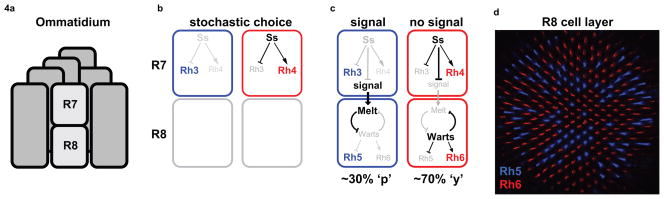
Neural cell fate programs must generate an enormous number of neurons with distinct adult functions. The decision to choose one neuronal subtype from two alternatives--a binary fate decision--is one way to diversify neuronal subtypes during nervous system development. Recent progress has been made in describing the genetic programs that define late-stage neuronal identity. Here, we review mechanisms that control how such fate decisions generate two different postmitotic, terminally differentiated neuronal subtypes. We survey examples from Caenorhabditis elegans and Drosophila that demonstrate different modes of binary neuronal fate specification that depend on cell division, lineage, stochastic gene expression, or extracellular signals. Comparison of these strategies reveals that, although organisms use diverse approaches to generate neural diversity, some common themes do exist.
2009 Elsevier Ltd. All rights reserved.
Figures
References
-
- Jessell TM. Neuronal specification in the spinal cord: inductive signals and transcriptional codes. Nat Rev Genet. 2000;1:20–29. - PubMed
-
- Price SR, Briscoe J. The generation and diversification of spinal motor neurons: signals and responses. Mech Dev. 2004;121:1103–1115. - PubMed
-
- Edlund T, Jessell TM. Progression from extrinsic to intrinsic signaling in cell fate specification: a view from the nervous system. Cell. 1999;96:211–224. - PubMed
-
- Livesey FJ, Cepko CL. Vertebrate neural cell-fate determination: lessons from the retina. Nat Rev Neurosci. 2001;2:109–118. - PubMed
Publication types
MeSH terms
Grants and funding
LinkOut - more resources
Full Text Sources
Molecular Biology Databases
