


Dynamic principles of gait and their clinical implications
- PMID: 20023002
- PMCID: PMC2816028
- DOI: 10.2522/ptj.20090125
Dynamic principles of gait and their clinical implications
Abstract
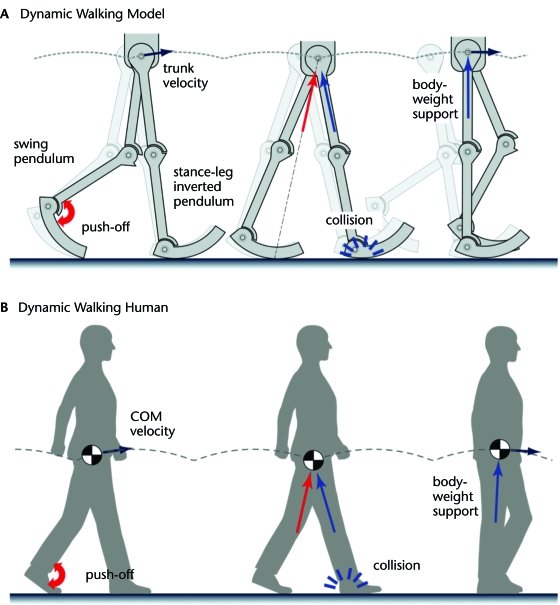
A healthy gait pattern depends on an array of biomechanical features, orchestrated by the central nervous system for economy and stability. Injuries and other pathologies can alter these features and result in substantial gait deficits, often with detrimental consequences for energy expenditure and balance. An understanding of the role of biomechanics in the generation of healthy gait, therefore, can provide insight into these deficits. This article examines the basic principles of gait from the standpoint of dynamic walking, an approach that combines an inverted pendulum model of the stance leg with a pendulum model of the swing leg and its impact with the ground. The heel-strike at the end of each step has dynamic effects that can contribute to a periodic gait and its passive stability. Biomechanics, therefore, can account for much of the gait pattern, with additional motor inputs that are important for improving economy and stability. The dynamic walking approach can predict the consequences of disruptions to normal biomechanics, and the associated observations can help explain some aspects of impaired gait. This article reviews the basic principles of dynamic walking and the associated experimental evidence for healthy gait and then considers how the principles may be applied to clinical gait pathologies.
Figures
Comment in
-
Invited commentary.Phys Ther. 2010 Feb;90(2):174-6. doi: 10.2522/ptj.20090125.ic. Phys Ther. 2010. PMID: 20123691 No abstract available.
References
-
- Gonzalez EG, Corcoran PJ. Energy expenditure during ambulation. In: Downey JA, Myers SJ, Gonzalez EG, Lieberman JS. eds. The Physiological Basis of Rehabilitation Medicine Boston, MA: Butterworth-Heinemann; 1994:413–446
-
- Waters R, Mulroy S. The energy expenditure of normal and pathologic gait. Gait Posture 1999;9:207–231 - PubMed
-
- Pardo RD, Deathe AB, Winter DA. Walker user risk index: a method for quantifying stability in walker users. Am J Phys Med Rehabil 1993;72:301–305 - PubMed
-
- Said CM, Goldie PA, Patla AE, et al. Balance during obstacle crossing following stroke. Gait Posture 2008;27:23–30 - PubMed
-
- Bohannon RW, Andrews AW, Smith MB. Rehabilitation goals of patients with hemiplegia. Int J Rehabil Res 1988;11;181–183
Publication types
MeSH terms
Grants and funding
LinkOut - more resources
Full Text Sources
Medical
