


Deletion of the ftsZ-like gene results in the production of superparamagnetic magnetite magnetosomes in Magnetospirillum gryphiswaldense
- PMID: 20023033
- PMCID: PMC2812952
- DOI: 10.1128/JB.01292-09
Deletion of the ftsZ-like gene results in the production of superparamagnetic magnetite magnetosomes in Magnetospirillum gryphiswaldense
Abstract
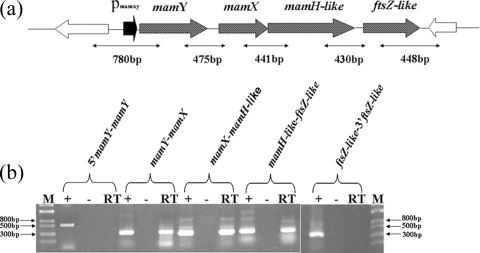
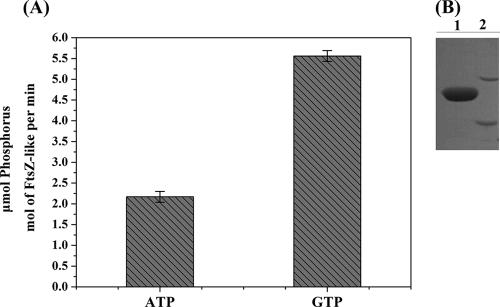
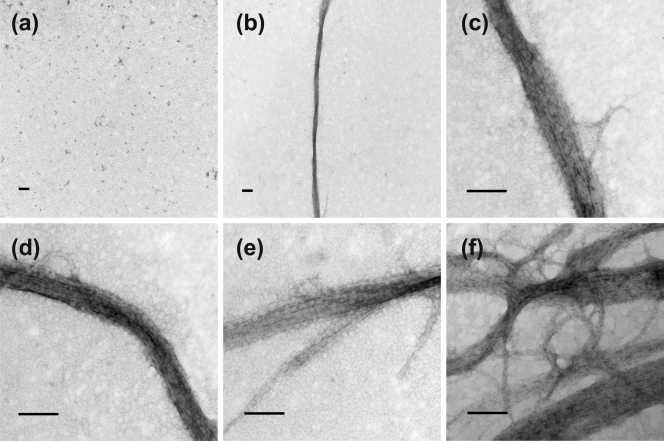
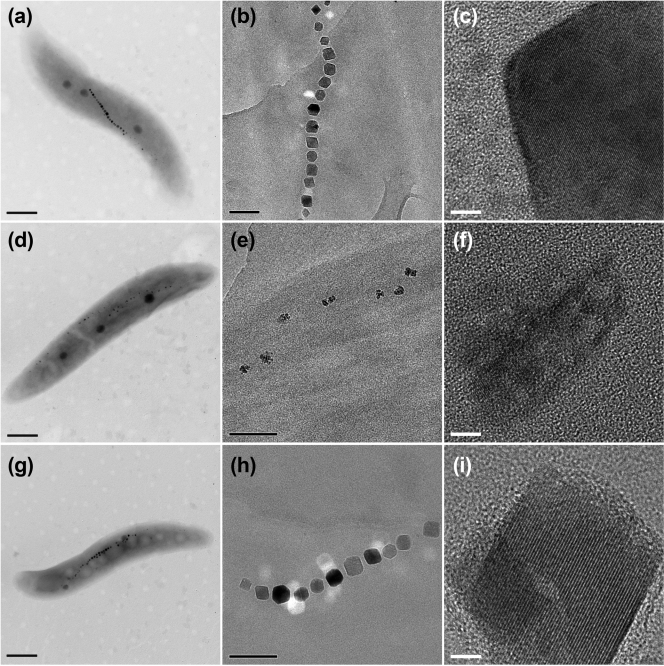
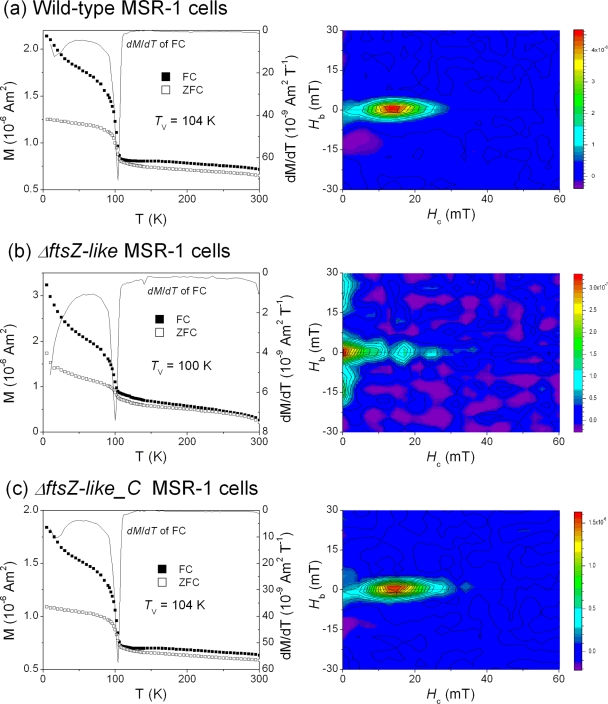
Magnetotactic bacteria (MTB) synthesize unique organelles termed "magnetosomes," which are membrane-enclosed structures containing crystals of magnetite or greigite. Magnetosomes form a chain around MamK cytoskeletal filaments and provide the basis for the ability of MTB to navigate along geomagnetic field lines in order to find optimal microaerobic habitats. Genomes of species of the MTB genus Magnetospirillum, in addition to a gene encoding the tubulin-like FtsZ protein (involved in cell division), contain a second gene termed "ftsZ-like," whose function is unknown. In the present study, we found that the ftsZ-like gene of Magnetospirillum gryphiswaldense strain MSR-1 belongs to a 4.9-kb mamXY polycistronic transcription unit. We then purified the recombinant FtsZ-like protein to homogeneity. The FtsZ-like protein efficiently hydrolyzed ATP and GTP, with ATPase and GTPase activity levels of 2.17 and 5.56 mumol phosphorus per mol protein per min, respectively. The FtsZ-like protein underwent GTP-dependent polymerization into long filamentous bundles in vitro. To determine the role of the ftsZ-like gene, we constructed a ftsZ-like mutant (DeltaftsZ-like mutant) and its complementation strain (DeltaftsZ-like_C strain). Growth of DeltaftsZ-like cells was similar to that of the wild type, indicating that the DeltaftsZ-like gene is not involved in cell division. Transmission electron microscopic observations indicated that the DeltaftsZ-like cells, in comparison to wild-type cells, produced smaller magnetosomes, with poorly defined morphology and irregular alignment, including large gaps. Magnetic analyses showed that DeltaftsZ-like produced mainly superparamagnetic (SP) magnetite particles, whereas wild-type and DeltaftsZ-like_C cells produced mainly single-domain (SD) particles. Our findings suggest that the FtsZ-like protein is required for synthesis of SD particles and magnetosomes in M. gryphiswaldense.
Figures
References
-
- Altschul, S. F., W. Gish, W. Miller, E. W. Myers, and D. J. Lipman. 1990. Basic local alignment search tool. J. Mol. Biol. 215:403-410. - PubMed
-
- Arakaki, A., J. Webb, and T. Matsunaga. 2003. A novel protein tightly bound to bacterial magnetic particles in Magnetospirillum magneticum strain AMB-1. J. Biol. Chem. 278:8745-8750. - PubMed
-
- Bazylinski, D. A., and R. B. Frankel. 2004. Magnetosome formation in prokaryotes. Nat. Rev. Microbiol. 2:217-230. - PubMed
-
- Blakemore, R. P. 1975. Magnetotactic bacteria. Science 190:377-379. - PubMed
-
- Blakemore, R. P. 1982. Magnetotactic bacteria. Annu. Rev. Microbiol. 36:217-238. - PubMed
Publication types
MeSH terms
Substances
Grants and funding
LinkOut - more resources
Full Text Sources
Molecular Biology Databases
