


Reduced immune effector cell NKG2D expression and increased levels of soluble NKG2D ligands in multiple myeloma may not be causally linked
- PMID: 20024547
- PMCID: PMC11030819
- DOI: 10.1007/s00262-009-0807-3
Reduced immune effector cell NKG2D expression and increased levels of soluble NKG2D ligands in multiple myeloma may not be causally linked
Abstract
Background: There is limited understanding of the dysregulation of the innate immune system in multiple myeloma (MM). We analysed the expression of the activating receptor NKG2D on NK cells and T cells of MM patients and investigated the impact of soluble versus membrane-bound NKG2D ligands on the expression of NKG2D.
Design: NKG2D expression on NK cells and CD8+ alphabeta T cells from patients with MM or monoclonal gammopathy of uncertain significance and healthy controls was examined flow-cytometrically. Sera from patients and controls were analysed for soluble NKG2D ligands (sNKG2D ligands).
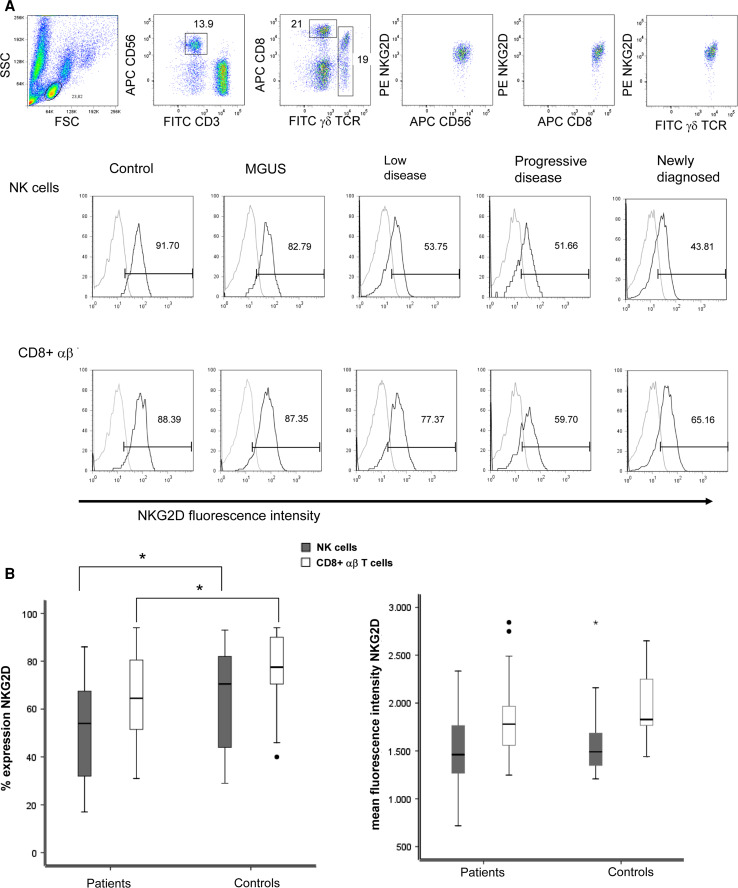
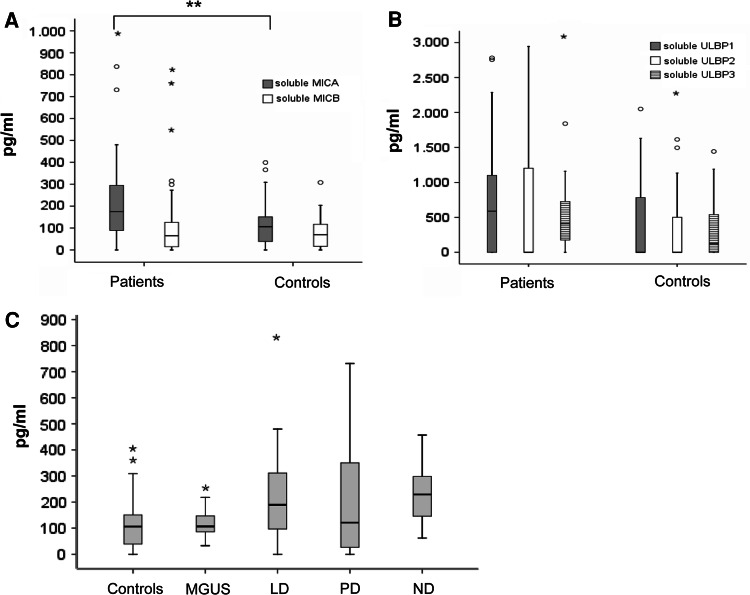
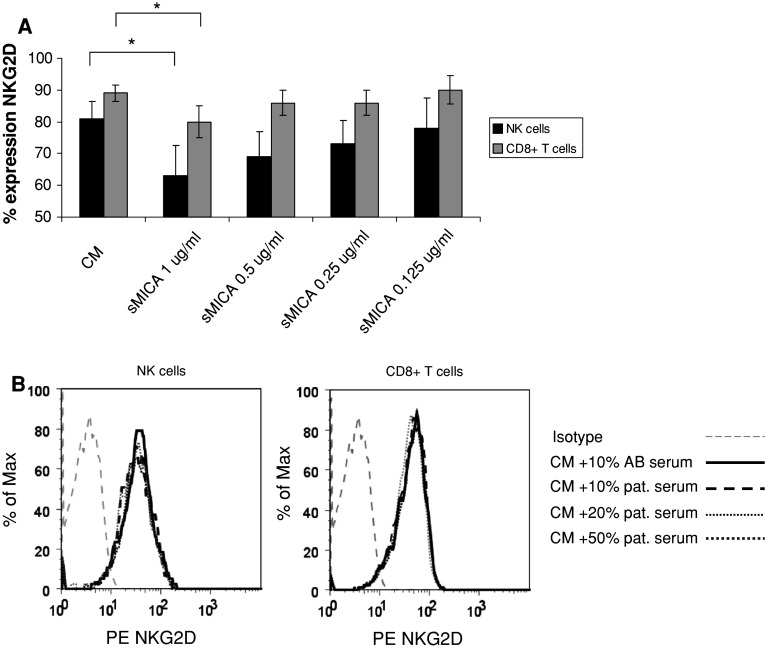
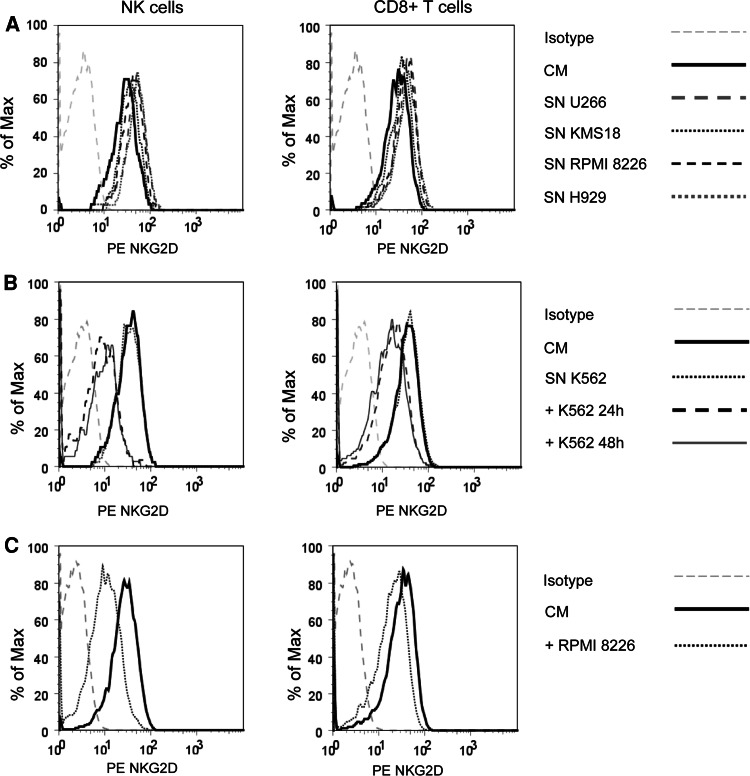
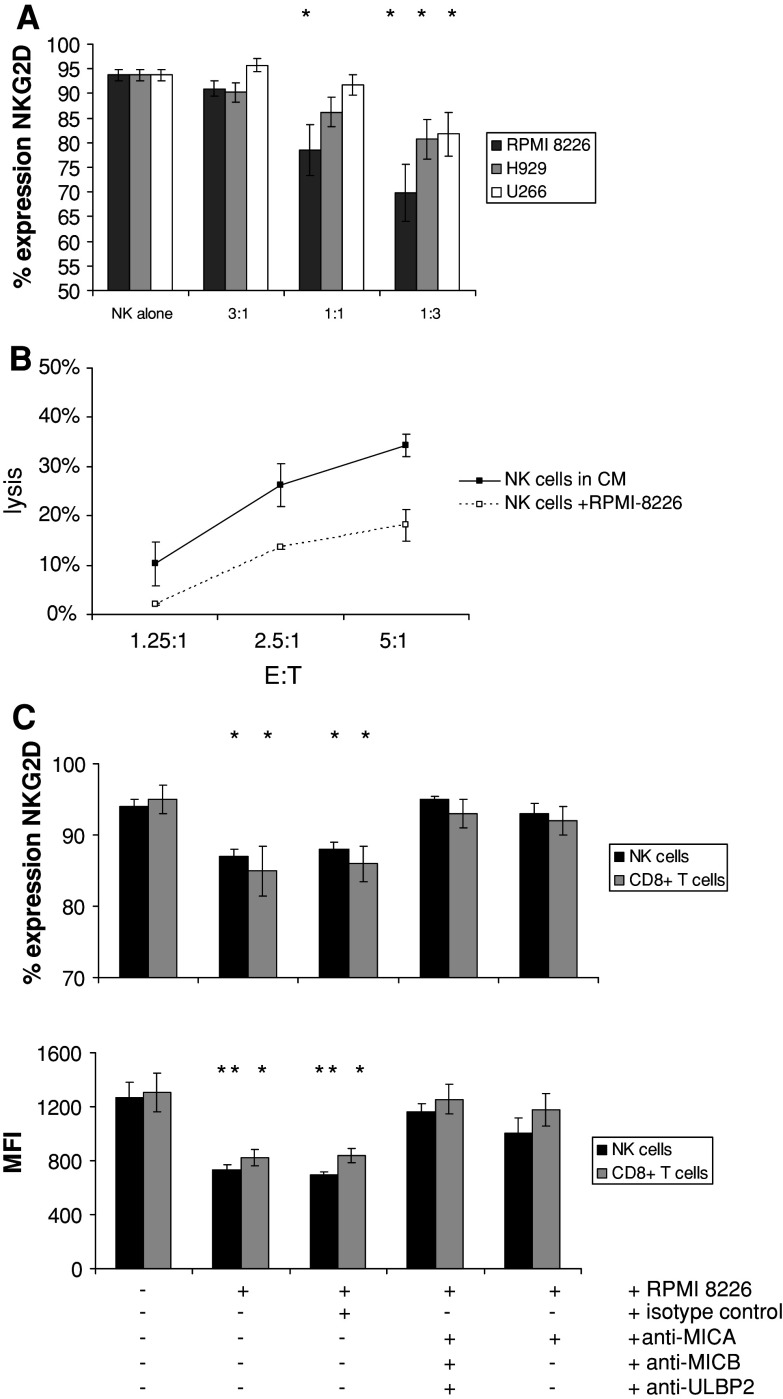
Results: Significantly fewer NK cells and CD8+ alphabeta T cells from patients expressed NKG2D compared to healthy controls (NK cells: median 54% interquartile range (IQR) 32-68 versus 71% IQR 44-82%, P = 0.017, CD8+ alphabeta T cells: median 63% IQR 52-81 versus 77% IQR 71-90%, P = 0.018). The sNKG2D ligand sMICA was increased in patients [median 175 (IQR 87-295) pg/ml] versus controls [median 80 (IQR 32-129) pg/ml, P < 0.001], but levels of sMICA did not correlate with NKG2D expression on effector cells. To elucidate the mechanism of NKG2D down-regulation, we incubated lymphocytes from healthy donors in the presence of sNKG2D ligands or in co-culture with MM cell lines. sNKG2D ligands in clinically relevant concentrations did not down-regulate NKG2D expression, but co-culture of effector cells with myeloma cells with high surface expression of NKG2D ligands reduced NKG2D expression significantly.
Conclusions: These results indicate that MM is associated with a significant reduction in NKG2D expression which may be contact-mediated rather than caused by soluble NKG2D ligands.
Figures
References
-
- Cook G, Campbell JD, Carr CE, Boyd KS, Franklin IM. Transforming growth factor beta from multiple myeloma cells inhibits proliferation and IL-2 responsiveness in T lymphocytes. J Leukoc Biol. 1999;66:981–988. - PubMed
-
- Brown RD, Pope B, Murray A, Esdale W, Sze DM, Gibson J, Ho PJ, Hart D, Joshua D. Dendritic cells from patients with myeloma are numerically normal but functionally defective as they fail to up-regulate CD80 (B7–1) expression after huCD40LT stimulation because of inhibition by transforming growth factor-beta1 and interleukin-10. Blood. 2001;98:2992–2998. doi: 10.1182/blood.V98.10.2992. - DOI - PubMed
Publication types
MeSH terms
Substances
LinkOut - more resources
Full Text Sources
Other Literature Sources
Medical
Research Materials
