


HDAC inhibitor, valproic acid, induces p53-dependent radiosensitization of colon cancer cells
- PMID: 20025549
- PMCID: PMC2920759
- DOI: 10.1089/cbr.2009.0629
HDAC inhibitor, valproic acid, induces p53-dependent radiosensitization of colon cancer cells
Abstract
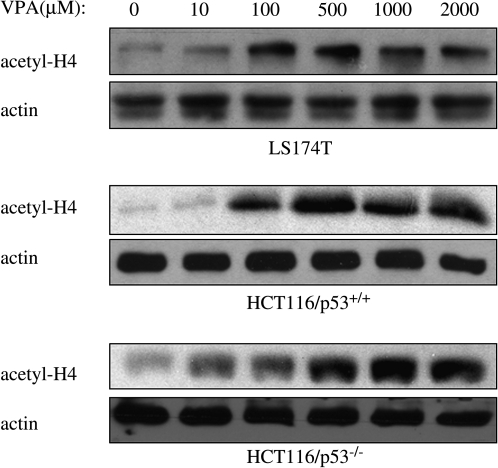
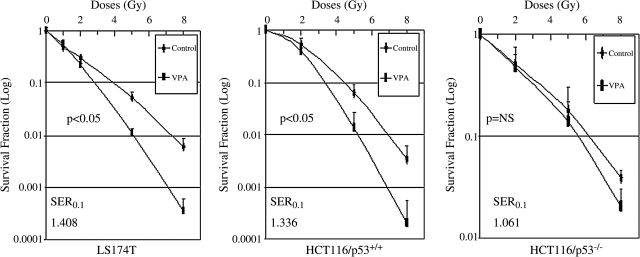
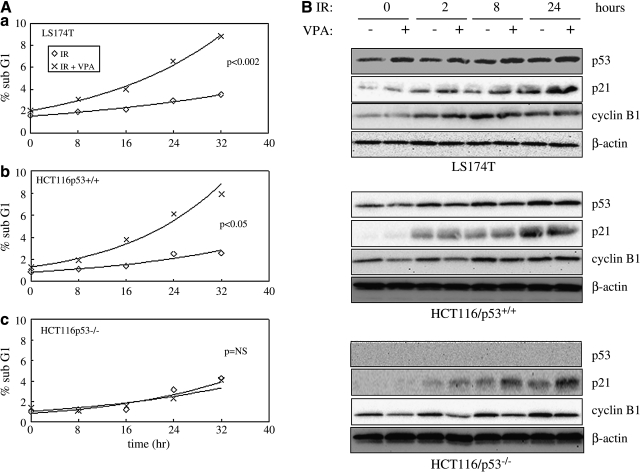
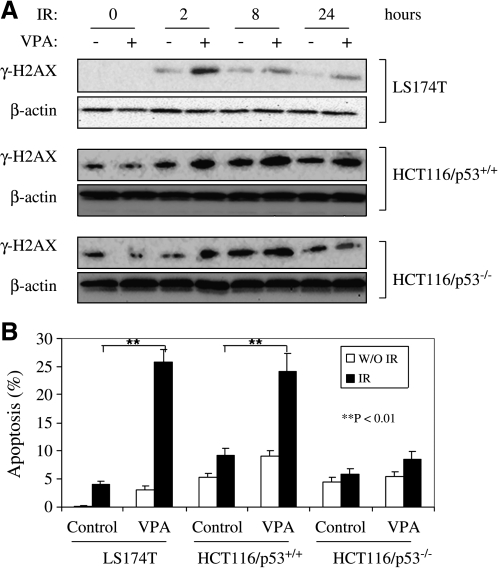
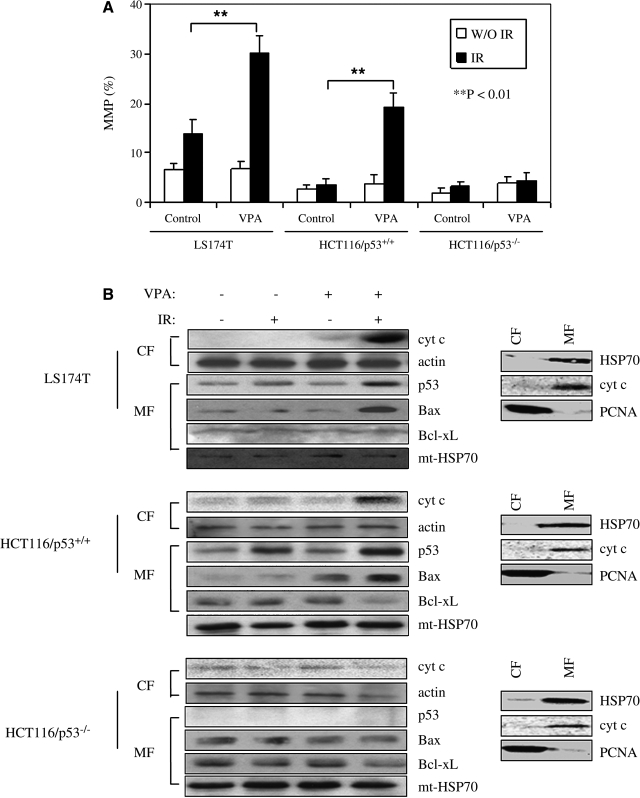
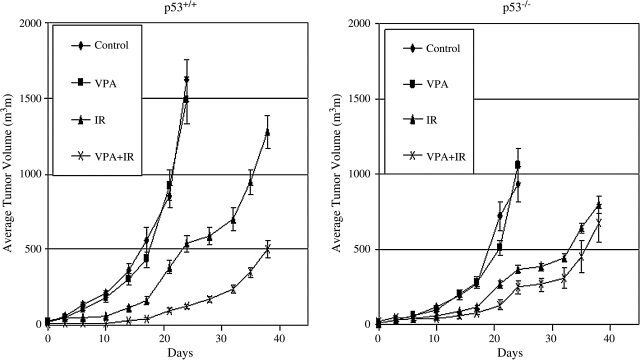
Agents that inhibit histone deacetylases (HDAC inhibitors) have been shown to enhance radiation response. The aim of this study was to evaluate the effects of low, minimally cytotoxic concentrations of the HDAC inhibitor, valproic acid (VPA), on radiation response of colorectal cancer cells. Cell lines LS174T and an isogenic pair of HCT116, which differed only for the presence of wild-type p53, were exposed to ionizing radiation (IR) alone, VPA alone, or the combination. Clonogenic survival, gamma-H2AX induction, apoptosis, changes in mitochondrial membrane potential, and mitochondrial levels of p53 and Bcl-2 family proteins were assessed. In vivo studies monitored tumor growth suppression after therapy in mice bearing HCT116/p53(+/+) and HCT116/p53(-/-) tumor xenografts. VPA led to radiosensitization, which was dependent on p53 status. A decrease in clonogenic survival, an increase in apoptosis, and an increase in levels of gamma-H2AX were observed after VPA+IR, compared to IR alone, in wild-type p53 cells (LS174T and HCT116/p53(+/+)), as opposed to p53 null cells (HCT116/p53(-/-)). Exposure to VPA resulted in enhancement of IR-induced mitochondrial localizations of Bax and Bcl-xL, mitochondrial membrane potential, and cytochrome c release only in wild-type p53 cell lines. VPA also enhanced tumor growth suppression after IR only in wild-type p53 xenografts. These data suggest that VPA may have an important role in enhancing radiotherapy response in colorectal cancer, particularly in tumors with the wild-type p53 genotype.
Figures
References
-
- Howell SB. Resistance to apoptosis in prostate cancer cells. Mol Urol. 2000;4:225. - PubMed
-
- Gordon AT. McMillan TJ. A role for molecular radiobiology in radiotherapy? Clin Oncol (R Coll Radiol) 1997;9:70. - PubMed
-
- Ward JF. The complexity of DNA damage: Relevance to biological consequences. Int J Radiat Biol. 1994;66:427. - PubMed
-
- Kastan MB. Bartek J. Cell-cycle checkpoints and cancer. Nature. 2004;432:316. - PubMed
-
- Rogakou EP. Pilch DR. Orr AH, et al. DNA double-stranded breaks induce histone H2AX phosphorylation on serine 139. J Biol Chem. 1998;273:5858. - PubMed
Publication types
MeSH terms
Substances
Grants and funding
LinkOut - more resources
Full Text Sources
Medical
Research Materials
Miscellaneous
