


Noradrenergic innervation of the rat spinal cord caudal to a complete spinal cord transection: effects of olfactory ensheathing glia
- PMID: 20025875
- PMCID: PMC2838922
- DOI: 10.1016/j.expneurol.2009.12.008
Noradrenergic innervation of the rat spinal cord caudal to a complete spinal cord transection: effects of olfactory ensheathing glia
Abstract
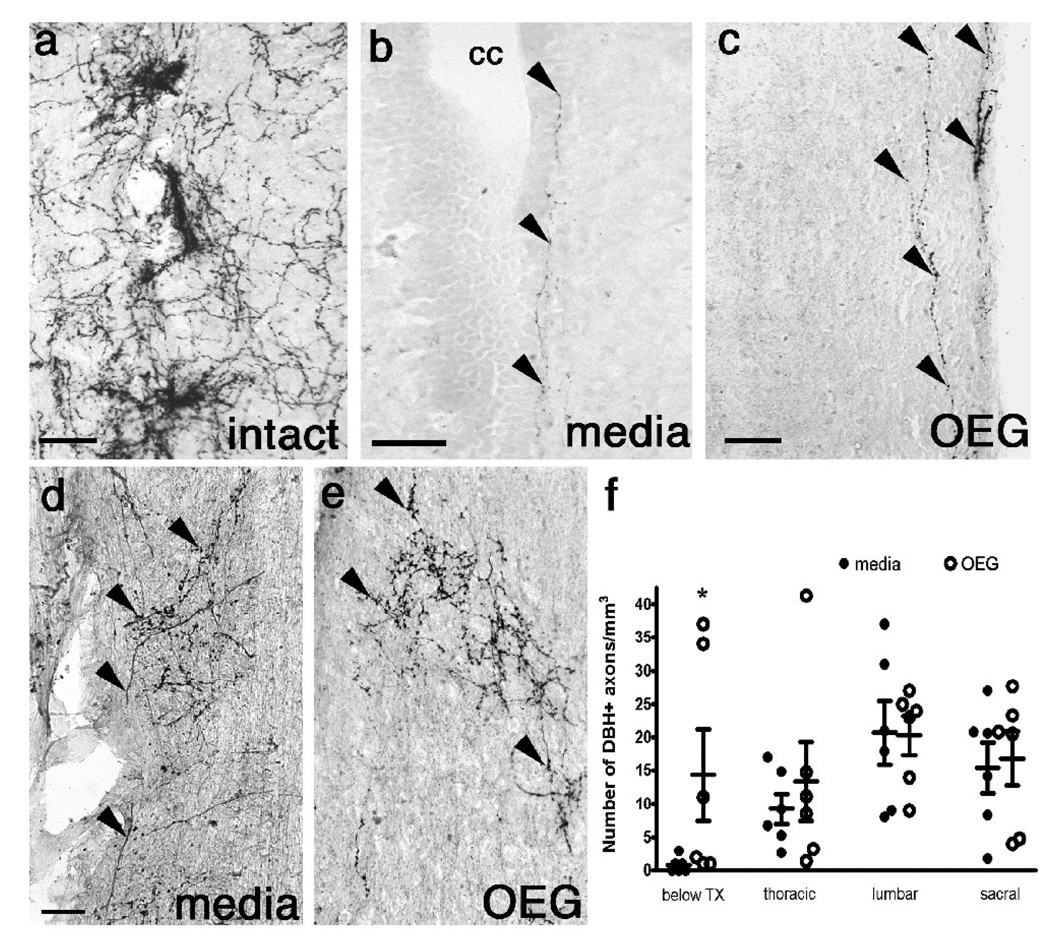
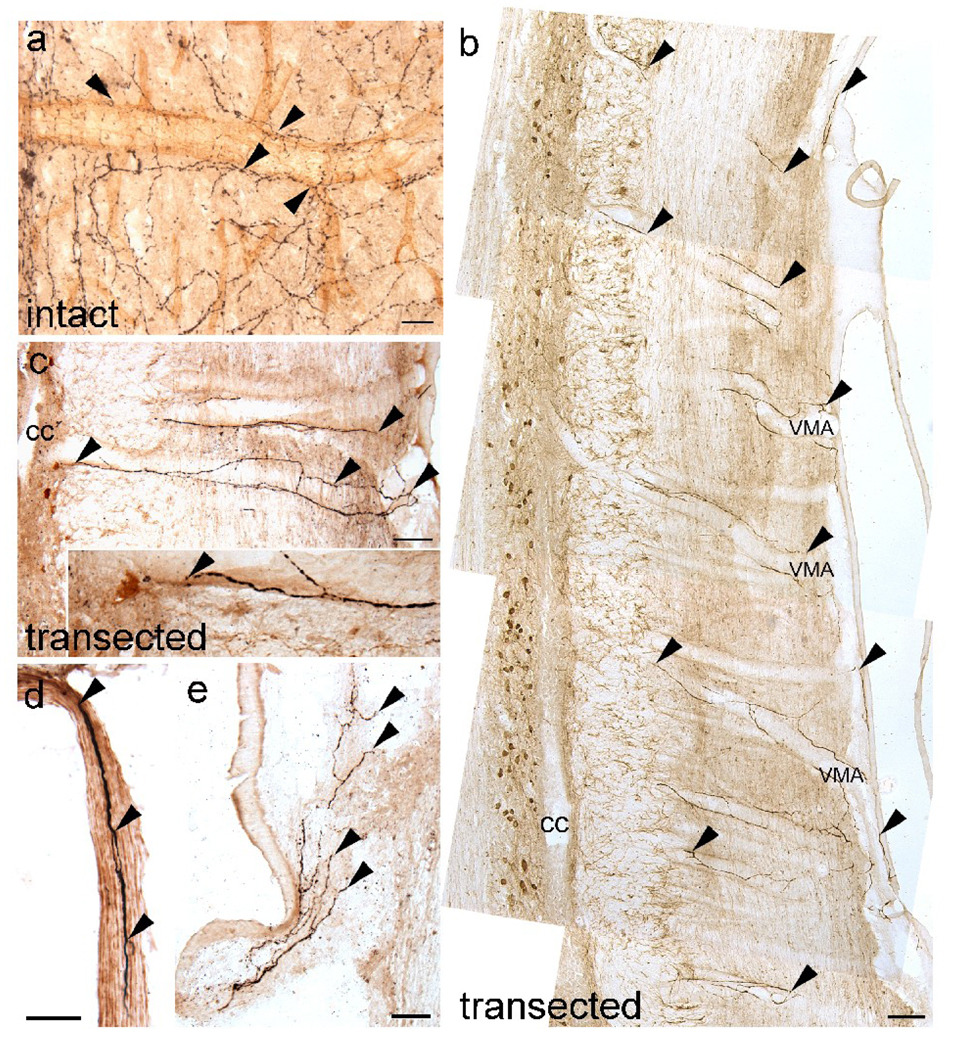
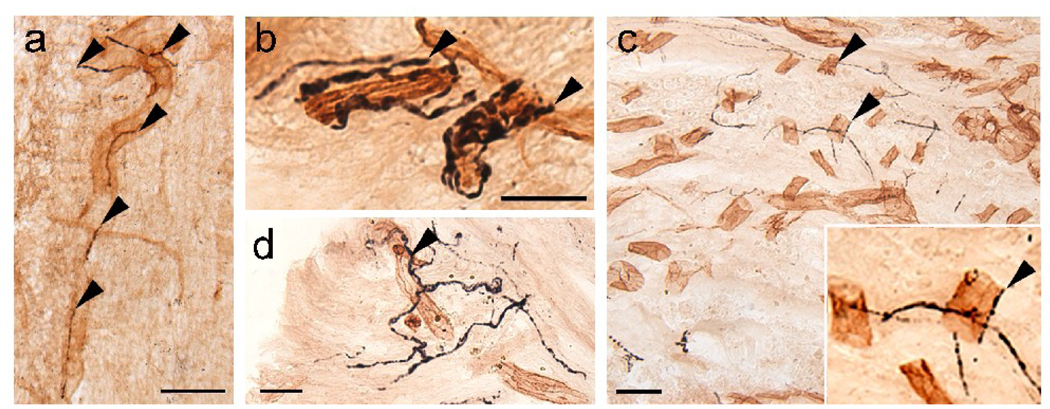
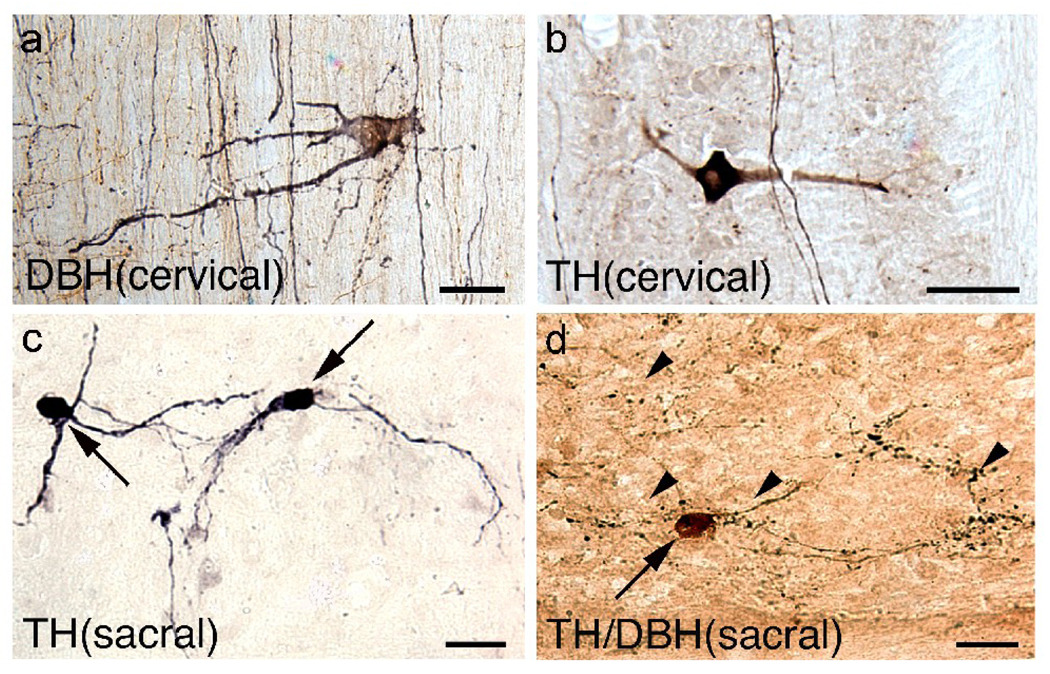
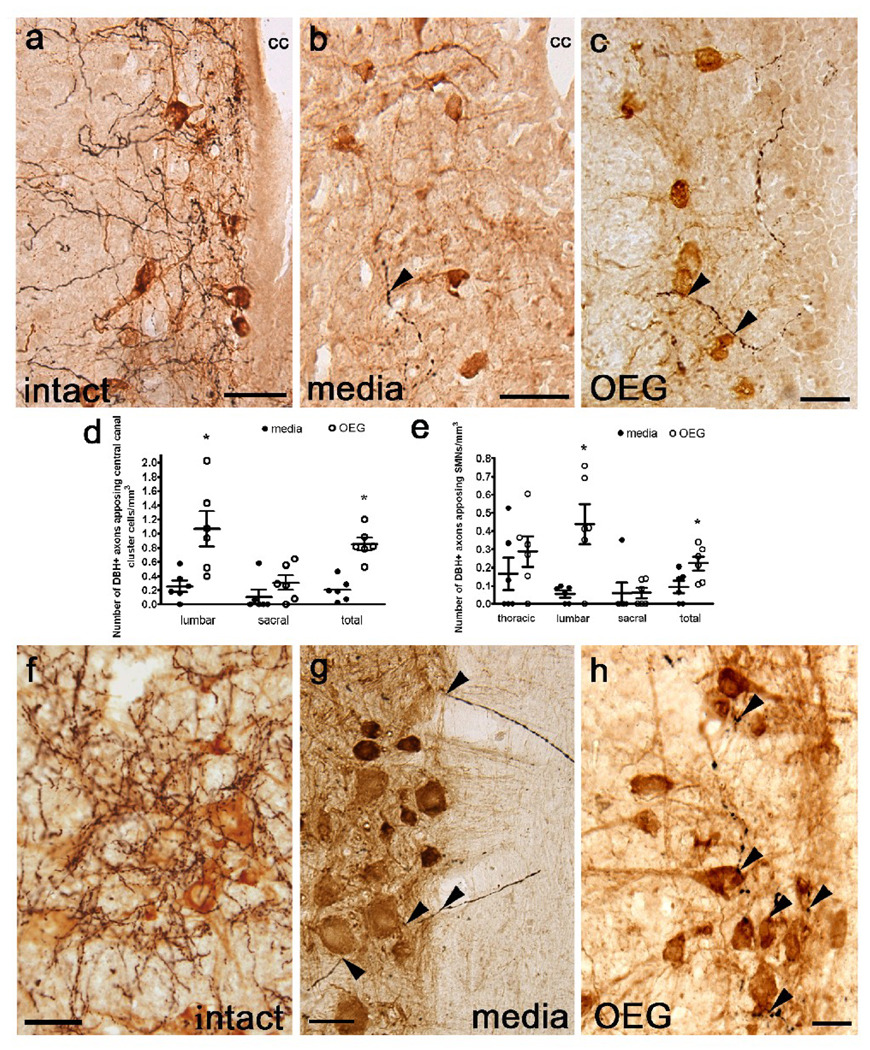
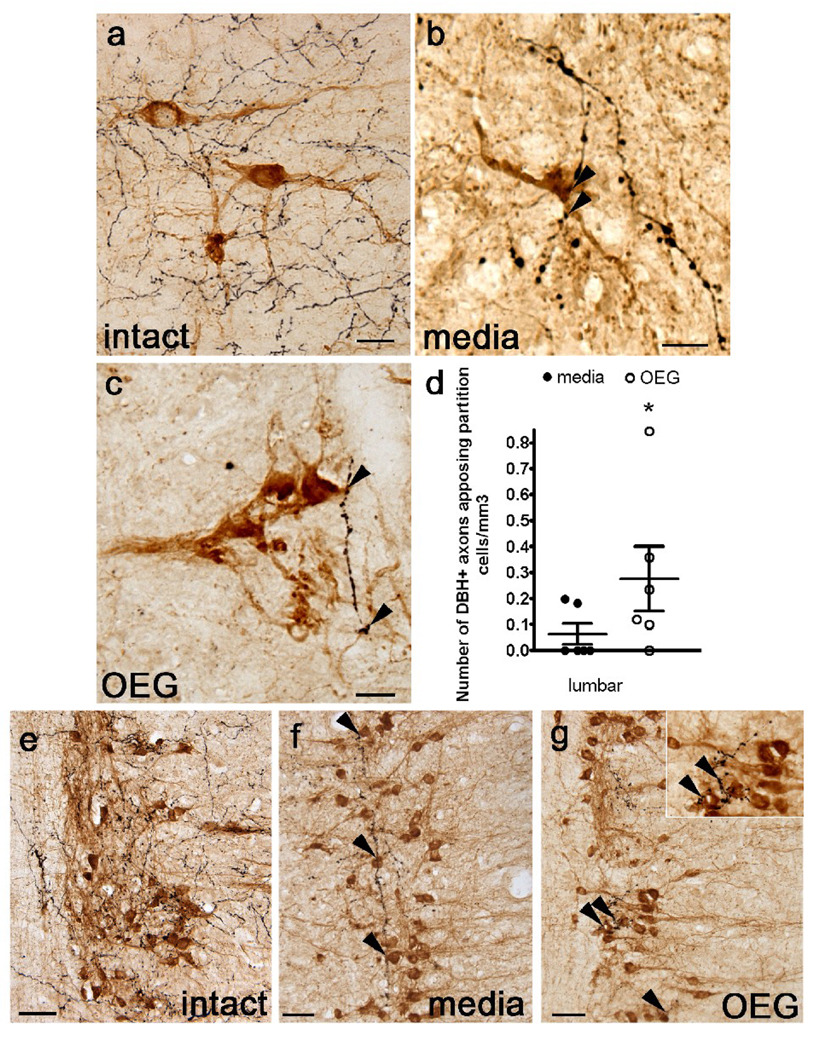
Transplantation of olfactory bulb-derived olfactory ensheathing glia (OEG) combined with step training improves hindlimb locomotion in adult rats with a complete spinal cord transection. Spinal cord injury studies use the presence of noradrenergic (NA) axons caudal to the injury site as evidence of axonal regeneration and we previously found more NA axons just caudal to the transection in OEG- than media-injected spinal rats. We therefore hypothesized that OEG transplantation promotes descending coeruleospinal regeneration that contributes to the recovery of hindlimb locomotion. Now we report that NA axons are present throughout the caudal stump of both media- and OEG-injected spinal rats and they enter the spinal cord from the periphery via dorsal and ventral roots and along large penetrating blood vessels. These results indicate that the presence of NA fibers in the caudal spinal cord is not a reliable indicator of coeruleospinal regeneration. We then asked if NA axons appose cholinergic neurons associated with motor functions, i.e., central canal cluster and partition cells (active during fictive locomotion) and somatic motor neurons (SMNs). We found more NA varicosities adjacent to central canal cluster cells, partition cells, and SMNs in the lumbar enlargement of OEG- than media-injected rats. As non-synaptic release of NA is common in the spinal cord, more associations between NA varicosities and motor-associated cholinergic neurons in the lumbar spinal cord may contribute to the improved treadmill stepping observed in OEG-injected spinal rats. This effect could be mediated through direct association with SMNs and/or indirectly via cholinergic interneurons.
Copyright 2009 Elsevier Inc. All rights reserved.
Figures
References
-
- Amenta F, Bronzetti E, Cavallotti C, Felici L. Quantitative image analysis of the density and pattern of adrenergic innervation of blood vessels of rat spinal cord. J Auton Nerv Syst. 1987;18:261–264. - PubMed
-
- Andén N-E, Engel J, Rubenson A. Central decarboxylation and uptake of L-DOPA. Naunyn Schmiedebergs Arch Pharmacol. 1972;273:11–26. - PubMed
-
- Aramant RB, Giron LT, Jr, Ziegler MG. Postnatal development of dopamine-beta-hydroxylase-immunoreactive fibers of the spinal cord of the rat. Brain Res. 1986;390:161–171. - PubMed
-
- Barbeau H, Chau C, Rossignol S. Noradrenergic agonists and locomotor training affect locomotor recovery after cord transection in adult cats. Brain Res Bull. 1993;30:387–393. - PubMed
-
- Barbeau H, Norman KE. The effect of noradrenergic drugs on the recovery of walking after spinal cord injury. Spinal Cord. 2003;41:137–143. - PubMed
Publication types
MeSH terms
Substances
Grants and funding
LinkOut - more resources
Full Text Sources
Medical
Research Materials
