


The extensive polymorphism of KIR genes
- PMID: 20028428
- PMCID: PMC2807482
- DOI: 10.1111/j.1365-2567.2009.03208.x
The extensive polymorphism of KIR genes
Abstract
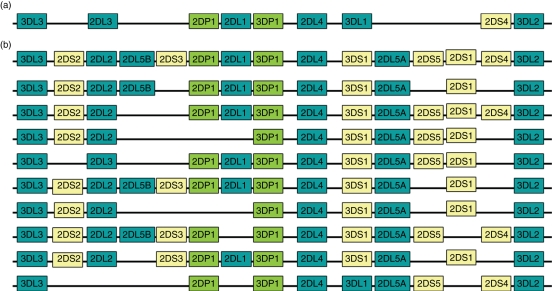
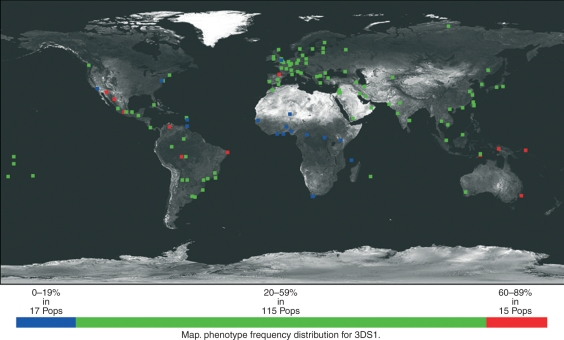
The functions of human natural killer (NK) cells are controlled by diverse families of antigen receptors. Prominent among these are the killer cell immunoglobulin-like receptors (KIR), a family of genes clustered in one of the most variable regions of the human genome. Within this review we discuss the vast polymorphism of the KIR gene complex which rivals that of the human leucocyte antigen (HLA) complex. There are several aspects to this polymorphism. Initially there is presence/absence of individual KIR genes, with four of these genes, termed framework genes, being present in all individuals tested to date, except on those very occasional instances when the gene has been deleted. Within each gene, alleles are present at different frequencies. We provide details of a new website that enables convenient searching for data on KIR gene, allele and genotype frequencies in different populations and show how these frequencies vary in different worldwide populations and the high probability of individuals differing in their KIR repertoire when both gene and allele polymorphism is considered. The KIR genes present in an individual may be classified into A and/or B haplotypes, which respectively have a more inhibitory role or a more activating role on the function of the NK cell. Family studies have been used to ascertain the make-up of these haplotypes, inclusion of allele typing enabling determination of whether one or two copies of a particular gene is present. In addition to genetic diversification the KIR gene complex shows differences at the functional level with different alleles having different protein expression levels and different avidity with their HLA ligand.
Figures
References
-
- Ljunggren HG, Karre K. In search of the ‘missing self’. MHC molecules and NK cell recognition. Immunol Today. 1990;11:237–44. - PubMed
-
- Liu WR, Kim J, Nwankwo C, Ashworth LK, Arm JP. Genomic organisation of the human leukocyte immunoglobulin-like receptors within the leukocyte receptor complex on chromosome 19q13.4. Immunogenetics. 2000;51:659–69. - PubMed
-
- Trowsdale J, Barten R, Haude A, et al. The genomic context of natural killer receptor extended gene families. Immunol Rev. 2001;181:20–38. - PubMed
-
- Wende H, Colonna M, Ziegler A, Volz A. Organisation of the leukocyte receptor cluster (LRC) on human chromosome 19q13.4.A. Mamm Genome. 1999;10:154–60. - PubMed
Publication types
MeSH terms
Substances
LinkOut - more resources
Full Text Sources
Other Literature Sources
Research Materials
