


Potential impact of stress activated retrotransposons on genome evolution in a marine diatom
- PMID: 20028555
- PMCID: PMC2806351
- DOI: 10.1186/1471-2164-10-624
Potential impact of stress activated retrotransposons on genome evolution in a marine diatom
Abstract
Background: Transposable elements (TEs) are mobile DNA sequences present in the genomes of most organisms. They have been extensively studied in animals, fungi, and plants, and have been shown to have important functions in genome dynamics and species evolution. Recent genomic data can now enlarge the identification and study of TEs to other branches of the eukaryotic tree of life. Diatoms, which belong to the heterokont group, are unicellular eukaryotic algae responsible for around 40% of marine primary productivity. The genomes of a centric diatom, Thalassiosira pseudonana, and a pennate diatom, Phaeodactylum tricornutum, that likely diverged around 90 Mya, have recently become available.
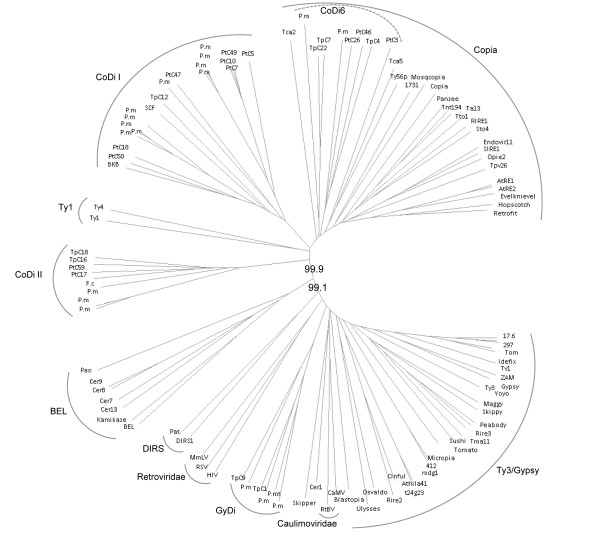
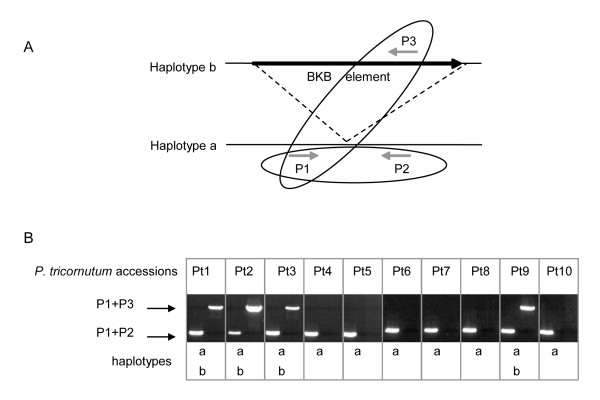
Results: In the present work, we establish that LTR retrotransposons (LTR-RTs) are the most abundant TEs inhabiting these genomes, with a much higher presence in the P. tricornutum genome. We show that the LTR-RTs found in diatoms form two new phylogenetic lineages that appear to be diatom specific and are also found in environmental samples taken from different oceans. Comparative expression analysis in P. tricornutum cells cultured under 16 different conditions demonstrate high levels of transcriptional activity of LTR retrotransposons in response to nitrate limitation and upon exposure to diatom-derived reactive aldehydes, which are known to induce stress responses and cell death. Regulatory aspects of P. tricornutum retrotransposon transcription also include the occurrence of nitrate limitation sensitive cis-regulatory components within LTR elements and cytosine methylation dynamics. Differential insertion patterns in different P. tricornutum accessions isolated from around the world infer the role of LTR-RTs in generating intraspecific genetic variability.
Conclusion: Based on these findings we propose that LTR-RTs may have been important for promoting genome rearrangements in diatoms.
Figures






References
-
- Kim JM, Vanguri S, Boeke JD, Gabriel A, Voytas DF. Transposable elements and genome organization: a comprehensive survey of retrotransposons revealed by the complete Saccharomyces cerevisiae genome sequence. Genome Res. 1998;8:464–478. - PubMed
-
- Kaminker JS, Bergman CM, Kronmiller B, Carlson J, Svirskas R, Patel S, Frise E, Wheeler DA, Lewis SE, Rubin GM, Ashburner M, Celniker SE. The transposable elements of the Drosophila melanogaster euchromatin: a genomics perspective. Genome Biol. 2002;3:RESEARCH0084. doi: 10.1186/gb-2002-3-12-research0084. - DOI - PMC - PubMed
MeSH terms
Substances
LinkOut - more resources
Full Text Sources
