


Total flavonoids extracted from xiaobuxin-tang on the hyperactivity of hypothalamic-pituitary-adrenal axis in chronically stressed rats
- PMID: 20028718
- PMCID: PMC3136372
- DOI: 10.1093/ecam/nep218
Total flavonoids extracted from xiaobuxin-tang on the hyperactivity of hypothalamic-pituitary-adrenal axis in chronically stressed rats
Abstract
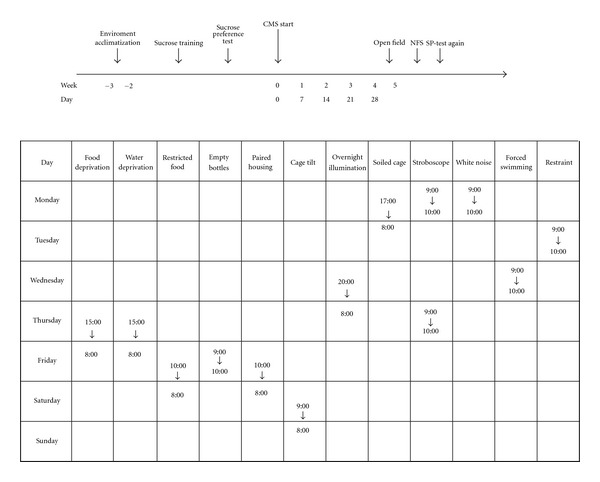
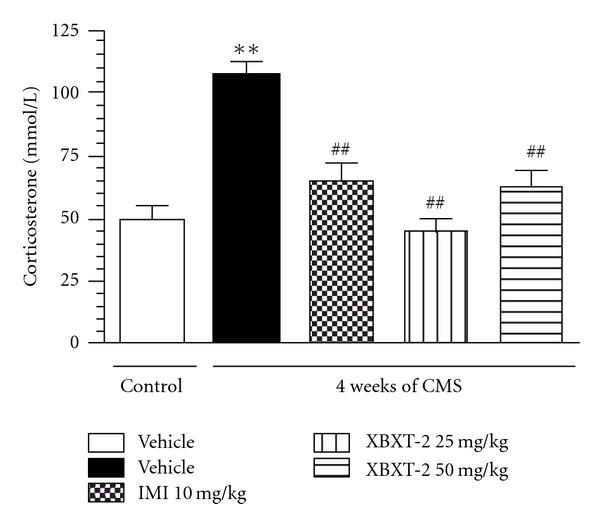
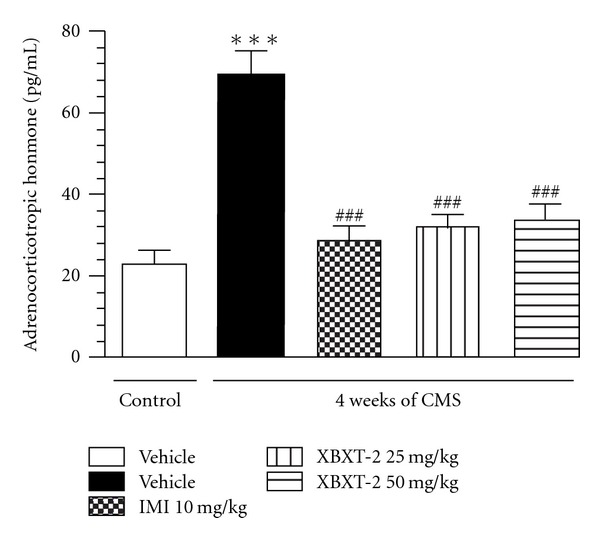
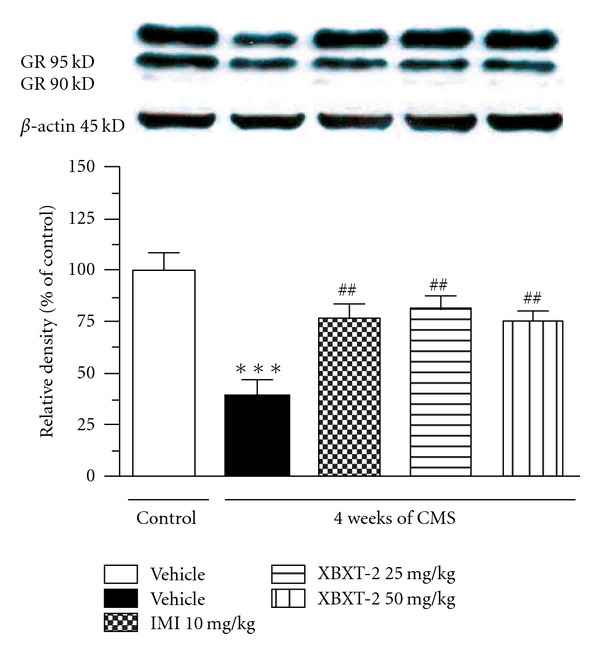
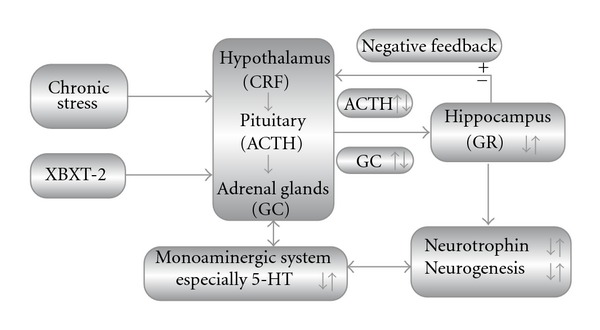
Our previous studies have demonstrated that the total flavonoids (XBXT-2) isolated from the extract of Xiaobuxin-Tang (XBXT), a traditional Chinese herbal decoction, ameliorated behavioral alterations and hippocampal dysfunctions in chronically stressed rats. Studies over the last decades have suggested that the hyperactivity of hypothalamic-pituitary-adrenal (HPA) axis is one of the most consistent findings in stress-related depression. Herein, we used the same chronic mild stress model of rats as before to further investigate the effect of XBXT-2 on the hyperactivity of HPA axis, including the stress hormones levels and glucocorticoid receptors (GRs) expression. Our ELISA results showed that chronic administration of XBXT-2 (25, 50 mg kg(-1), p.o., 28 days, the effective doses for behavioral responses) significantly decreased serum corticosterone level and its upstream stress hormone adrenocorticotropic hormone (ACTH) level in chronically stressed rats. Furthermore, western blotting result demonstrated XBXT-2 treatment ameliorated stress-induced decrease of GRs expression in hippocampus, an important target involved in the hyperactivity of HPA axis. These results were similar to that of classic antidepressant imipramine treatment (10 mg kg(-1), p.o.). In conclusion, the modulation of HPA axis produced by XBXT-2, including the inhibition of stress hormones levels and up-regulation of hippocampal GRs expression, may be an important mechanism underlying its antidepressant-like effect in chronically stressed rats.
Figures
References
-
- Juruena MF, Cleare AJ, Pariante CM. The hypothalamic pituitary adrenal axis, glucocorticoid receptor function and relevance to depression. Revista Brasileira de Psiquiatria. 2004;26(3):189–201. - PubMed
-
- Pariante CM, Lightman SL. The HPA axis in major depression: classical theories and new developments. Trends in Neurosciences. 2008;31(9):464–468. - PubMed
-
- Kim S-H, Han J, Seog D-H, et al. Antidepressant effect of Chaihu-Shugan-San extract and its constituents in rat models of depression. Life Sciences. 2005;76(11):1297–1306. - PubMed
-
- Li J-M, Kong L-D, Wang Y-M, Cheng CHK, Zhang W-Y, Tan W-Z. Behavioral and biochemical studies on chronic mild stress models in rats treated with a Chinese traditional prescription Banxia-houpu decoction. Life Sciences. 2003;74(1):55–73. - PubMed
LinkOut - more resources
Full Text Sources
