


A tolC mutant of Francisella tularensis is hypercytotoxic compared to the wild type and elicits increased proinflammatory responses from host cells
- PMID: 20028804
- PMCID: PMC2825903
- DOI: 10.1128/IAI.00992-09
A tolC mutant of Francisella tularensis is hypercytotoxic compared to the wild type and elicits increased proinflammatory responses from host cells
Abstract
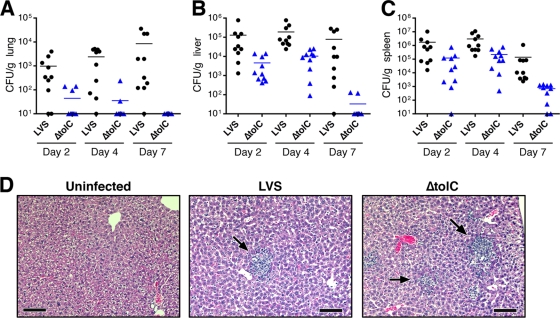
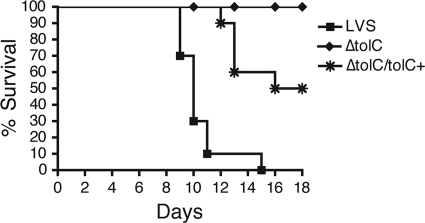
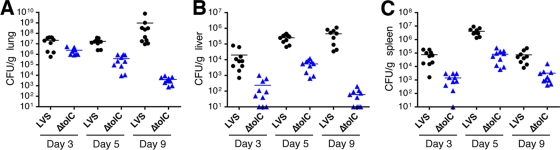
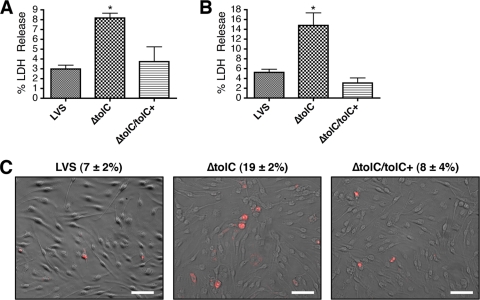
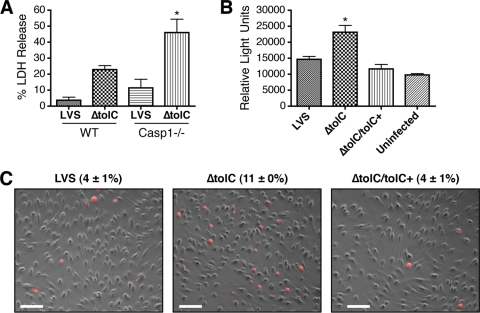
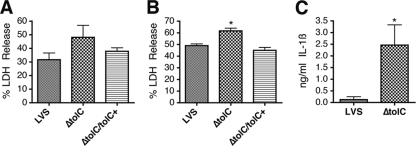
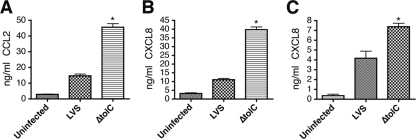
The highly infectious bacterium Francisella tularensis is a facultative intracellular pathogen and the causative agent of tularemia. TolC, which is an outer membrane protein involved in drug efflux and type I protein secretion, is required for the virulence of the F. tularensis live vaccine strain (LVS) in mice. Here, we show that an LVS DeltatolC mutant colonizes livers, spleens, and lungs of mice infected intradermally or intranasally, but it is present at lower numbers in these organs than in those infected with the parental LVS. For both routes of infection, colonization by the DeltatolC mutant is most severely affected in the lungs, suggesting that TolC function is particularly important in this organ. The DeltatolC mutant is hypercytotoxic to murine and human macrophages compared to the wild-type LVS, and it elicits the increased secretion of proinflammatory chemokines from human macrophages and endothelial cells. Taken together, these data suggest that TolC function is required for F. tularensis to inhibit host cell death and dampen host immune responses. We propose that, in the absence of TolC, F. tularensis induces excessive host cell death, causing the bacterium to lose its intracellular replicative niche. This results in lower bacterial numbers, which then are cleared by the increased innate immune response of the host.
Figures
References
-
- Abu-Zant, A., S. Jones, R. Asare, J. Suttles, C. Price, J. Graham, and Y. A. Kwaik. 2007. Anti-apoptotic signalling by the Dot/Icm secretion system of L. pneumophila. Cell Microbiol. 9:246-264. - PubMed
-
- Bazzocchi, C., S. Comazzi, R. Santoni, C. Bandi, C. Genchi, and M. Mortarino. 2007. Wolbachia surface protein (WSP) inhibits apoptosis in human neutrophils. Parasite Immunol. 29:73-79. - PubMed
Publication types
MeSH terms
Substances
Grants and funding
LinkOut - more resources
Full Text Sources
