


Cyclooxygenase-2 inhibition provides lasting protection against neonatal hypoxic-ischemic brain injury
- PMID: 20029340
- PMCID: PMC2808453
- DOI: 10.1097/CCM.0b013e3181cb1158
Cyclooxygenase-2 inhibition provides lasting protection against neonatal hypoxic-ischemic brain injury
Abstract
Objective: To investigate whether inhibition of cyclooxygenase-2, a critical component of the inflammatory pathway, is neuroprotective in a neonatal rat model of cerebral hypoxia-ischemia. The development of brain inflammation largely contributes to neonatal brain injury that may lead to a lifetime of neurologic deficits.
Design: Laboratory investigation.
Setting: University research laboratory.
Subjects: Postnatal day ten Sprague-Dawley rats.
Interventions: Neonatal hypoxia-ischemia was induced by ligation of the right common carotid artery followed by 2 hrs of hypoxia (8% oxygen). The pups in treatment groups were administered 10 mg/kg (low dose) or 30 mg/kg (high dose) of a known selective cyclooxygenase-2 inhibitor (NS398). Animals were euthanized at three time points: 72 hrs, 2 wks, or 6 wks. Inflammation outcomes were assessed at 72 hrs; brain damage was assessed at 2 wks and 6 wks along with other organs (heart, spleen). Detailed neurobehavioral examination was performed at 6 wks.
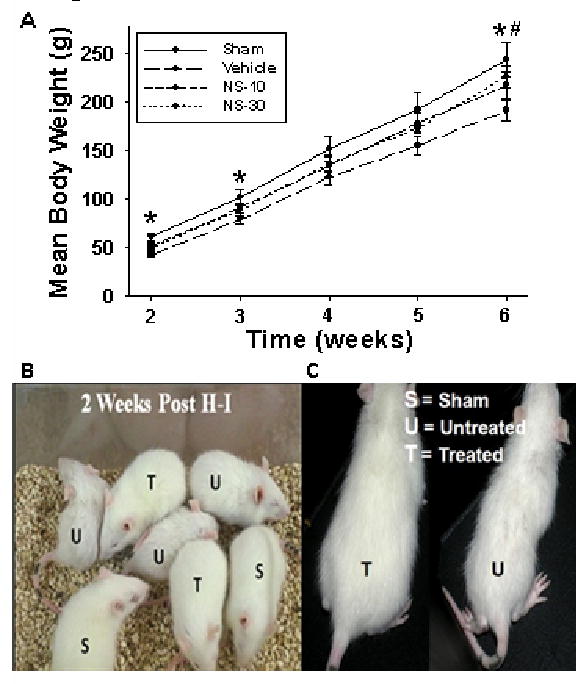
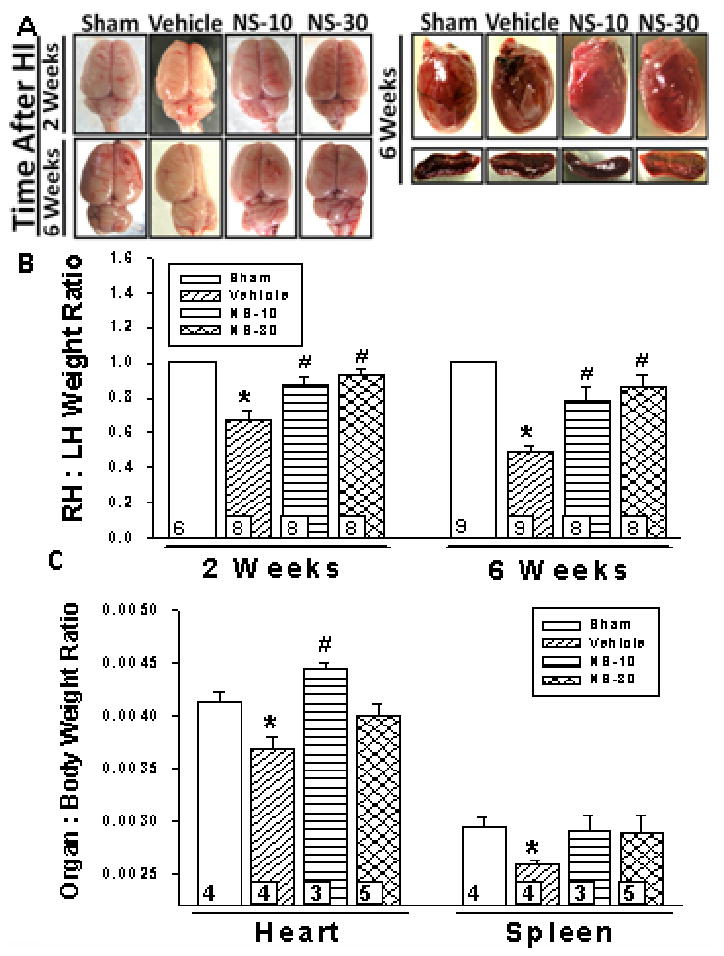
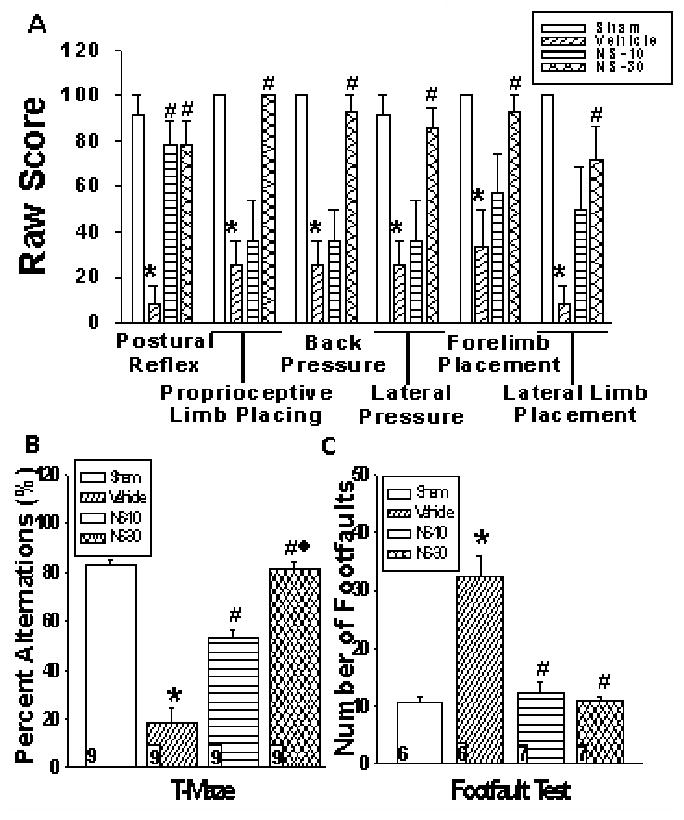
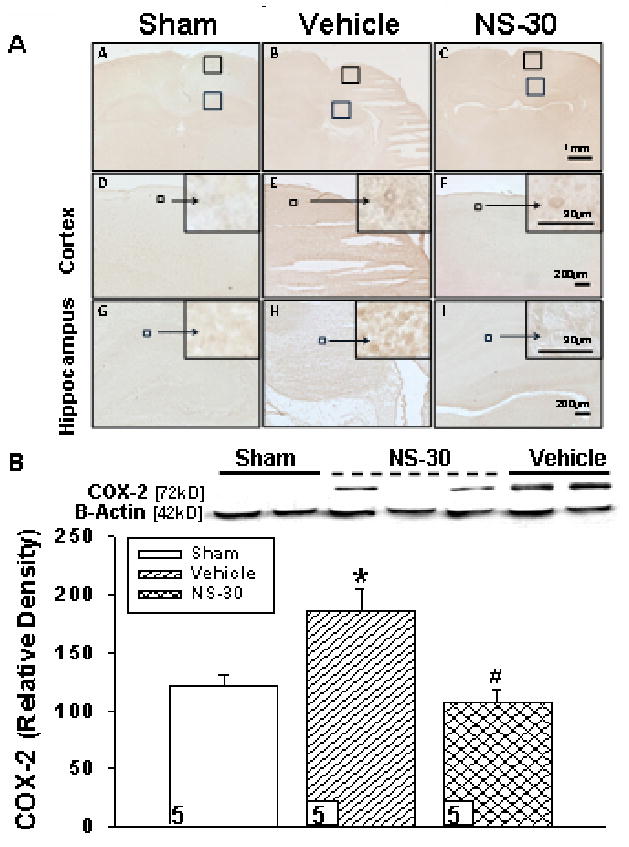
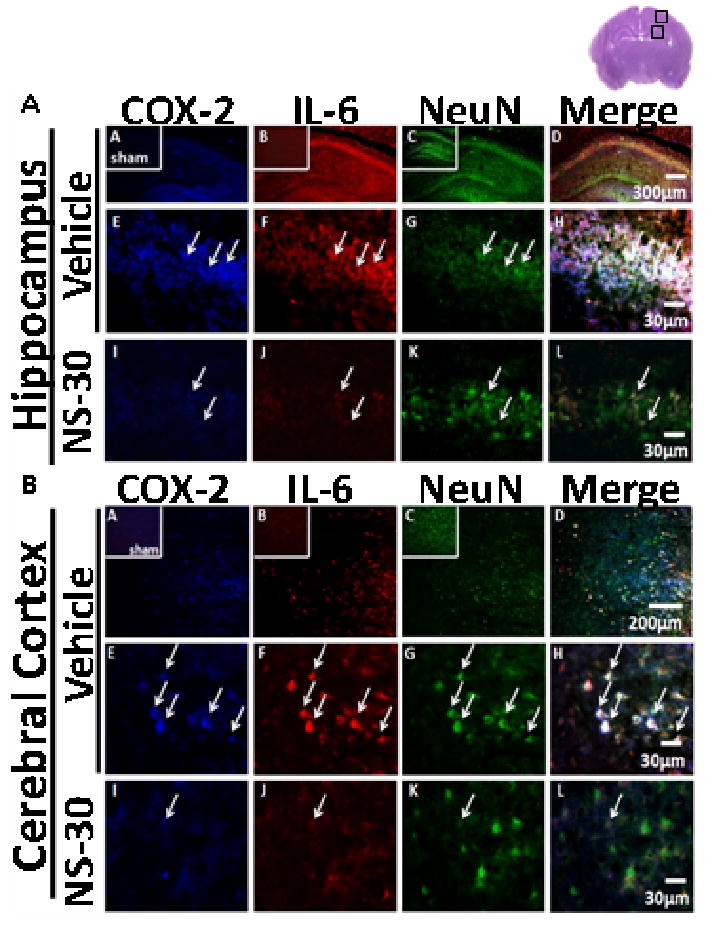
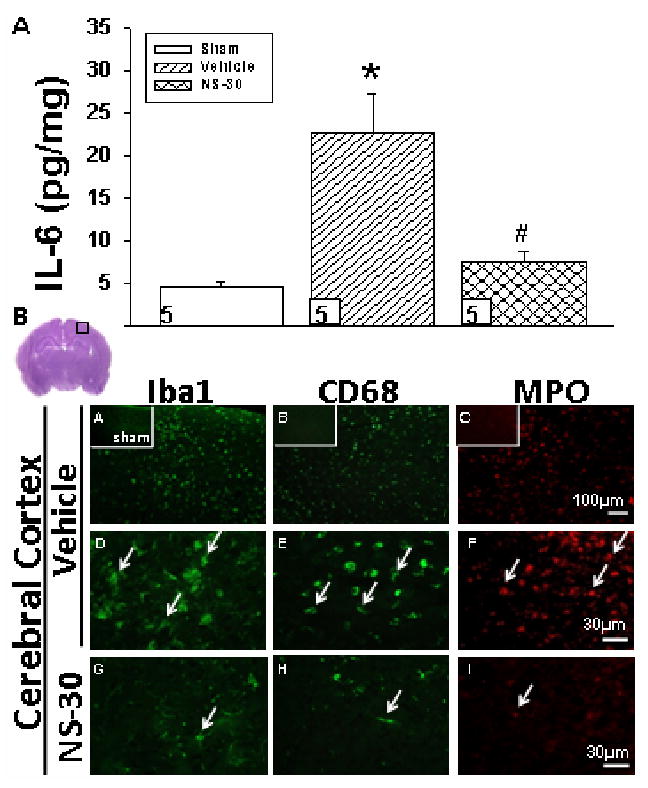
Measurements and main results: Pharmacologic inhibition of cyclooxygenase-2 markedly increased survivability within the first 72 hrs compared with untreated rats (100% vs. 72%). Low- and high-dose NS398 significantly attenuated the loss of brain and body weights observed after hypoxia-ischemia. Neurobehavioral outcomes were significantly improved in some parameters with low-dose treatment, whereas high-dose treatment consistently improved all neurologic deficits. Immunohistochemical results showed a marked decrease in macrophage, microglial, and neutrophil abundance in ipsilateral hemisphere of the NS398-treated group along with a reduction in interleukin-6 expression.
Conclusions: Selective cyclooxygenase-2 inhibition protected neonatal rats against death, progression of brain injury, growth retardation, and neurobehavioral deficits after a hypoxic-ischemic insult.
Conflict of interest statement
Conflict of Interest: None
Figures
Comment in
-
COX2 inhibitors for acquired brain injuries: is the time ripe?Crit Care Med. 2010 Feb;38(2):723-4. doi: 10.1097/CCM.0b013e3181bc80b9. Crit Care Med. 2010. PMID: 20083946 Free PMC article. No abstract available.
References
-
- Wagner BP, Nedelcu J, Martin E. Delayed postischemic hypothermia improves long-term behavioral outcome after cerebral hypoxia-ischemia in neonatal rats. Pediatr Res. 2002;51:354–360. - PubMed
-
- Lubics A, Reglodi D, Tamas A, et al. Neurological reflexes and early motor behavior in rats subjected to neonatal hypoxic-ischemic injury. Behav Brain Res. 2005;157:157–165. - PubMed
-
- Shaywitz BA, Fletcher JM. Neurological, cognitive, and behavioral sequelae of hypoxic-ischemic encephalopathy. Semin Perinatol. 1993;17:357–366. - PubMed
-
- Calvert JW, Zhang JH. Pathophysiology of an hypoxic-ischemic insult during the perinatal period. Neurol Res. 2005;27:246–260. - PubMed
-
- Minghetti L. Cyclooxygenase-2 (COX-2) in inflammatory and degenerative brain diseases. J Neuropathol Exp Neurol. 2004;63:901–910. - PubMed
Publication types
MeSH terms
Substances
Grants and funding
LinkOut - more resources
Full Text Sources
Research Materials
