


An optimal protocol to analyze the rat spinal cord proteome
- PMID: 20029654
- PMCID: PMC2796866
- DOI: 10.4137/bmi.s2965
An optimal protocol to analyze the rat spinal cord proteome
Abstract
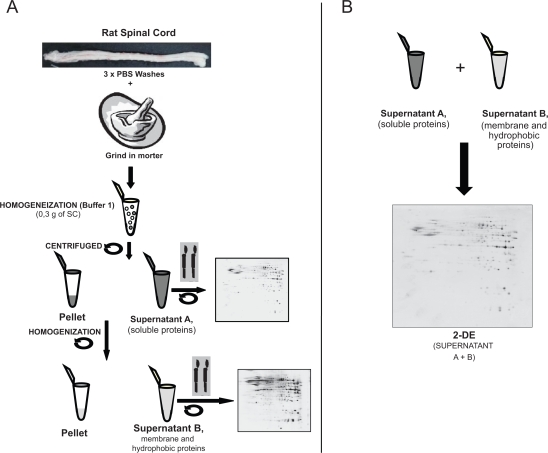
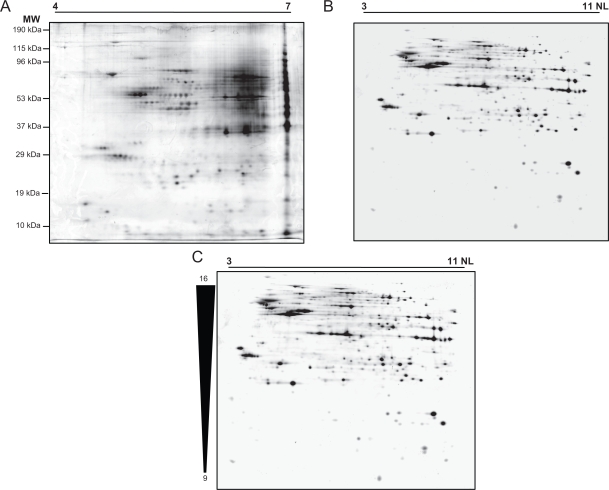
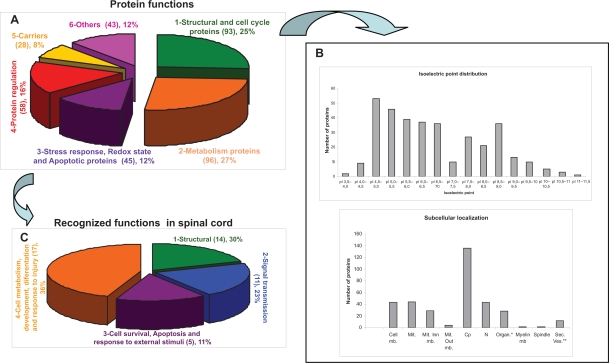
Since the function of the spinal cord depends on the proteins found there, better defing the normal Spinal Cord Proteome is an important and challenging task. Although brain and cerebrospinal fluid samples from patients with different central nervous system (CNS) disorders have been studied, a thorough examination of specific spinal cord proteins and the changes induced by injury or associated to conditions such as neurodegeneration, spasticity and neuropathies has yet to be performed. In the present study, we aimed to describe total protein content in the spinal cord of healthy rats, employing different proteomics tools. Accordingly, we have developed a fast, easy, and reproducible sequential protocol for protein extraction from rat spinal cords. We employed conventional two dimensional electrophoresis (2DE) in different pH ranges (eg. 4-7, 3-11 NL) combined with identification by mass spectrometry (MALDI-TOF/TOF), as well as first dimension protein separation combined with Liquid Chromatography Mass Spectrometry/Mass Spectrometry (LC-MS/MS) to maximise the benefits of this technology. The value of these techniques is demonstrated here by the identification of several proteins known to be associated with neuroglial structures, neurotransmission, cell survival and nerve growth in the central nervous system. Furthermore this study identified many spinal proteins that have not previously been described in the literature and which may play an important role as either sensitive biomarkers of dysfunction or of recovery after Spinal Cord Injury.
Keywords: Liquid Chromatography Mass Spectrometry/Mass Spectrometry (LC-MS MS); proteome; proteomics; spinal cord; two dimensional electrophoresis (2-DE).
Figures


References
-
- Bonita R. Epidemiology of Stroke. Lancet. 1992;339:342–4. - PubMed
-
- Alonso I, Regidor E, Rodriguez C, Gutierrez-Fisac JL. The main causes of death in Spain. Med Clin (Barc) 1996;12:441–5. - PubMed
-
- Beattie MS, Hermann GE, Rogers RC, Bresnahan JC. Cell death in models of spinal cord injury. Prog Brain Res. 2002;137:37–47. - PubMed
-
- Profyris C, Cheema SS, Zang D, Azari MF, Boyle K, Petratos S. Degenerative and regenerative mechanisms governing spinal cord injury. Neurobiol Dis. 2004;3:415–36. - PubMed
-
- Sindrup SH, Jensen TS. Efficacy of pharmacological treatments of neuropathic pain: An update and effect related to mechanism of drug action. Pain. 1999;83:389–400. - PubMed
LinkOut - more resources
Full Text Sources
