


A mouse model to dissect progesterone signaling in the female reproductive tract and mammary gland
- PMID: 20029965
- PMCID: PMC2819579
- DOI: 10.1002/dvg.20586
A mouse model to dissect progesterone signaling in the female reproductive tract and mammary gland
Abstract
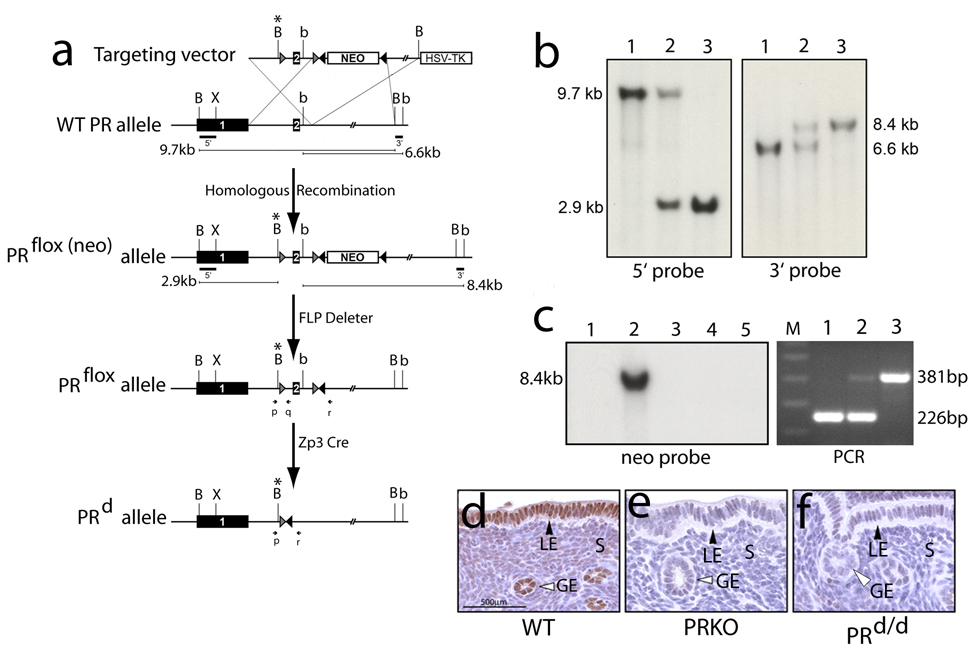
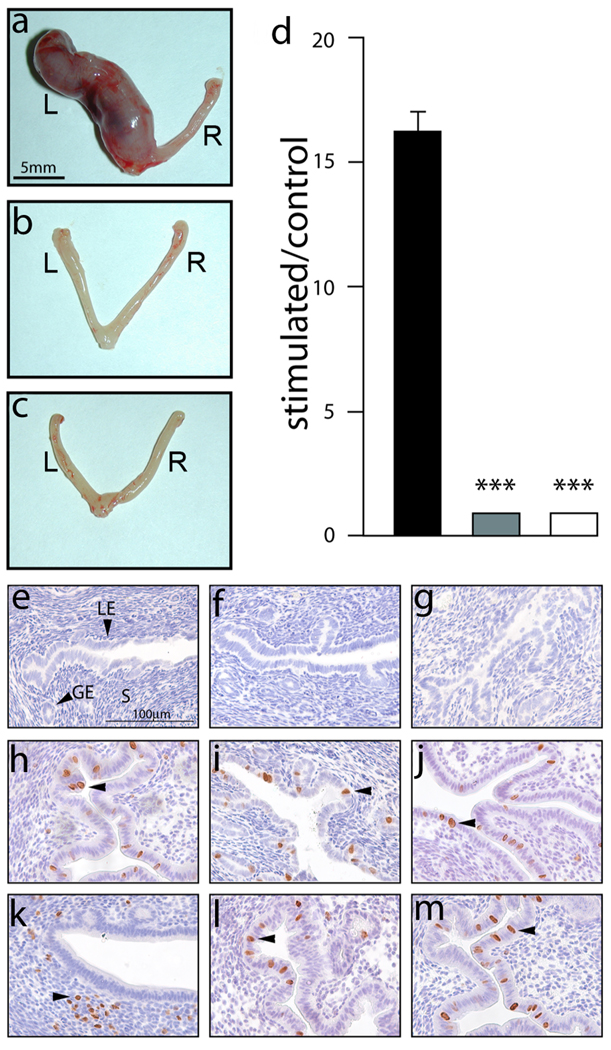
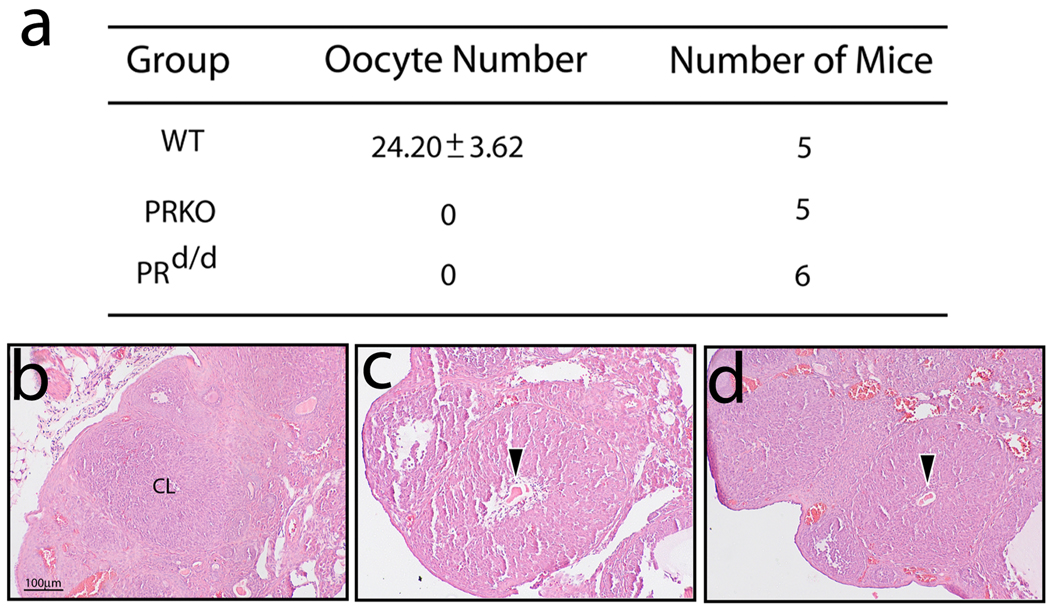
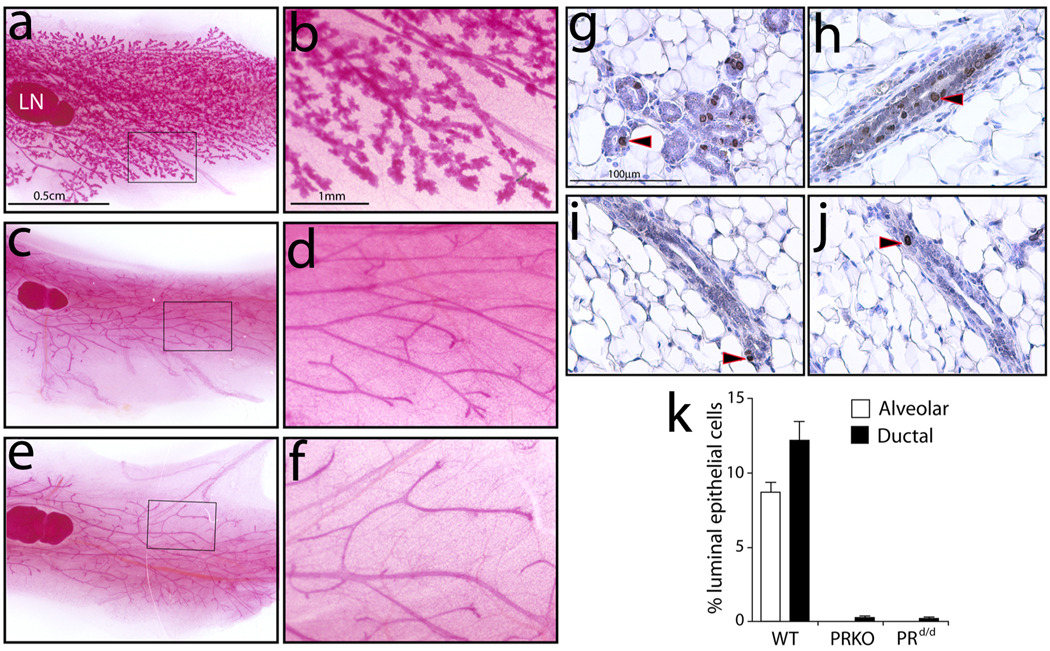
Considering the regulatory complexities of progesterone receptor (PR) action throughout the female reproductive axis and mammary gland, we generated a mouse model that enables conditional ablation of PR function in a spatiotemporal specific manner. Exon 2 of the murine PR gene was floxed to generate a conditional PR allele (PR(flox)) in mice. Crossing the PR(flox/flox) mouse with the ZP3-cre transgenic demonstrated that the PR(flox) allele recombines to a PR null allele (PR(d)). Mice homozygous for the recombined null PR allele (PR(d/d)) exhibit uterine, ovarian, and mammary gland defects that phenocopy those of our previously described PR knockout (PRKO) model. Therefore, this conditional mouse model for PR ablation represents an invaluable resource with which to further define in a developmental and/or reproductive stage-specific manner the individual and integrative roles of distinct PR populations resident in multiple progesterone-responsive target sites.
(c) 2009 Wiley-Liss, Inc.
Figures
References
-
- Chen B, Pan H, Zhu L, Deng Y, Pollard JW. Progesterone inhibits the estrogen-induced phosphoinositide 3-kinase-->AKT-->GSK-3beta-->cyclin D1-->pRB pathway to block uterine epithelial cell proliferation. Mol Endocrinol. 2005;19:1978–1990. - PubMed
-
- Farley FW, Soriano P, Steffen LS, Dymecki SM. Widespread recombinase expression using FLPeR (flipper) mice. Genesis. 2000;28:106–110. - PubMed
-
- Hashimoto-Partyka MK, Lydon JP, Iruela-Arispe ML. Generation of a mouse for conditional excision of progesterone receptor. Genesis. 2006;44:391–395. - PubMed
Publication types
MeSH terms
Substances
Grants and funding
LinkOut - more resources
Full Text Sources
Molecular Biology Databases
Research Materials
Miscellaneous
