


Utilization of prosodic information in syntactic ambiguity resolution
- PMID: 20033849
- PMCID: PMC2892637
- DOI: 10.1007/s10936-009-9139-x
Utilization of prosodic information in syntactic ambiguity resolution
Abstract
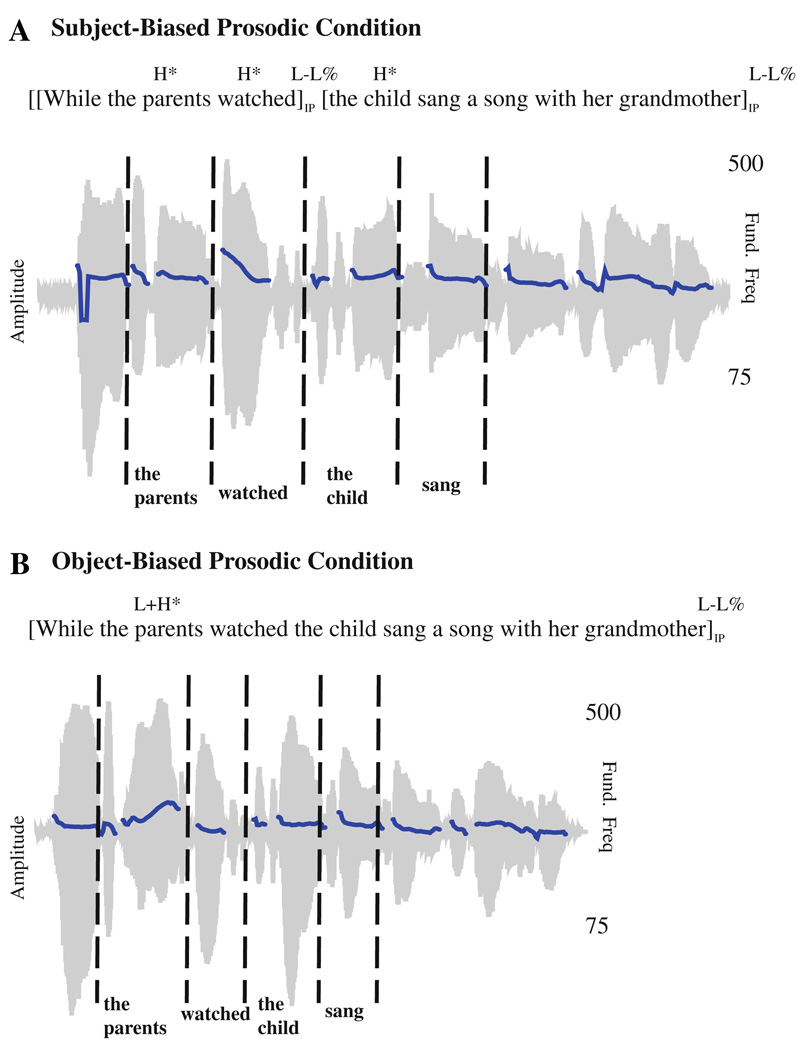
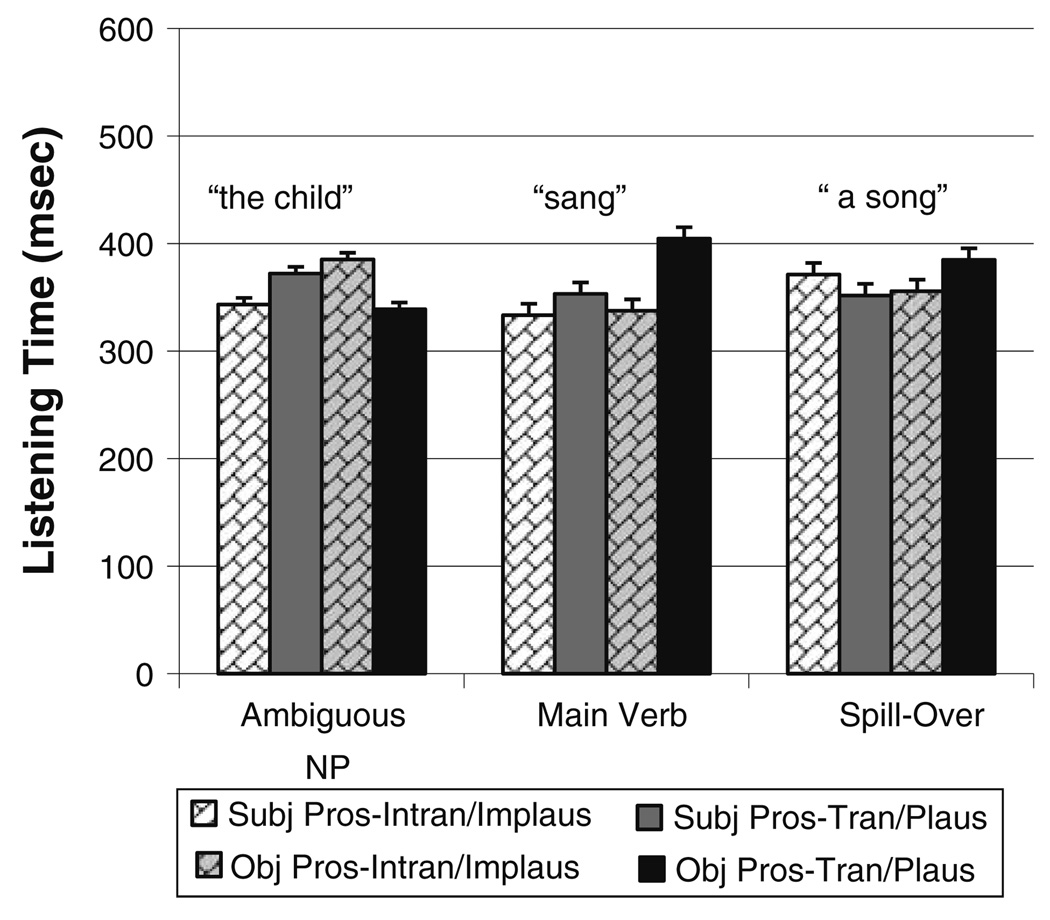
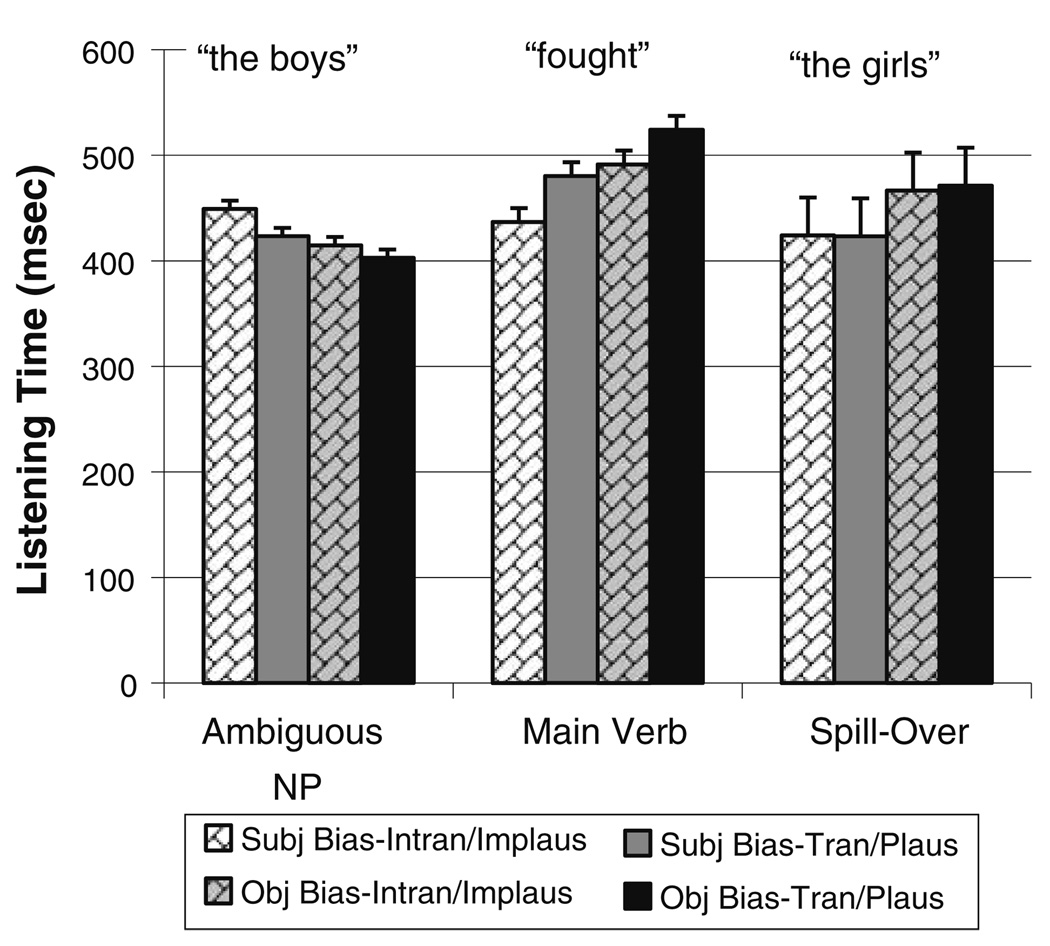
Two self paced listening experiments examined the role of prosodic phrasing in syntactic ambiguity resolution. In Experiment 1, the stimuli consisted of early closure sentences (e.g., "While the parents watched, the child sang a song.") containing transitive-biased subordinate verbs paired with plausible direct objects or intransitive-biased subordinate verbs paired with implausible direct objects. Experiment 2 also contained early closure sentences with transitively and intransitive-biased subordinate verbs, but the subordinate verbs were always followed by plausible direct objects. In both experiments, there were two prosodic conditions. In the subject-biased prosodic condition, an intonational phrase boundary marked the clausal boundary following the subordinate verb. In the object-biased prosodic condition, the clause boundary was unmarked. The results indicate that lexical and prosodic cues interact at the subordinate verb and plausibility further affects processing at the ambiguous noun. Results are discussed with respect to models of the role of prosody in sentence comprehension.
Figures
References
-
- Adams BC, Clifton C, Mitchell DC. Lexical guidance in sentence processing. Psychonomic Bulletin and Review. 1998;5:265–270. - PubMed
-
- Blodgett A. Unpublished doctoral dissertation. Columbus: The Ohio State University; 2004. The interaction of prosodic phrasing, verb bias, and plausibility during spoken sentence comprehension.
-
- Boersma P, Weenink D. Praat: Doing phonetics by computer (version 4.6.12) [Computer software] 2007. Retrieved from http://www.praat.org/
-
- Boland JE. The relationship between syntactic and semantic processes in sentence comprehension. Language and Cognitive Processes. 1997;12:423–484.
-
- Caplan D, Waters GS. On-line syntactic processing in aphasia: Studies with auditory moving windows presentation. Brain and Language. 2003;84:222–249. - PubMed
Publication types
MeSH terms
Grants and funding
LinkOut - more resources
Full Text Sources
