


Kupffer cell and interleukin-12-dependent loss of natural killer T cells in hepatosteatosis
- PMID: 20034047
- PMCID: PMC3761962
- DOI: 10.1002/hep.23292
Kupffer cell and interleukin-12-dependent loss of natural killer T cells in hepatosteatosis
Abstract
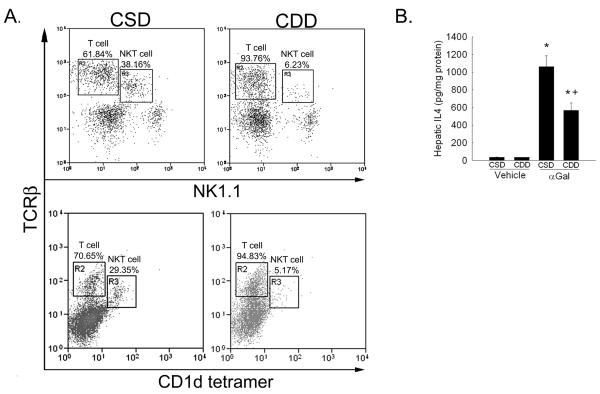
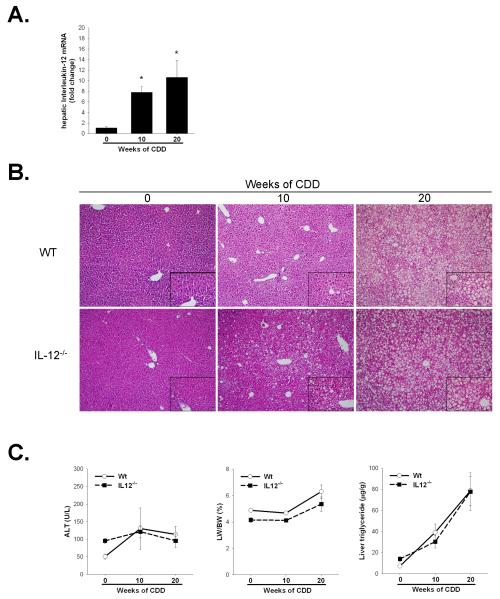
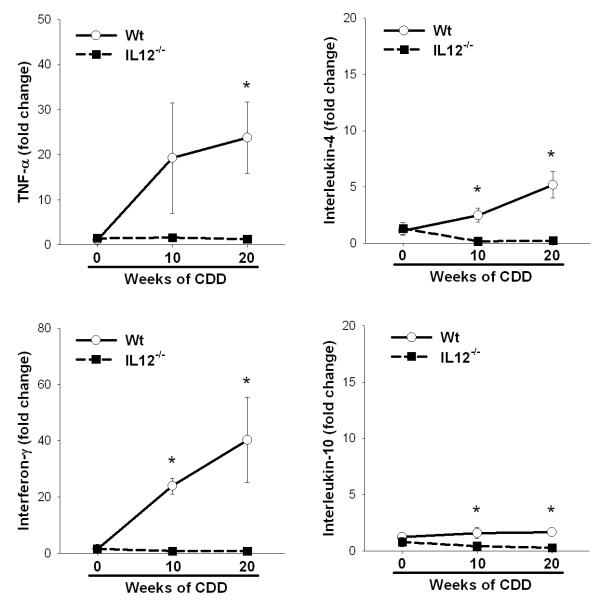
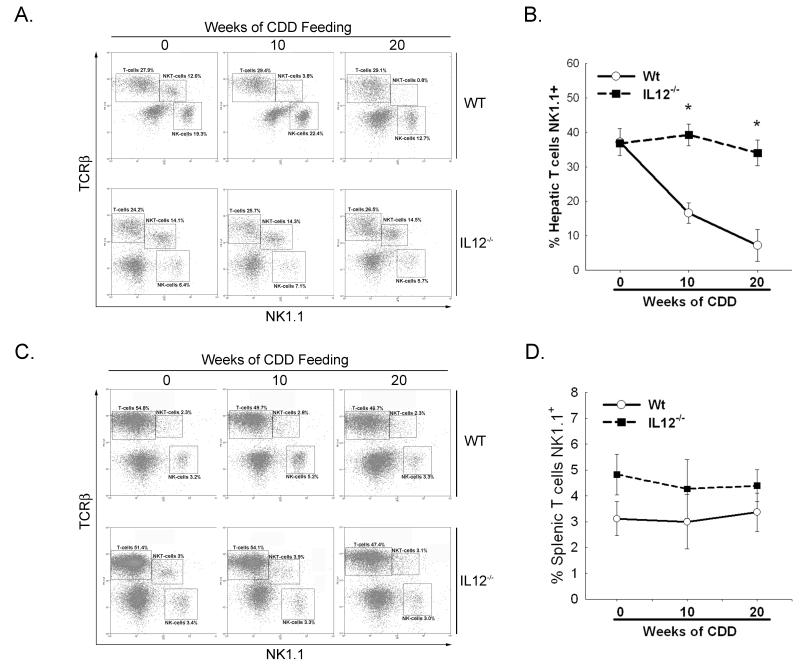
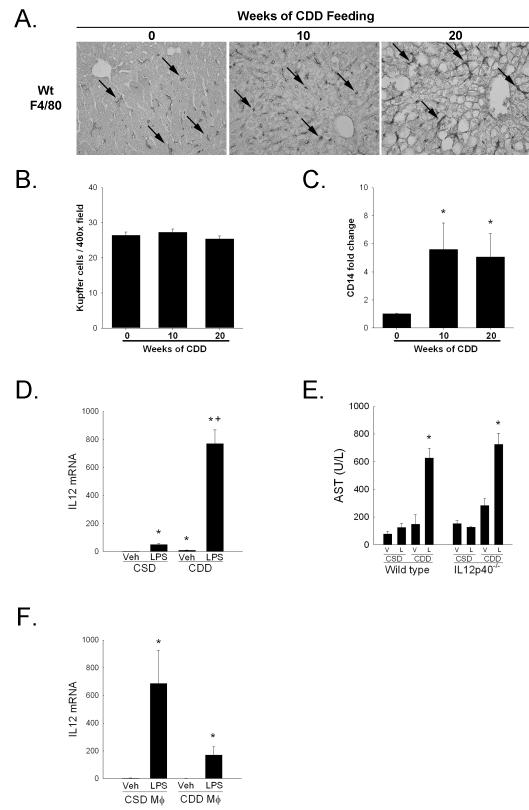
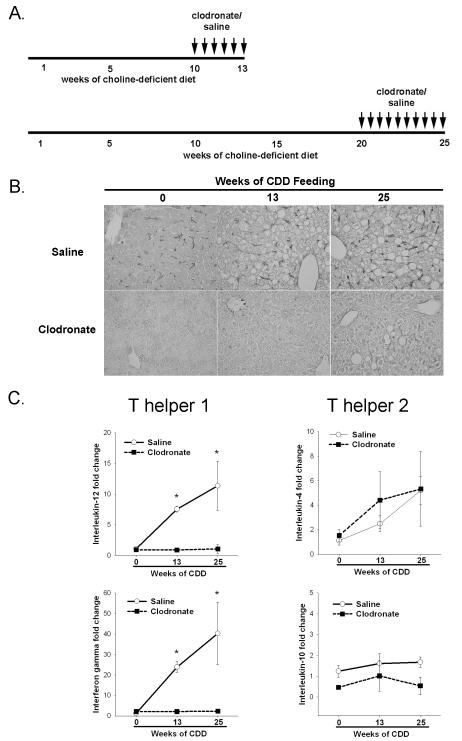
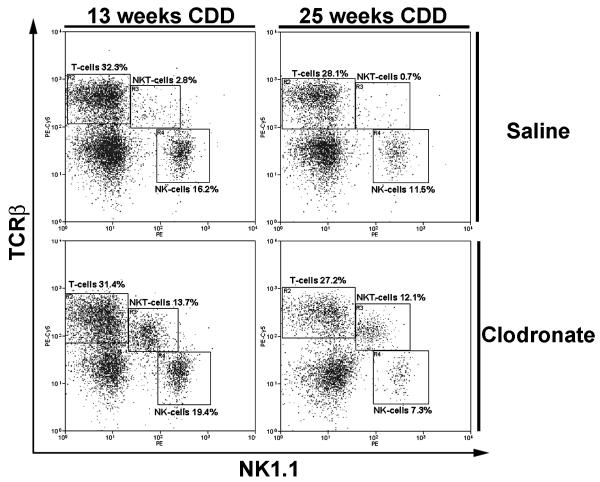
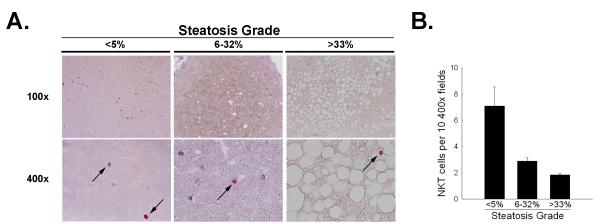
Hepatosteatosis is associated with increased expression of tumor necrosis factor alpha (TNF-alpha) and interleukin (IL)-12, major T helper (Th) 1 cytokines, and reduced hepatic natural killer T (NKT) cell numbers. The relationship between lipid accumulation, cytokine expression, and hepatic NKT cells is not known. This study was conducted to assess the role of IL-12 in the development of hepatic steatosis and its potential impact on liver NKT cells. Male C57Bl/6 wildtype (WT) and IL-12-deficient (IL-12(-/-)) mice were fed a choline-deficient diet (CDD) for 0, 10, or 20 weeks. CDD led to marked hepatosteatosis, reduced hepatic but not splenic NKT cell numbers and function, and increased hepatic expression of the T(h)1-type cytokines IL-12, interferon gamma (IFN-gamma), and TNF-alpha in WT mice. The absence of IL-12 resulted in similar CDD-induced hepatosteatosis, but preserved hepatic NKT cells and significantly reduced hepatic IFN-gamma and TNF-alpha expression. Treatment of CDD-fed mice with lipopolysaccharide led to a significant increase in hepatic IL-12 expression, and Kupffer cell (KC) depletion reduced liver IL-12 expression and restored NKT cells in CDD-induced fatty liver. Interestingly, KCs from CDD-fed mice failed to produce increased quantities of IL-12 upon activation in vitro when compared to similarly treated KCs from control fed mice, suggesting that secondary factors in vivo promote heightened IL-12 production. Finally, human livers with severe steatosis showed a substantial decrease in NKT cells.
Conclusion: Hepatosteatosis reduces the numbers of hepatic NKT cells in a KC-and IL-12-dependent manner. Our results suggest a pivotal and multifunctional role of KC-derived IL-12 in the altered immune response in steatotic liver, a process that is likely active within human nonalcoholic fatty liver disease.
Figures
Comment in
-
Supporting evidence for natural killer T cell accumulation in progressive nonalcoholic fatty liver disease?Hepatology. 2010 Jan;51(1):345-6; author reply 346. doi: 10.1002/hep.23404. Hepatology. 2010. PMID: 20034038 No abstract available.
-
The link between hepatosteatosis and cells of the immune system.Hepatology. 2010 Apr;51(4):1472; author reply 1472-3. doi: 10.1002/hep.23563. Hepatology. 2010. PMID: 20373379 No abstract available.
References
-
- Li Z, Diehl AM. Innate immunity in the liver. Curr Opin Gastroenterol. 2003;19:565–571. - PubMed
-
- Godfrey DI, MacDonald HR, Kronenberg M, Smyth MJ, Van KL. NKT cells: what’s in a name? Nat Rev Immunol. 2004;4:231–237. - PubMed
-
- Gumperz JE. CD1d-restricted “NKT” cells and myeloid IL-12 production: an immunological crossroads leading to promotion or suppression of effective anti-tumor immune responses? J Leukoc Biol. 2004;76:307–313. - PubMed
-
- Wilson SB, Delovitch TL. Janus-like role of regulatory iNKT cells in autoimmune disease and tumour immunity. Nat Rev Immunol. 2003;3:211–222. - PubMed
Publication types
MeSH terms
Substances
Grants and funding
LinkOut - more resources
Full Text Sources
Medical