


A comparative view of insect circadian clock systems
- PMID: 20035363
- PMCID: PMC11115600
- DOI: 10.1007/s00018-009-0232-y
A comparative view of insect circadian clock systems
Abstract
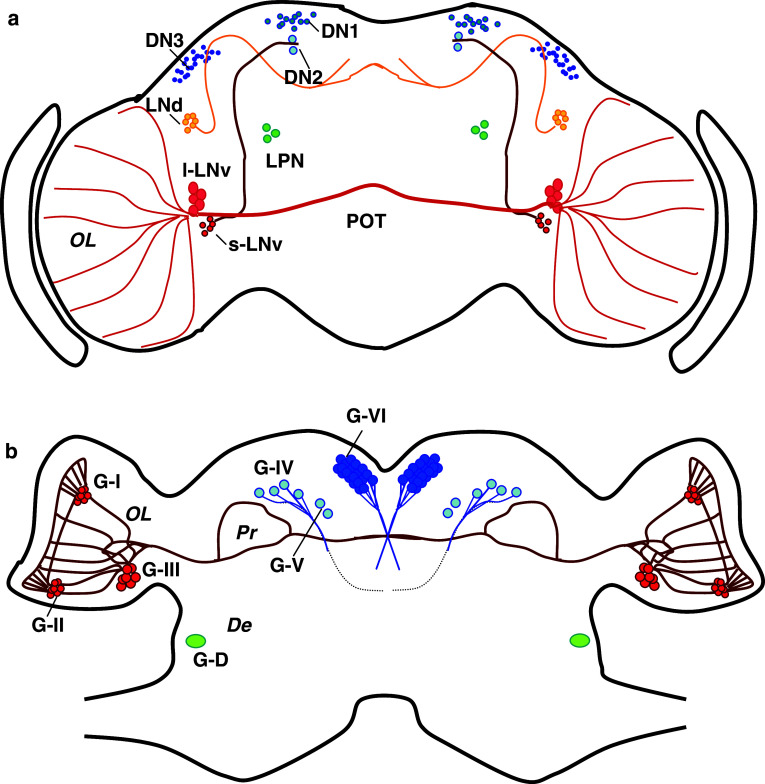
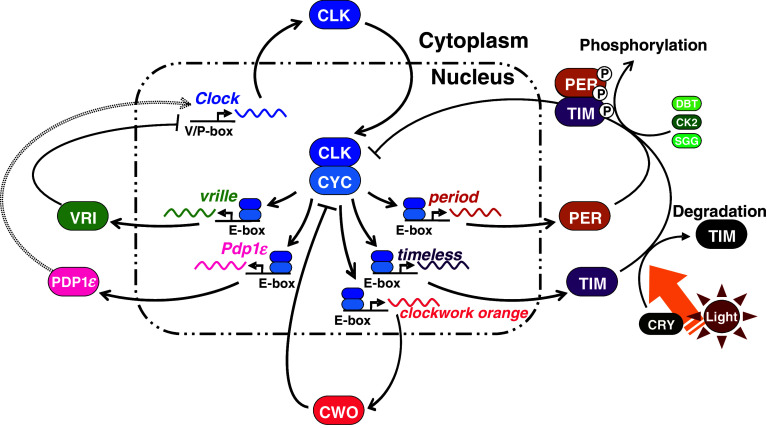
Recent studies revealed that the neuronal network controlling overt rhythms shows striking similarity in various insect orders. The pigment-dispersing factor seems commonly involved in regulating locomotor activity. However, there are considerable variations in the molecular oscillatory mechanism, and input and output pathways among insects. In Drosophila, autoregulatory negative feedback loops that consist of clock genes, such as period and timeless are believed to create 24-h rhythmicity. Although similar clock genes have been found in some insects, the behavior of their product proteins shows considerable differences from that of Drosophila. In other insects, mammalian-type cryptochrome (cry2) seems to work as a transcriptional repressor in the feedback loop. For photic entrainment, Drosophila type cryptochrome (cry1) plays the major role in Drosophila while the compound eyes are the major photoreceptor in others. Further comparative study will be necessary to understand how this variety of clock mechanisms derived from an ancestral one.
Figures
References
-
- Dunlap JC, Loros J, DeCoursey PJ. Chronobiology: biological timekeeping. Sunderland: Sinauer; 2004.
-
- Saunders DS. Insect clocks. Amsterdam: Elsevier; 2002.
-
- Tomioka K, Chiba Y. Characterization of optic lobe circadian pacemaker by in situ and in vitro recording of neuronal activity in the cricket Gryllus bimaculatus . J Comp Physiol A. 1992;171:1–7. doi: 10.1007/BF00195955. - DOI
-
- Fleissner G. Isolation of an insect circadian clock. J Comp Physiol. 1982;149:311–316. doi: 10.1007/BF00619146. - DOI
Publication types
MeSH terms
Substances
LinkOut - more resources
Full Text Sources
Molecular Biology Databases
