


The role of synapsins in neuronal development
- PMID: 20035364
- PMCID: PMC11115787
- DOI: 10.1007/s00018-009-0227-8
The role of synapsins in neuronal development
Abstract
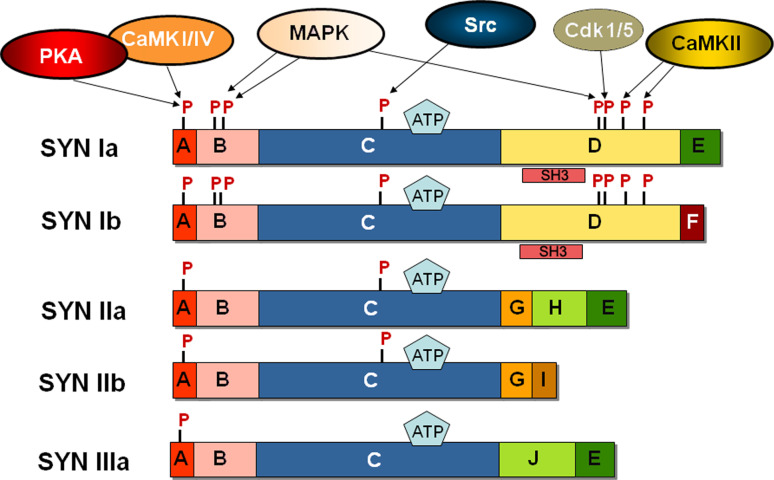
The synapsins, the first identified synaptic vesicle-specific proteins, are phosphorylated on multiple sites by a number of protein kinases and are involved in neurite outgrowth and synapse formation as well as in synaptic transmission. In mammals, the synapsin family consists of at least 10 isoforms encoded by 3 distinct genes and composed by a mosaic of conserved and variable domains. The synapsins are highly conserved evolutionarily, and orthologues have been found in invertebrates and lower vertebrates. Within nerve terminals, synapsins are implicated in multiple interactions with presynaptic proteins and the actin cytoskeleton. Via these interactions, synapsins control several mechanisms important for neuronal homeostasis. In this review, we describe the main functional features of the synapsins, in relation to the complex role played by these phosphoproteins in neuronal development.
Figures
References
-
- De Camilli P, Cameron R, Greengard P. Synapsin I (protein I), a nerve terminal-specific phosphoprotein. I. Its general distribution in synapses of the central and peripheral nervous system demonstrated by immunofluorescence in frozen and plastic sections. J Cell Biol. 1983;96:1337–1354. doi: 10.1083/jcb.96.5.1337. - DOI - PMC - PubMed
-
- De Camilli P, Harris SM, Jr, Huttner WB, Greengard P. Synapsin I (protein I), a nerve terminal-specific phosphoprotein. II. Its specific association with synaptic vesicles demonstrated by immunocytochemistry in agarose-embedded synaptosomes. J Cell Biol. 1983;96:1355–1373. doi: 10.1083/jcb.96.5.1355. - DOI - PMC - PubMed
Publication types
MeSH terms
Substances
Grants and funding
LinkOut - more resources
Full Text Sources
