


2,8-dihydroxyadenine nephrolithiasis induces developmental stage-specific alterations in gene expression in mouse kidney
- PMID: 20035974
- PMCID: PMC3177599
- DOI: 10.1016/j.urology.2009.10.031
2,8-dihydroxyadenine nephrolithiasis induces developmental stage-specific alterations in gene expression in mouse kidney
Abstract
Objectives: To identify factors that may be crucial for the initiation and progression of stone-induced injury in the developing mouse kidney by a prospective observational study using microarray analysis. Kidney stone diseases are common in premature infants, but the underlying molecular and cellular mechanisms are not fully defined.
Methods: Mice with adenine phosphoribosyltransferase deficiency develop 2,8-dihydroxyadenine (DHA) nephrolithiasis. The gene expression changes between Aprt(-/-) and Aprt(+/+) kidneys from newborn and adult mice were compared using Affymetrix gene chips. Targets of interest were further analyzed by quantitative real-time polymerase chain reaction and immunohistochemistry.
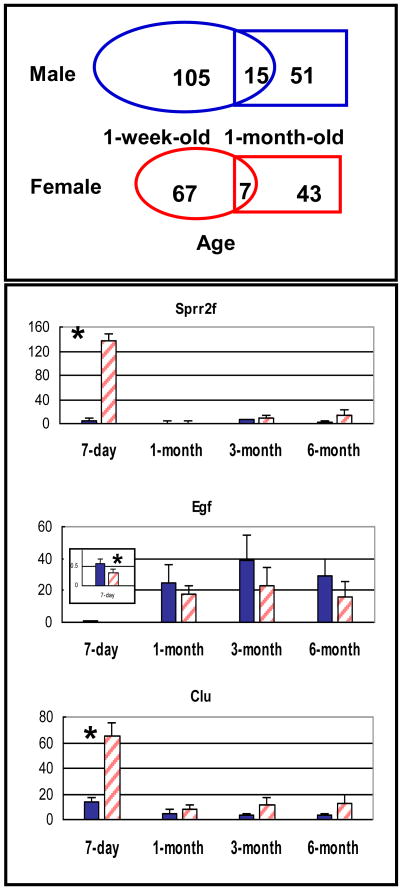
Results: We identified a set of genes that were differentially expressed in the developing kidney in response to DHA-induced injury. In 1-week-old Aprt(-/-) mice, the expression of Sprr2f and Clu was highly augmented and that of Egf was significantly decreased. We also observed that maturation-related gene expression changes were delayed in developing Aprt(-/-) kidneys, and immature Aprt(-/-) kidneys contained large numbers of intercalated cells that were blocked from terminal differentiation.
Conclusions: This study presents a comprehensive picture of the transcriptional changes induced by DHA stone injury in the developing mouse kidney. Our findings help explain growth impairment in kidneys subject to injury during the early stages of development.
Copyright 2010 Elsevier Inc. All rights reserved.
Figures


References
-
- Verhulst A, Asselman M, De Naeyer S, et al. Preconditioning of the distal tubular epithelium of the human kidney precedes nephrocalcinosis. Kidney Int. 2005;68:1643–1647. - PubMed
-
- Verkoelen CF, van der Boom BG, Houtsmuller AB, et al. Increased calcium oxalate monohydrate crystal binding to injured renal tubular epithelial cells in culture. Am J Physiol. 1998;274:F958–965. - PubMed
-
- Asselman M, Verhulst A, Van Ballegooijen ES, et al. Hyaluronan is apically secreted and expressed by proliferating or regenerating renal tubular cells. Kidney Int. 2005;68:71–83. - PubMed
-
- Sahota AS, Tischfield JA, Kamatani N, Simmonds HA. Adenine phosphoribosyltransferase deficiency and 2,8-dihydroxyadenine lithiasis. In: Scriver CR, editor. The Metabolic and Molecular Bases of Inherited Disease. 8th. New York: McGraw-Hill; 2001. pp. 2571–2584.
MeSH terms
Substances
Grants and funding
LinkOut - more resources
Full Text Sources
Medical
Molecular Biology Databases
Research Materials
Miscellaneous
