


An aqueous extract of Ammi visnaga fruits and its constituents khellin and visnagin prevent cell damage caused by oxalate in renal epithelial cells
- PMID: 20036111
- PMCID: PMC3618668
- DOI: 10.1016/j.phymed.2009.10.011
An aqueous extract of Ammi visnaga fruits and its constituents khellin and visnagin prevent cell damage caused by oxalate in renal epithelial cells
Abstract
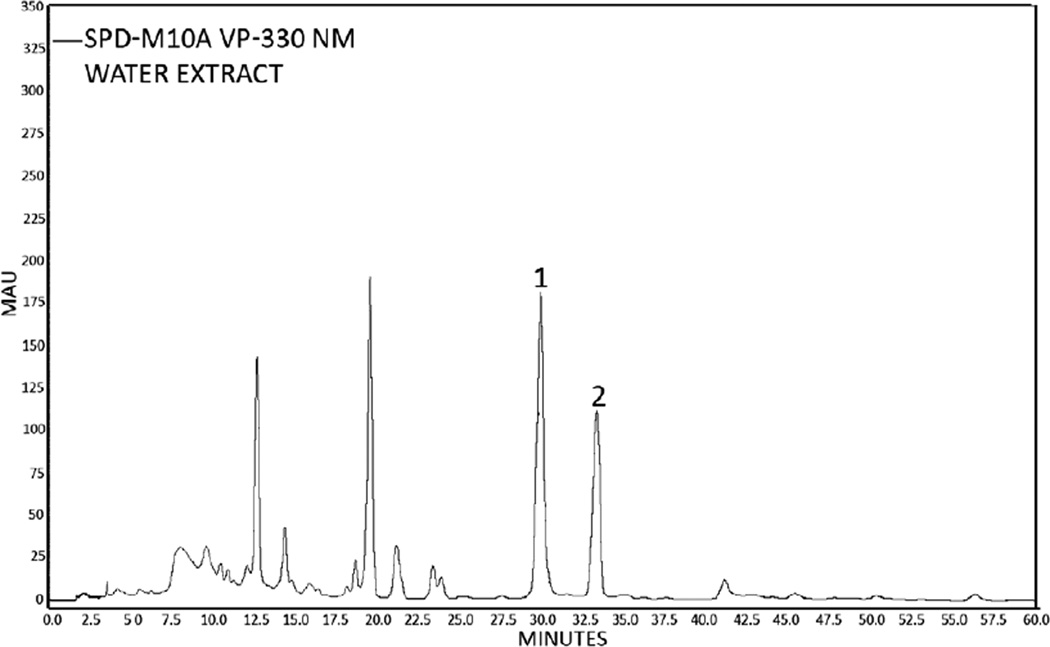
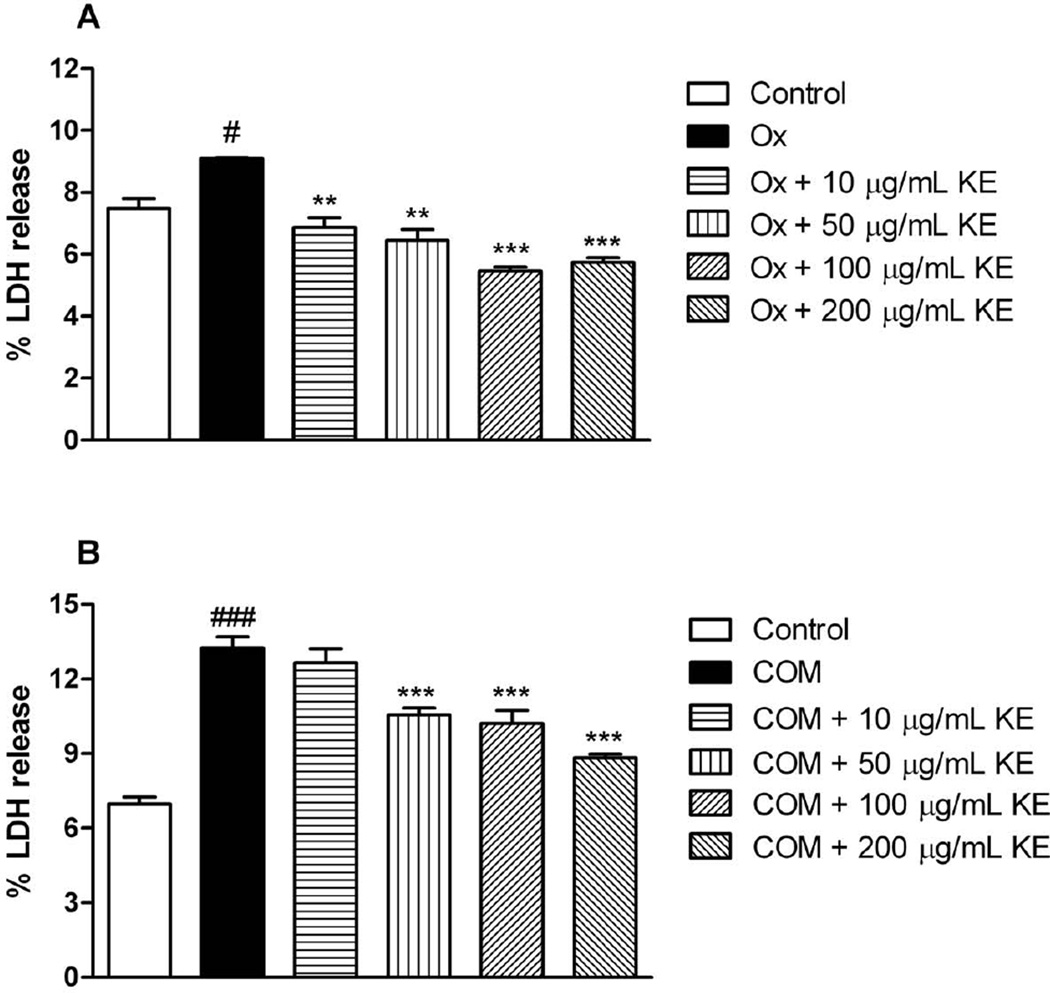
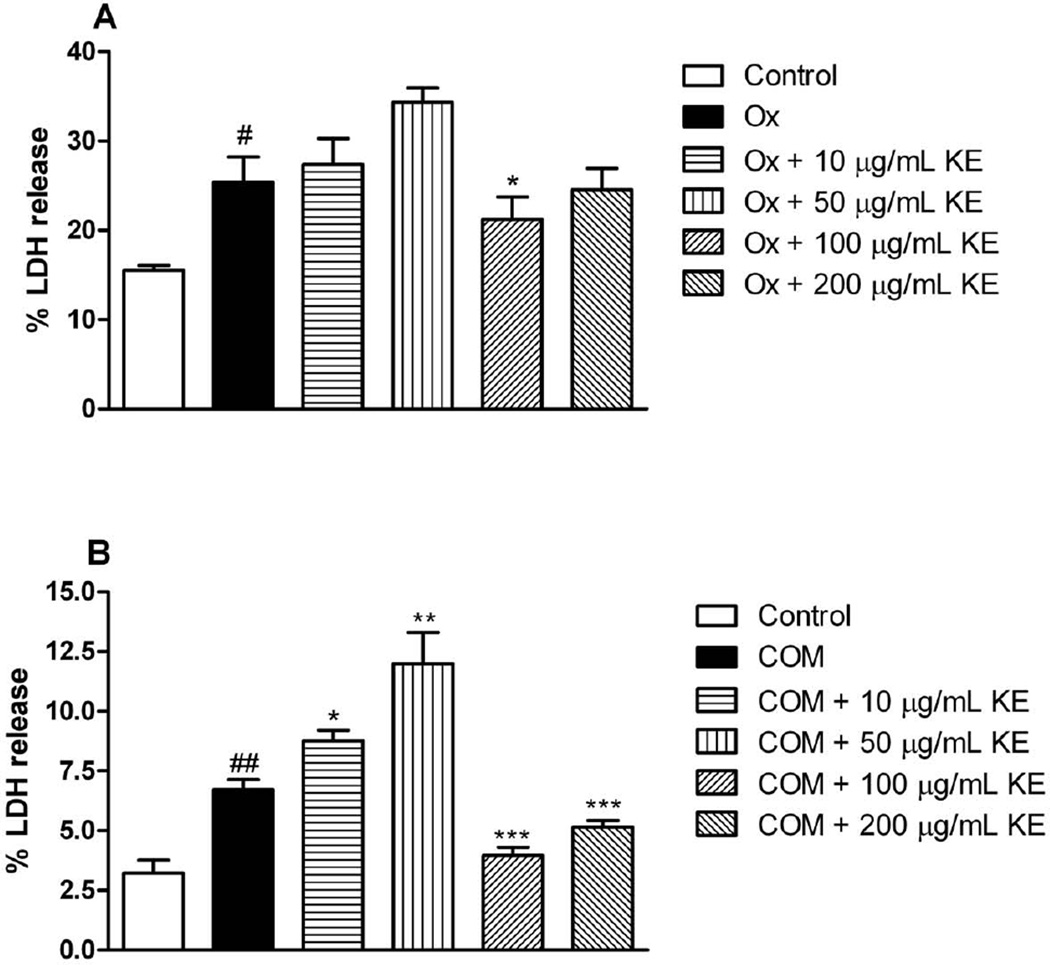
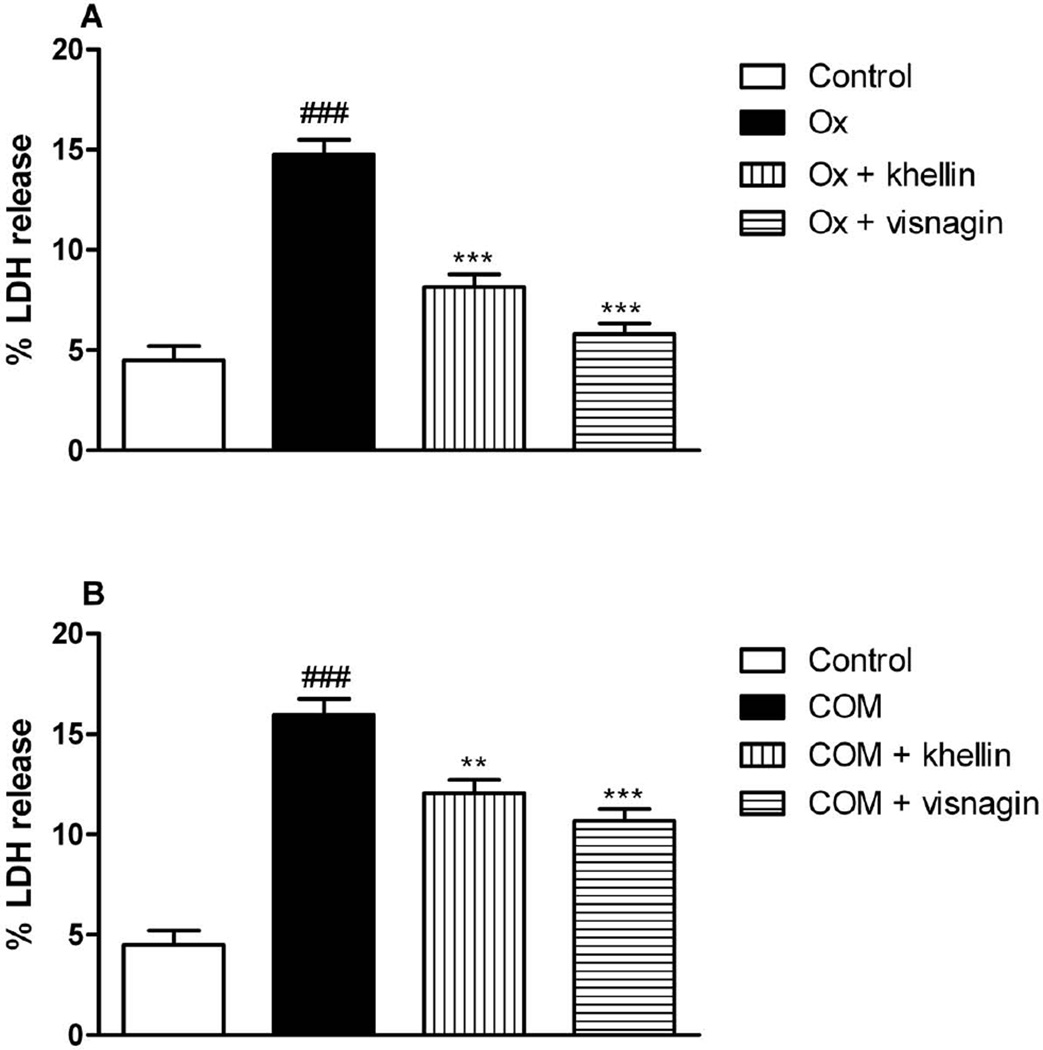
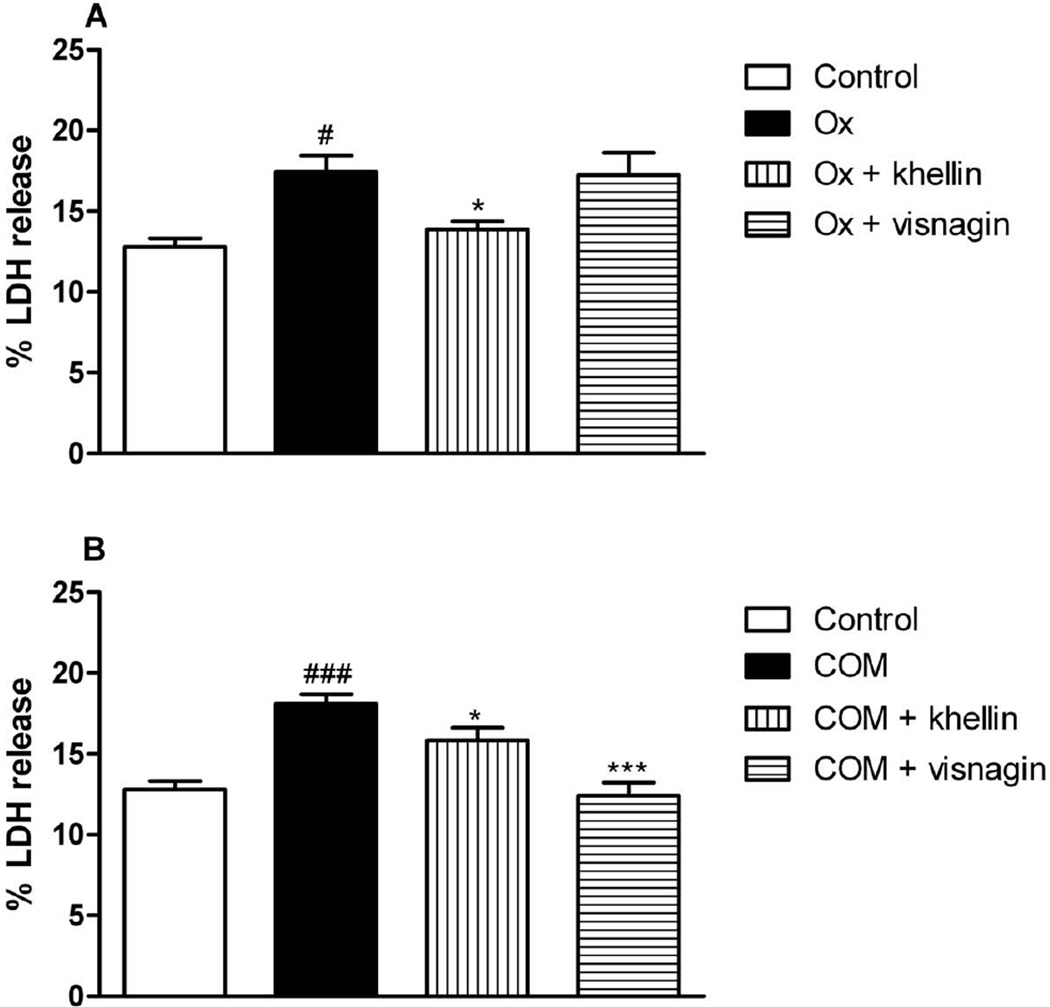
Teas prepared from the fruits of Ammi visnaga L. (syn. "Khella") have been traditionally used in Egypt as a remedy to treat kidney stones. It was the aim of our study to evaluate the effect of a Khella extract (KE) as well as the two major constituents khellin and visnagin on renal epithelial injury using LLC-PK1 and Madin-Darby-canine kidney (MDCK) cells. Both cell lines provide suitable model systems to study cellular processes that are possibly involved in the development of a renal stone. LLC-PK1 and MDCK cell lines were exposed to 300 microM oxalate (Ox) or 133 microg/cm(2) calcium oxalate monohydrate (COM) in presence or absence of 10, 50, 100 or 200 microg/mL KE. To evaluate cell damage, cell viability was assessed by determining the release of lactate dehydrogenase (LDH). KE (e.g. 100 microg/ml) significantly decreased LDH release from LLC-PK1 (Ox: 8.46+0.76%; Ox + 100 microg/ml KE: 5.41+0.94%, p<0.001) as well as MDCK cells (Ox: 30.9+6.58%; Ox+100 microg/ml KE: 17.5+2.50%, p<0.001), which indicated a prevention of cell damage. Similar effects for KE were observed in both cell lines when COM crystals were added. In LLC-PK1 cells khellin and visnagin both decreased the % LDH release significantly in cells that were pretreated with Ox or COM crystals. However, khellin and visnagin exhibited different responses in MDCK cells. Whereas khellin slightly reduced the % LDH release after exposure of the cells to Ox and COM crystals, visnagin significantly decreased % LDH release only after COM crystal exposure. Overall both compounds were more active in LLC-PK1 than in MDCK cells. In summary, exposure of renal epithelial cells to Ox or COM crystals was associated with a significant release of LDH indicating cell injury. Our data demonstrate that KE as well as khellin and visnagin could prevent renal epithelial cell damage caused by Ox and COM and could therefore play a potential role in the prevention of stone formation associated with hyperoxaluria.
(c) 2009 Elsevier GmbH. All rights reserved.
Figures
References
-
- Abeysekera BF, Abramowski Z, Towers GH. Genotoxicity of the natural furochromones, khellin and visnagin and the identification of a khellin-thymine photoadduct. Photochem Photobiol. 1983;38:311–315. - PubMed
-
- Cassuto E, Gross N, Bardwell E, Howard-Flanders P. Genetic effects of photoadducts and photocross-links in the DNA of phage lambda exposed to 360 nm light and trimethylpsoralen or khellin. Biochim Biophys Acta. 1977;475:589–600. - PubMed
-
- Dellabella M, Milanese G, Muzzonigro G. Medical-expulsive therapy for distal ureterolithiasis: randomized prospective study on role of corticosteroids used in combination with tamsulosin-simplified treatment regimen and health-related quality of life. Urology. 2005;66:712–715. - PubMed
MeSH terms
Substances
Grants and funding
LinkOut - more resources
Full Text Sources
Other Literature Sources
Miscellaneous
