


Differences in methodology, but not differences in viral strain, account for variable experimental outcomes in laboratories utilizing the cottontail rabbit papillomavirus model
- PMID: 20036285
- PMCID: PMC2845176
- DOI: 10.1016/j.jviromet.2009.12.014
Differences in methodology, but not differences in viral strain, account for variable experimental outcomes in laboratories utilizing the cottontail rabbit papillomavirus model
Abstract
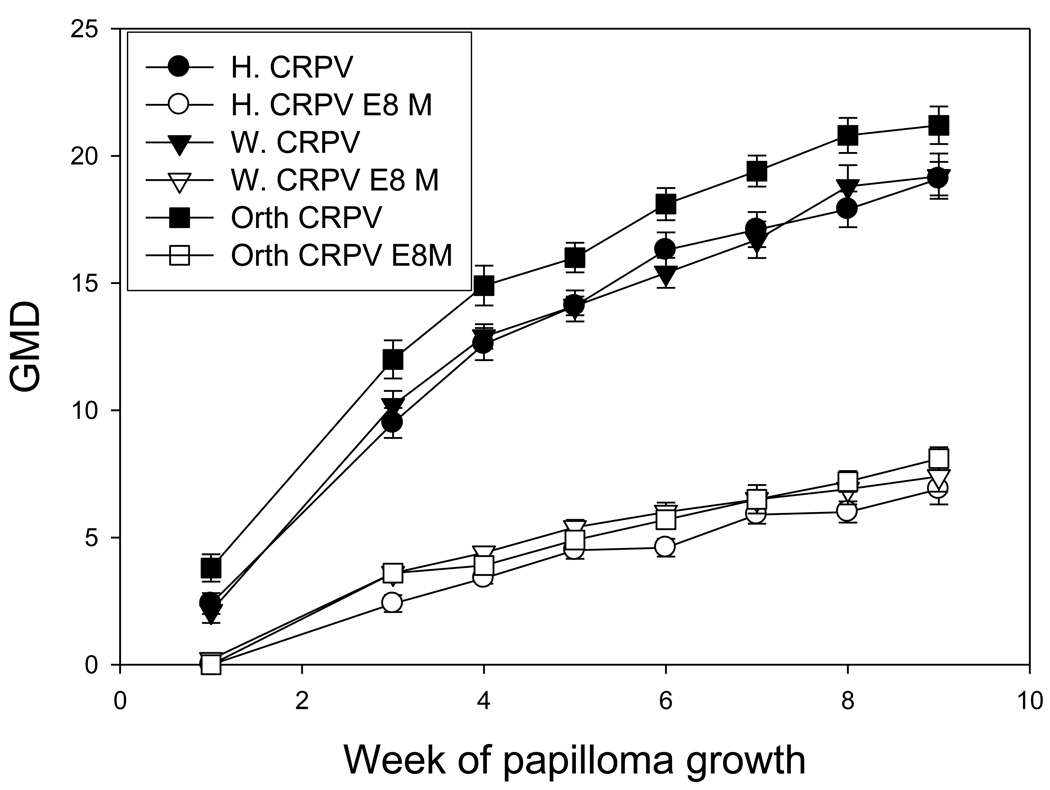
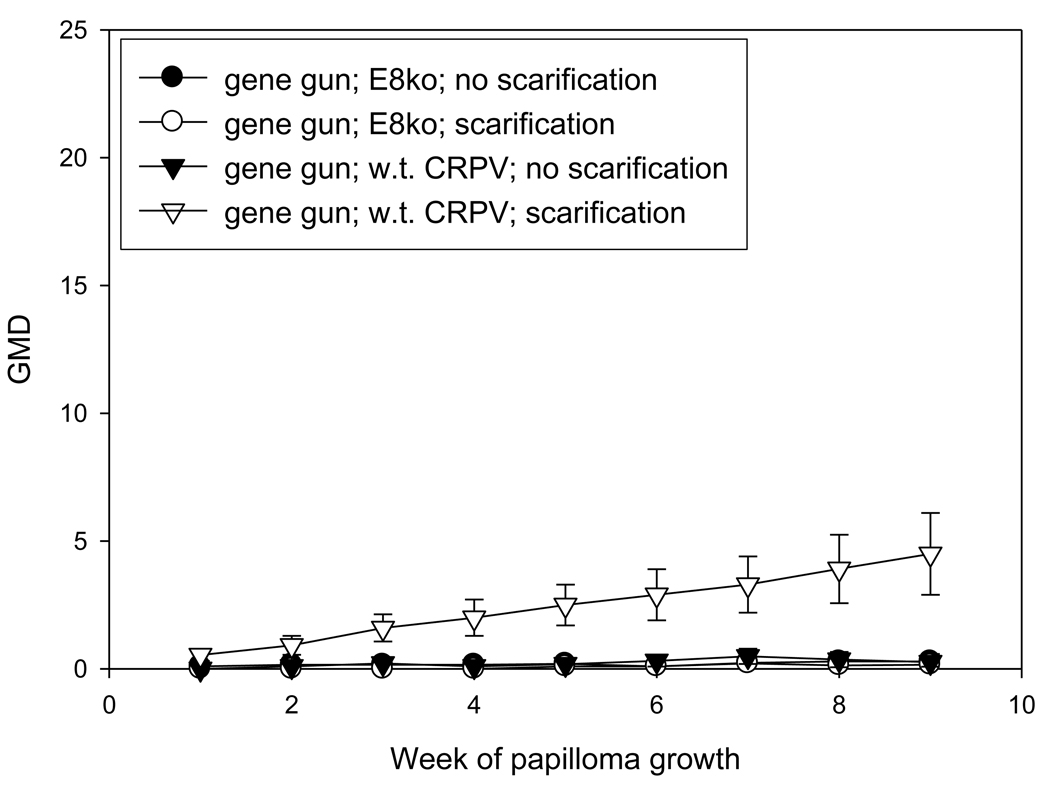
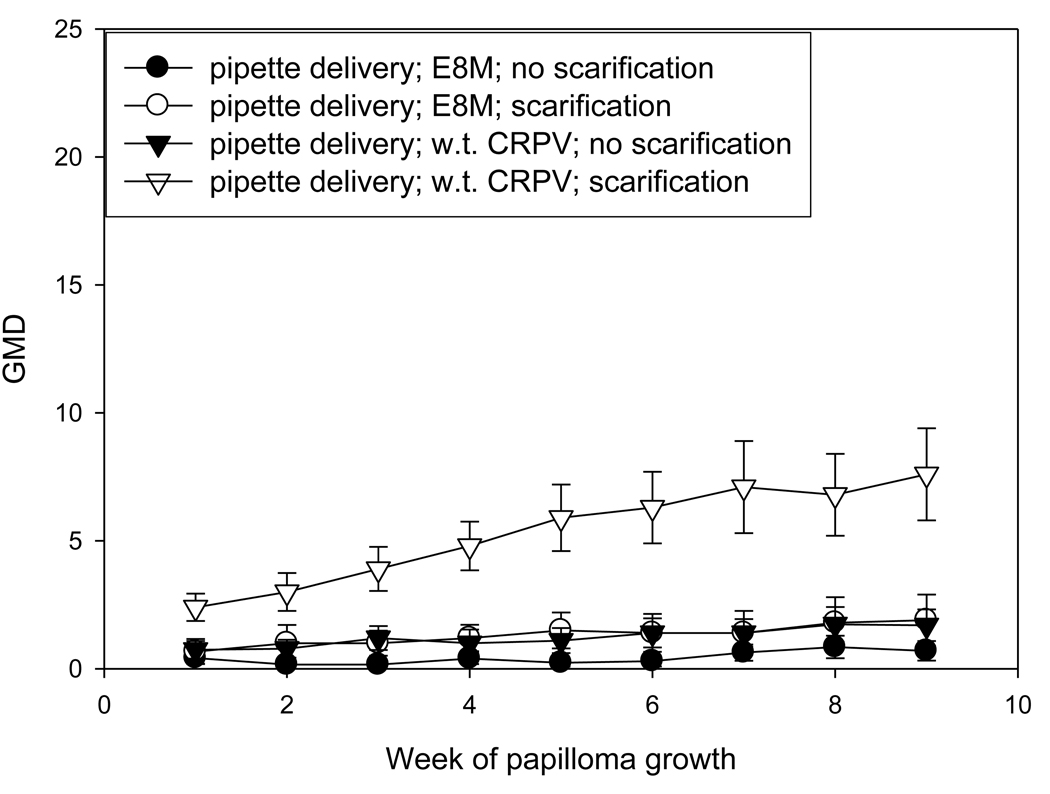
The cottontail rabbit papillomavirus (CRPV) animal model is used in several laboratories worldwide to investigate immunogenicity, carcinogenicity and life cycle aspects of papillomaviruses. It is the only animal model in which the full life cycle of the virus from initiation of infection to malignant progression can be studied. A major strength of the model is that the viral DNA is infectious. This feature allows for the study of mutant genomes without the need to create infectious mutant virus. Results from laboratory to laboratory have not always been consistent. Different laboratories use different methods for creating infections from DNA and it was postulated that the different challenge methods could play a role in the differential outcomes. Because different laboratories use different strains of CRPV, it was also desirable to test if the difference in CRPV genomes contributed to the differential outcomes. In this study, three of the CRPV strains used most widely (Washington B, Orth CRPV and Hershey CRPV) were cloned into PUC19; the E8 ATG ko mutants for each strain were also generated. We employed the infection technique reported previously in which scarification is done first and is followed with delivery of DNA by pipette 3 days later. The papilloma outgrowth generated by these three wild type constructs and their E8 ATG ko mutants was compared. No significant difference was found among the three strains or their E8 ATG ko mutants. E8 ATG ko mutants induced significantly smaller but persistent papillomas when compared to their respective wild type CRPVs. The gene gun was also used to create infections with both Hershey CRPV DNA and the corresponding E8 ATG ko and was found to lead to less vigorous growth as well as some regressions. Further studies suggested that gene gun delivery might have induced an immune response which then resulted in compromised growth of papillomas. It was concluded that the E8 gene is not required for infection. We suggest that standardized infection methods should be used in laboratories so that inconsistencies in conclusions will be minimized.
Copyright (c) 2009 Elsevier B.V. All rights reserved.
Figures
References
-
- Alvarez D, Harder G, Fattouh R, Sun JF, Goncharova S, Stampfli MR, Coyle AJ, Bramson JL, Jordana M. Cutaneous antigen priming via gene gun leads to skin-selective Th2 immune-inflammatory responses. Journal of Immunology. 2005;174:1664–1674. - PubMed
-
- Bodily JM, Hoopes DJ, Roeder BL, Gilbert SG, Pettit GR, Herald CL, Rollins DN, Robison RA. The inhibitory effects of bryostatin 1 administration on the growth of rabbit papillomas. Cancer Lett. 1999;136:67–74. - PubMed
-
- Brandsma JL. The cottontail rabbit papillomavirus model of high-risk HPV-induced disease. Methods Mol.Med. 2005;119:217–235. - PubMed
Publication types
MeSH terms
Grants and funding
LinkOut - more resources
Full Text Sources
Medical
Research Materials
