


Genome-wide screening and identification of factors affecting the biosynthesis of prodigiosin by Hahella chejuensis, using Escherichia coli as a surrogate host
- PMID: 20038694
- PMCID: PMC2832371
- DOI: 10.1128/AEM.01468-09
Genome-wide screening and identification of factors affecting the biosynthesis of prodigiosin by Hahella chejuensis, using Escherichia coli as a surrogate host
Abstract
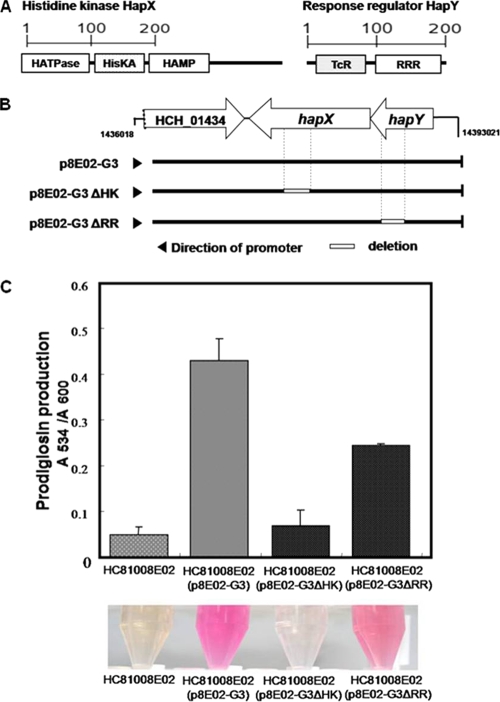
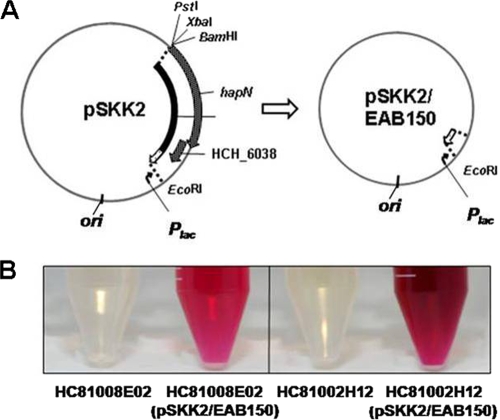
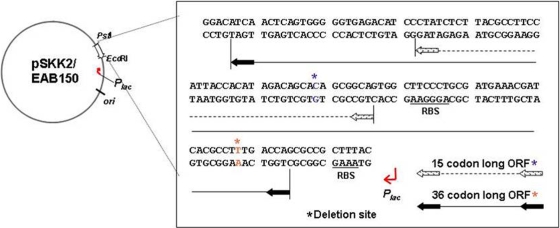
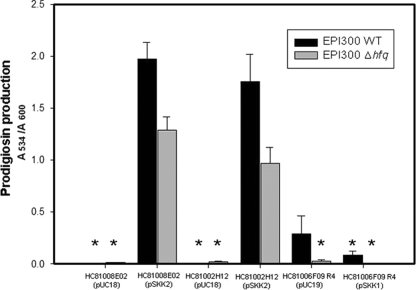
A marine bacterium, Hahella chejuensis, recently has attracted attention due to its lytic activity against a red-tide dinoflagellate. The algicidal function originates from its red pigment, prodigiosin, which also exhibits immunosuppressive or anticancer activity. Genome sequencing and functional analysis revealed a gene set contained in the hap gene cluster that is responsible for the biosynthesis of prodigiosin. To screen for the factors affecting the prodigiosin biosynthesis, we constructed a plasmid library of the H. chejuensis genomic DNA, introduced it into Escherichia coli strains harboring the hap cluster, and observed changes in production of the red pigment. Among the screened clones, hapXY genes whose products constitute a two-component signal transduction system were elucidated as positive regulators of the pigment production. In addition, an Hfq-dependent, noncoding region located at one end of the hap cluster was confirmed to play roles in regulation. Identification of factors involved in the regulation of prodigiosin biosynthesis should help in understanding how the prodigiosin-biosynthetic pathway is organized and controlled and also aid in modulating the overexpression of prodigiosin in a heterologous host, such as E. coli, or in the natural producer, H. chejuensis.
Figures

References
-
- Aravind, L., and C. P. Ponting. 1999. The cytoplasmic helical linker domain of receptor histidine kinase and methyl-accepting proteins is common to many prokaryotic signalling proteins. FEMS Microbiol. Lett. 176:111-116. - PubMed
-
- Doucette, G. J. 1995. Interactions between bacteria and harmful algae: a review. Nat. Toxins 3:65-74. - PubMed
-
- Fineran, P. C., H. Slater, L. Everson, K. Hughes, and G. P. Salmond. 2005. Biosynthesis of tripyrrole and β-lactam secondary metabolites in Serratia: integration of quorum sensing with multiple new regulatory components in the control of prodigiosin and carbapenem antibiotic production. Mol. Microbiol. 56:1495-1517. - PubMed
Publication types
MeSH terms
Substances
LinkOut - more resources
Full Text Sources
Molecular Biology Databases
