


Relative plasma volume monitoring during hemodialysis AIDS the assessment of dry weight
- PMID: 20038754
- PMCID: PMC2819307
- DOI: 10.1161/HYPERTENSIONAHA.109.143974
Relative plasma volume monitoring during hemodialysis AIDS the assessment of dry weight
Abstract
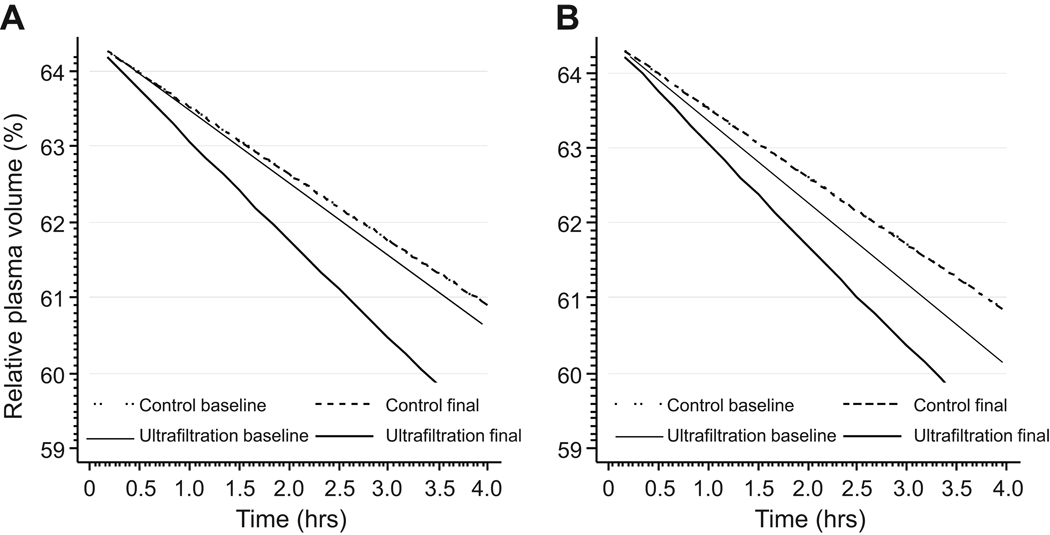
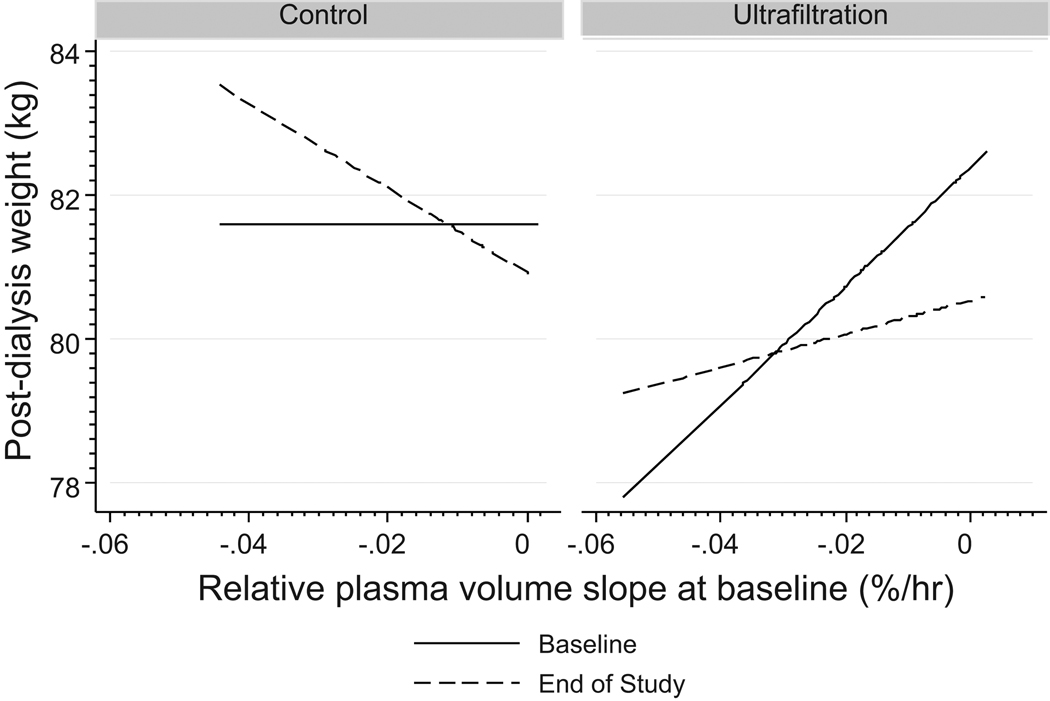
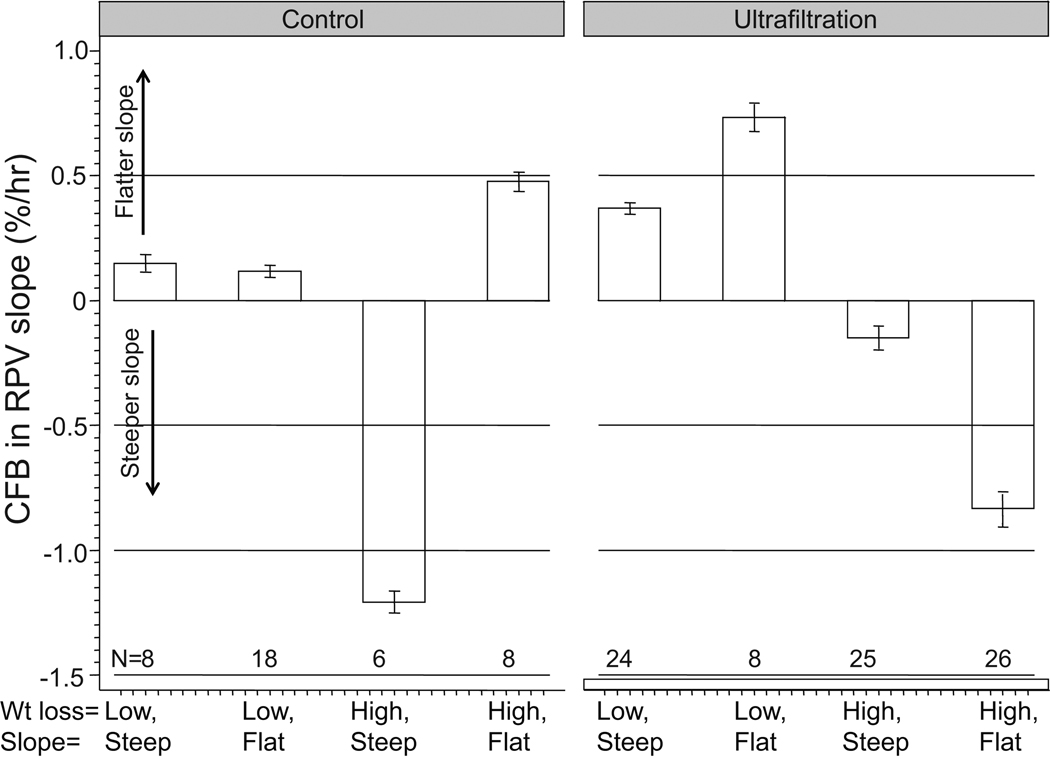
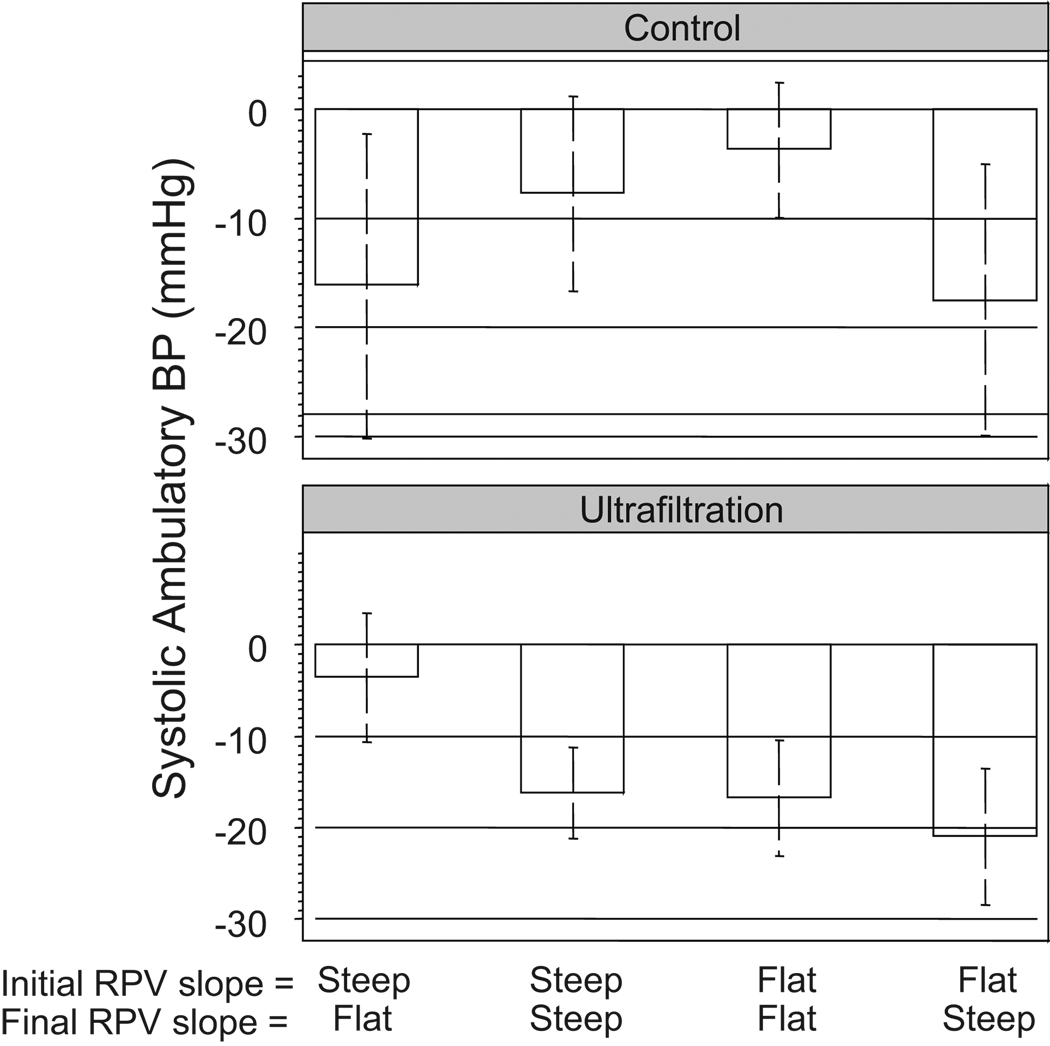
Among hemodialysis patients, the assessment of dry weight remains a matter of clinical judgment because tests to assess dry weight have not been validated. The objective of this study was to evaluate and validate relative plasma volume (RPV) monitoring as a marker of dry weight. We performed RPV monitoring using the Crit-Line monitor at baseline and at 8 weeks in 150 patients participating in the Dry-Weight Reduction in Hypertensive Hemodialysis Patients Trial. The intervention group of 100 patients had dry weight probed, whereas 50 patients served as time controls. RPV slopes were defined as flat when they were less than the median (1.33% per hour) at the baseline visit. Among predominantly (87%) black hemodialysis patients, we found that flat RPV slopes suggest a volume-overloaded state for the following reasons: (1) probing dry weight in these patients led to steeper slopes; (2) those with flatter slopes at baseline had greater weight loss; (3) both baseline RPV slopes and the intensity of weight loss were found to be important for subsequent change in RPV slopes; and, most importantly, (4) RPV slopes predicted the subsequent reduction in interdialytic ambulatory systolic blood pressure. Those with the flattest slopes had the greatest decline in blood pressure on probing dry weight. Both baseline RPV slopes and the change in RPV slopes were important for subsequent changes in ambulatory systolic blood pressure. We conclude that RPV slope monitoring is a valid method to assess dry weight among hypertensive hemodialysis patients.
Trial registration: ClinicalTrials.gov NCT00067665.
Figures
Comment in
-
Relative plasma volume monitoring and blood pressure control: an overlooked opportunity to achieve dry weight in the hemodialysis patient.Hypertension. 2010 Feb;55(2):226-7. doi: 10.1161/HYPERTENSIONAHA.109.146084. Epub 2009 Dec 28. Hypertension. 2010. PMID: 20038745 No abstract available.
References
-
- Ishibe S, Peixoto AJ. Methods of assessment of volume status and intercompartmental fluid shifts in hemodialysis patients: implications in clinical practice. Semin Dial. 2004;17:37–43. - PubMed
-
- Thomson GE, Waterhouse K, McDonald HP, Jr, Friedman EA. Hemodialysis for chronic renal failure. Clinical observations. Arch Intern Med. 1967;120:153–167. - PubMed
-
- Khosla UM, Johnson RJ. Hypertension in the hemodialysis patient and the "lag phenomenon": insights into pathophysiology and clinical management. Am J Kidney Dis. 2004;43:739–751. - PubMed
Publication types
MeSH terms
Associated data
Grants and funding
LinkOut - more resources
Full Text Sources
Other Literature Sources
Medical
