


Effects of vitamin A supplementation on intestinal barrier function, growth, total parasitic, and specific Giardia spp infections in Brazilian children: a prospective randomized, double-blind, placebo-controlled trial
- PMID: 20038852
- PMCID: PMC2830290
- DOI: 10.1097/MPG.0b013e3181a96489
Effects of vitamin A supplementation on intestinal barrier function, growth, total parasitic, and specific Giardia spp infections in Brazilian children: a prospective randomized, double-blind, placebo-controlled trial
Abstract
Background: This study evaluates the effects of retinol on intestinal barrier function, growth, total parasites, and Giardia spp infections in children in northeastern Brazil.
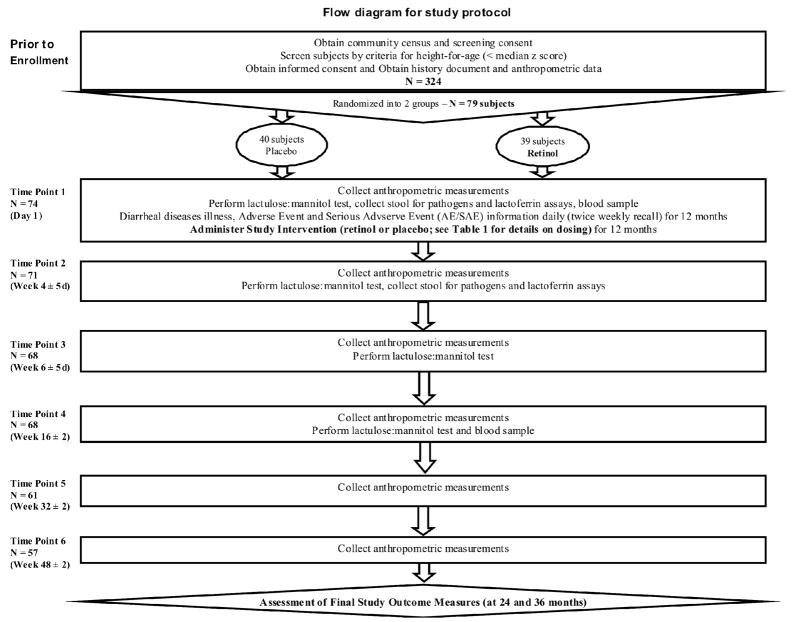
Subjects and methods: The study was a double-blind, randomized placebo-controlled trial (http://clinicaltrials.gov; register no. #NCT00133406) involving 79 children who received vitamin A 100,000-200,000 IU (n = 39) or placebo (n = 40) at enrollment, 4, and 8 months and were followed for 36 months. Intestinal barrier function was evaluated using the lactulose:mannitol ratio test. Stool lactoferrin was used as a marker for intestinal inflammation.
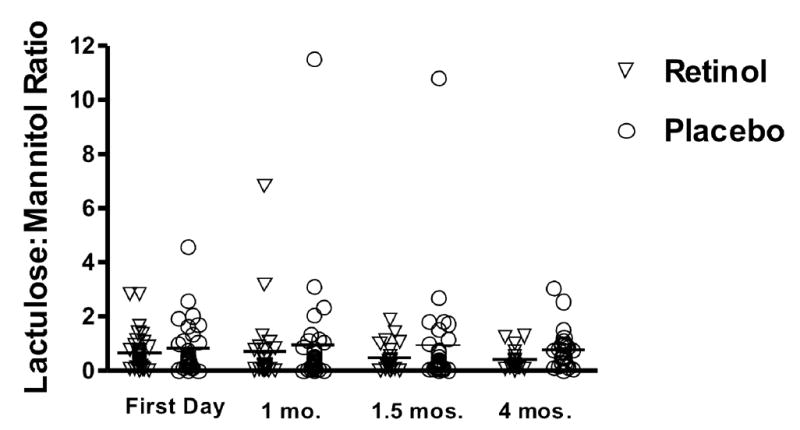
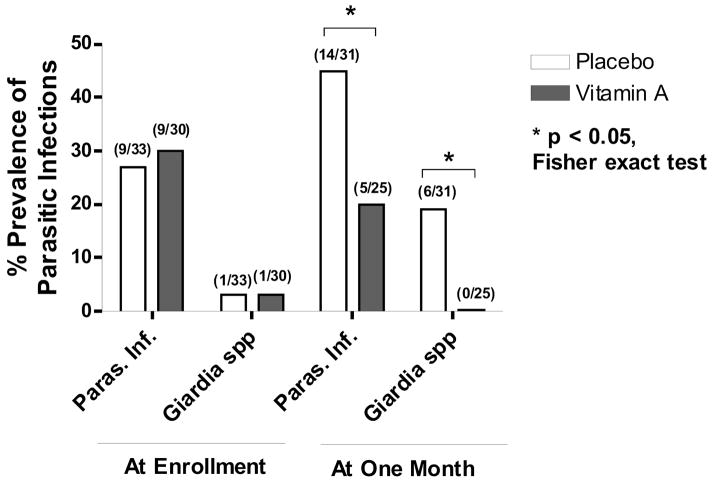
Results: The groups were similar with regard to age, sex, nutritional parameters (z scores), serum retinol concentrations, proportion of lactoferrin-positive stool samples, and intestinal barrier function. The lactulose:mannitol ratio did not change during the same time of follow-up (P > 0.05). The proportion of lactoferrin-positive samples evaluated at 1 month did not change between groups (P > 0.05). Total intestinal parasitic, specifically new, infections were significantly lower in the vitamin A treatment compared with control group; these were accounted for entirely by significantly fewer new Giardia infections in the vitamin A treatment group. The cumulative z scores for weight-for-length or height, length or height-for-age z scores, and weight-for-age did not change significantly with vitamin A intervention for 36 months of follow-up.
Conclusions: These data showed that total parasitic infection and Giardia spp infections were significantly lower in the vitamin A treatment group when compared with the placebo group, suggesting that vitamin A improves the host's defenses against Giardia infections.
Conflict of interest statement
There is no Conflict of interest.
Figures
References
-
- Fawzi WW, Chalmers TC, Herrera MG, Mosteller F. Vitamin A supplementation and child mortality. A meta-analysis. JAMA. 1993;269(7):898–3. - PubMed
-
- Grotto I, Mimouni M, Gdalevich M, Mimouni D. Vitamin A supplementation and childhood morbidity from diarrhea and respiratory infections: a meta-analysis. J Pediatr. 2003;142(3):297–4. - PubMed
-
- Long KZ, Rosado JL, DuPont HL, Hertzmark E, Santos JI. Supplementation with vitamin A reduces watery diarrhoea and respiratory infections in Mexican children. Br J Nutr. 2007;97(2):337–3. - PubMed
-
- Cantorna MT, Nashold FE, Hayes CE. Vitamin A deficiency results in a priming environment conducive for Th1 cell development. Eur J Immunol. 1995;25:1673–9. - PubMed
Publication types
MeSH terms
Substances
Associated data
Grants and funding
LinkOut - more resources
Full Text Sources
Medical
Miscellaneous
