


Comprehensive in silico prediction and analysis of chlamydial outer membrane proteins reflects evolution and life style of the Chlamydiae
- PMID: 20040079
- PMCID: PMC2811131
- DOI: 10.1186/1471-2164-10-634
Comprehensive in silico prediction and analysis of chlamydial outer membrane proteins reflects evolution and life style of the Chlamydiae
Abstract
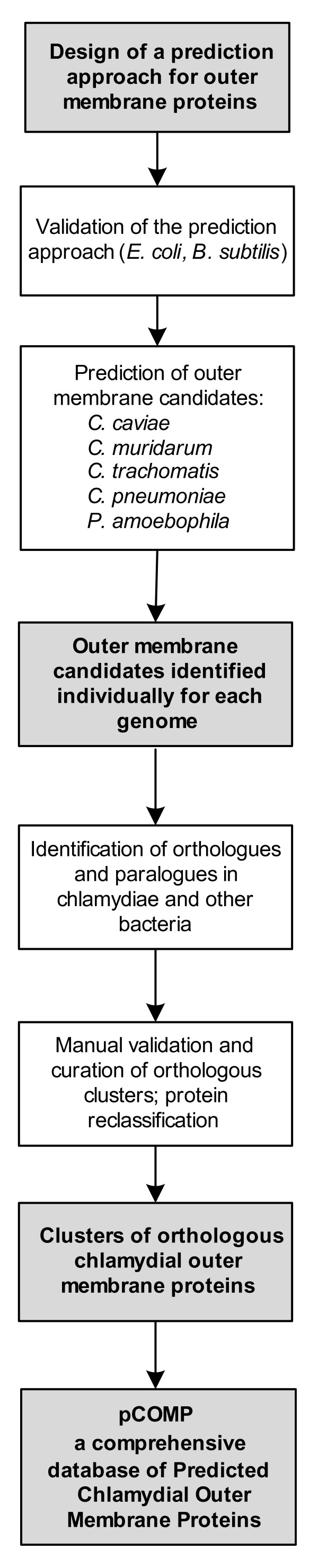
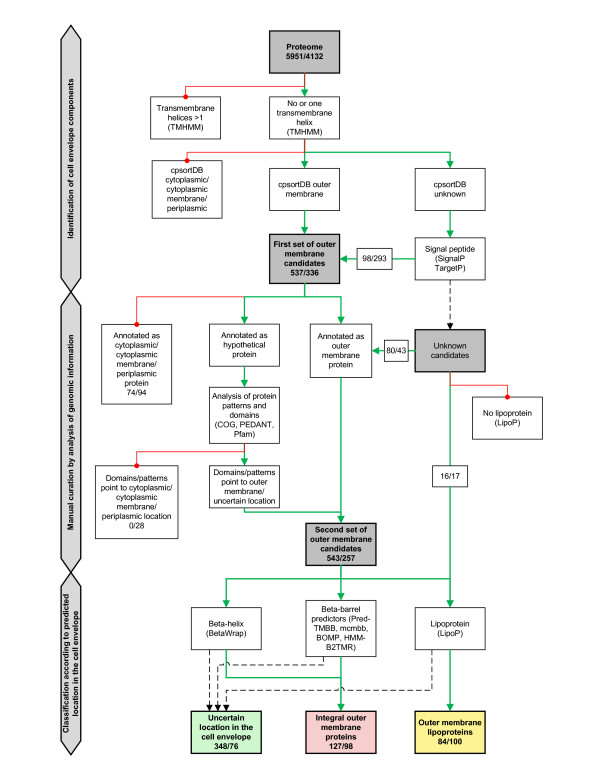
Background: Chlamydiae are obligate intracellular bacteria comprising some of the most important bacterial pathogens of animals and humans. Although chlamydial outer membrane proteins play a key role for attachment to and entry into host cells, only few have been described so far. We developed a comprehensive, multiphasic in silico approach, including the calculation of clusters of orthologues, to predict outer membrane proteins using conservative criteria. We tested this approach using Escherichia coli (positive control) and Bacillus subtilis (negative control), and applied it to five chlamydial species; Chlamydia trachomatis, Chlamydia muridarum, Chlamydia (a.k.a. Chlamydophila) pneumoniae, Chlamydia (a.k.a. Chlamydophila) caviae, and Protochlamydia amoebophila.
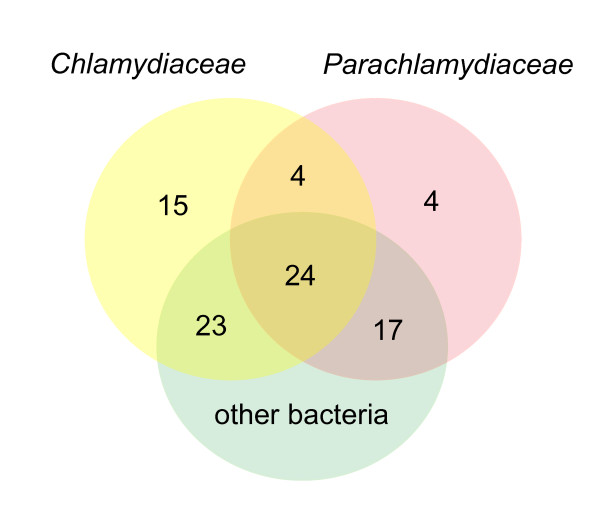
Results: In total, 312 chlamydial outer membrane proteins and lipoproteins in 88 orthologous clusters were identified, including 238 proteins not previously recognized to be located in the outer membrane. Analysis of their taxonomic distribution revealed an evolutionary conservation among Chlamydiae, Verrucomicrobia, Lentisphaerae and Planctomycetes as well as lifestyle-dependent conservation of the chlamydial outer membrane protein composition.
Conclusion: This analysis suggested a correlation between the outer membrane protein composition and the host range of chlamydiae and revealed a common set of outer membrane proteins shared by these intracellular bacteria. The collection of predicted chlamydial outer membrane proteins is available at the online database pCOMP http://www.microbial-ecology.net/pcomp and might provide future guidance in the quest for anti-chlamydial vaccines.
Figures
References
-
- WHO. Priority eye diseases. 2008. http://www.who.int/blindness/causes/priority/en/index2.html
-
- WHO. Global prevalence and incidence of curable STIs. Geneva: World Health Organization; 2001.
-
- Mahony JB, Coombes BK, Chernesky MA. In: Manual of clinical microbiology. 8. Murray PR, Baron EJ, Pfaller MA, Tenover FC, Yolken RH, editor. Vol. 1. Washington, DC: ASM Press; 2003. Chlamydia and Chlamydophila; pp. 991–1004.
-
- Kuo C-C, Horn M, Stephens RS. In: Bergey's Manual of Systematic Bacteriology - The Planctomycetes, Spriochaetes, Fibrobacteres, Bacteriodetes and Fusobacteria. 2. Hedlund B, Krieg NR, Ludwig W, Paster BJ, Staley JT, Ward N, Whitman WB, editor. New York: Springer; 2008. The order Chlamydiales. in press .
Publication types
MeSH terms
Substances
LinkOut - more resources
Full Text Sources
Other Literature Sources
