


Trichosanthes cucumerina Linn. improves glucose tolerance and tissue glycogen in non insulin dependent diabetes mellitus induced rats
- PMID: 20040935
- PMCID: PMC2792599
- DOI: 10.4103/0253-7613.42301
Trichosanthes cucumerina Linn. improves glucose tolerance and tissue glycogen in non insulin dependent diabetes mellitus induced rats
Abstract
Objective: To study the effect of Trichosanthes cucumerina Linn. on non insulin dependent diabetes mellitus induced rats.
Materials and methods: Non Insulin Dependent Diabetes Mellitus (NIDDM) was induced by administering streptozotocin (90 mg/kg, i.p.) in neonatal rat model. NIDDM animals were treated with aqueous extract of Trichosanthes cucumerina (100 mg/kg/day) orally for six weeks. Parameters such as fasting blood glucose, Oral Glucose Tolerance Test (OGTT) and tissue glycogen content were evaluated.
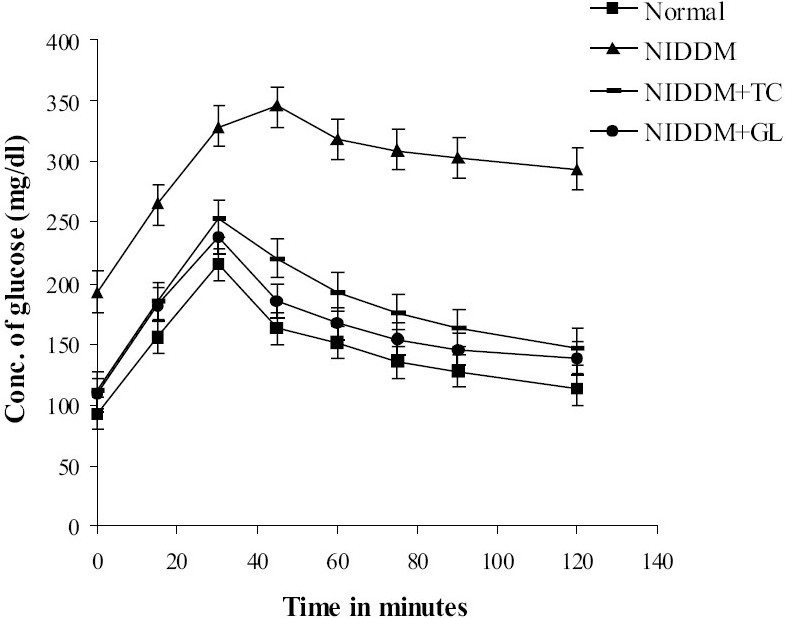
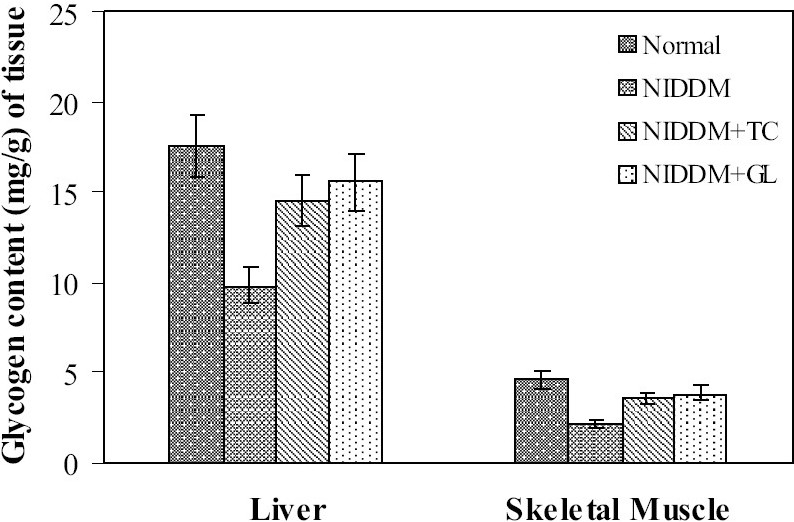
Results: Aqueous extract of Trichosanthes cucumerina significantly (P<0.01) decreased the elevated blood glucose of NIDDM induced rats. OGTT of NIDDM animals showed glucose intolerance. Blood glucose of diabetic animals reached peak at 45 min and remains high even after 2h. In case of Trichosanthes cucumerina treated group, the blood glucose reached peak level at 30 min, followed by decrease in glucose level up to 2h. The drug has significantly (P<0.01) reduced the postprandial blood glucose of diabetic animals. Glycogen content of insulin dependent tissues such as liver and skeletal muscle was found to be improved by 62% and 58.8% respectively with Trichosanthes cucumerina as compared to NIDDM control.
Conclusion: Studies revealed that, Trichosanthes cucumerina possess antidiabetic activity. The drug improved the oral glucose tolerance of NIDDM subjects. Increase in tissue glycogen content indicates the effect of the drug on the uptake of glucose by the peripheral tissues to reduce insulin resistance of NIDDM.
Keywords: Glycogen; Non Insulin Dependent Diabetes Mellitus; Trichosanthes cucumerina; oral glucose tolerance test.
Figures
References
-
- Berger JP, Akiyama TE, Meinke PT. PPARs: Therapeutic targets for metabolic disease. Trends Pharmacol Sci. 2005;26:244–51. - PubMed
-
- Baron AD. Postprandial hyperglycemia and α-glucosidase inhibitors. Diabetes Res Clin Pract. 1998;40:S51–5. - PubMed
-
- Grover JK, Vats V, Yadav SP. Effect of feeding aqueous extract of Pterocarpus marsupium on glycogen content of tissue and the key enzymes of carbohydrate metabolism. Mol Cell Biochem. 2002;241:53–9. - PubMed
-
- Kar A, Choudhary BK, Bandyopadhyay NG. Comparative evaluation of hypoglycemic activity of some medicinal plants in alloxon diabetic rats. J Ethnopharmacol. 2003;84:105–8. - PubMed
-
- Pant MC, Govind S. Preliminary observations on serum biochemical parameters of albino rabbits fed on seed of Trichosanthes dioica (Roxb) Indian J Med Res. 1998;87:398–400. - PubMed
LinkOut - more resources
Full Text Sources
