


Association between Infant Feeding and Early Postpartum Infant Body Composition: A Pilot Prospective Study
- PMID: 20041019
- PMCID: PMC2778447
- DOI: 10.1155/2009/648091
Association between Infant Feeding and Early Postpartum Infant Body Composition: A Pilot Prospective Study
Abstract
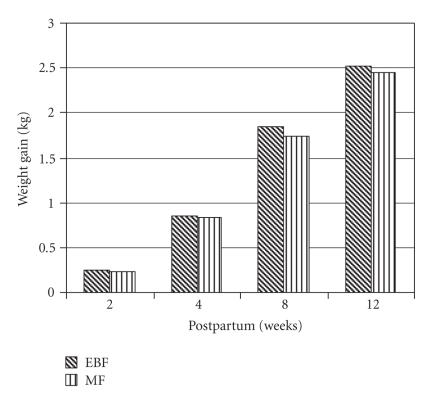
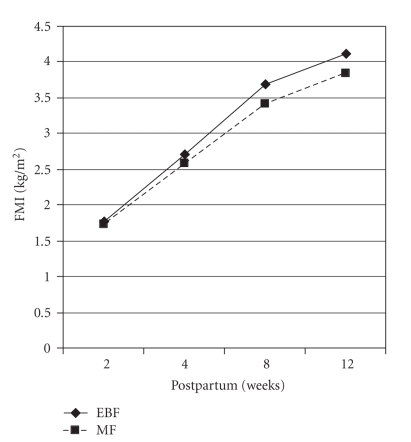
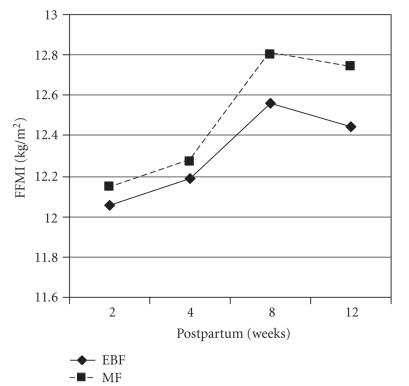
Research studies have produced conflicting results of the impact of breastfeeding on overweight/obesity. This study evaluated the impact of infant feeding on infant body composition. There were two groups of mother-infant pairs (exclusive breastfeeding [EBF; n = 27] and mixed feeding [MF; n = 13]) in this study. At baseline, participants were similar in their demographic characteristics except prepregnancy weight, where MF mothers tended to be heavier than their EBF counterparts (67.3 kg versus 59.9 kg; P = .034). Infant birth weight was slightly higher among the MF group than their EBF counterparts (3.5 kg versus 3.4 kg), although the differences were not statistically significant. At 3 months postpartum, mean infant FMI (4.1 kg/m(2) versus 3.8 kg/m(2)) and percent body fat (24.4% versus 23.1%) were slightly higher among EBF infants than MF infants. In terms of growth velocity, EBF infants gained weight faster than their MF counterparts, although the differences were not statistically significant. The findings from this study suggest that EBF may promote faster weight gain and increase in both fat mass index (FMI) and percent body fat in the early postpartum period in addition to the numerous health benefits enjoyed by the infant and the mother who exclusively breastfeeds her newborn.
Figures
References
-
- Arenz S, Rückerl R, Koletzko B, von Kries R. Breast-feeding and childhood obesity—a systematic review. International Journal of Obesity. 2004;28(10):1247–1256. - PubMed
-
- Harder T, Bergmann R, Kallischnigg G, Plagemann A. Duration of breastfeeding and risk of overweight: a meta-analysis. American Journal of Epidemiology. 2005;162(5):397–403. - PubMed
-
- Owen CG, Martin RM, Whincup PH, Smith GD, Cook DG. Effect of infant feeding on the risk of obesity across the life course: a quantitative review of published evidence. Pediatrics. 2005;115(5):1367–1377. - PubMed
LinkOut - more resources
Full Text Sources
