


NREM arousal parasomnias and their distinction from nocturnal frontal lobe epilepsy: a video EEG analysis
- PMID: 20041600
- PMCID: PMC2786048
- DOI: 10.1093/sleep/32.12.1637
NREM arousal parasomnias and their distinction from nocturnal frontal lobe epilepsy: a video EEG analysis
Abstract
Study objectives: To describe the semiological features of NREM arousal parasomnias in detail and identify features that can be used to reliably distinguish parasomnias from nocturnal frontal lobe epilepsy (NFLE).
Design: Systematic semiologial evaluation of parasomnias and NFLE seizures recorded on video-EEG monitoring.
Patients: 120 events (57 parasomnias, 63 NFLE seizures) from 44 subjects (14 males). Interventions. The presence or absence of 68 elemental clinical features was determined in parasomnias and NFLE seizures. Qualitative analysis of behavior patterns and ictal EEG was undertaken. Statistical analysis was undertaken using established techniques.
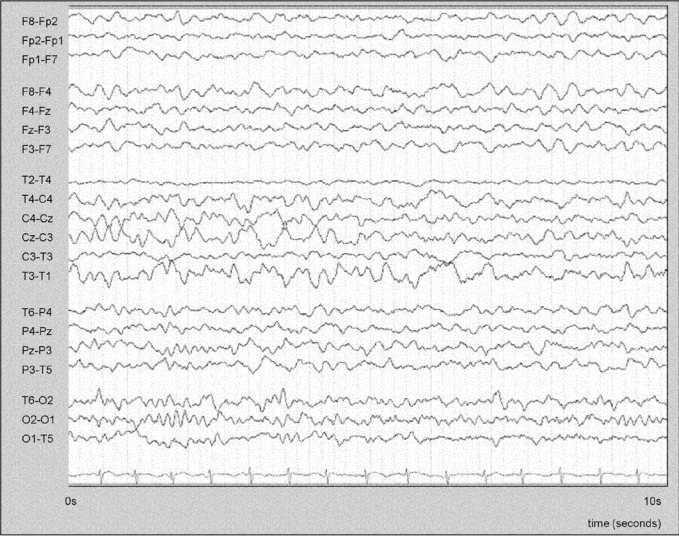
Results: Elemental clinical features strongly favoring parasomnias included: interactive behavior, failure to wake after event, and indistinct offset (all P < 0.001). Cluster analysis confirmed differences in both the frequency and combination of elemental features in parasomnias and NFLE. A diagnostic decision tree generated from these data correctly classified 94% of events. While sleep stage at onset was discriminatory (82% of seizures occurred during stage 1 or 2 sleep, with 100% of parasomnias occurring from stage 3 or 4 sleep), ictal EEG features were less useful. Video analysis of parasomnias identified three principal behavioral patterns: arousal behavior (92% of events); non-agitated motor behavior (72%); distressed emotional behavior (51%).
Conclusions: Our results broadly support the concept of confusion arousals, somnambulism and night terrors as prototypical behavior patterns of NREM parasomnias, but as a hierarchical continuum rather than distinct entities. Our observations provide an evidence base to assist in the clinical diagnosis of NREM parasomnias, and their distinction from NFLE seizures, on semiological grounds.
Figures



Comment in
-
Can homemade video recording become more than a screening tool?Sleep. 2009 Dec;32(12):1544-5. doi: 10.1093/sleep/32.12.1544. Sleep. 2009. PMID: 20041587 Free PMC article. No abstract available.
References
-
- American Academy of Sleep Medicine. International classification of sleep disorders: diagnostic and coding manual. 2nd ed. Westchester, IL: American Academy of Sleep Medicine; 2005.
-
- Mahowald MW. Arousal and sleep-wake transition parasomnias. In: Lee-Chiong TJ, Sateia MJ, Carskadon MA, editors. Sleep medicine. Philadelphia: Hanley and Belfus; 2002. pp. 207–13.
-
- Montagna P. Nocturnal paroxysmal dystonia and nocturnal wandering. Neurology. 1992;42:61–7. - PubMed
-
- Provini F, Plazzi G, Montagna P, Lugaresi E. The wide clinical spectrum of nocturnal frontal lobe epilepsy. Sleep Med Rev. 2000;4:375–86. - PubMed
-
- Provini F, Plazzi G, Tinuper P, et al. Nocturnal frontal lobe epilepsy. A clinical and polygraphic overview of 100 consecutive cases. Brain. 1999;122(Pt 6):1017–31. - PubMed
