Phosphatase inhibitors with anti-angiogenic effect in vitro
- PMID: 20041871
- PMCID: PMC2806050
- DOI: 10.1111/j.1600-0463.2009.02561.x
Phosphatase inhibitors with anti-angiogenic effect in vitro
Abstract
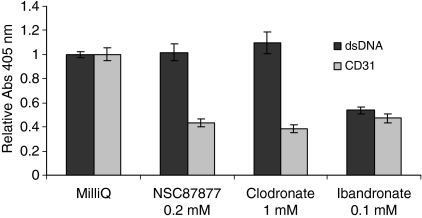
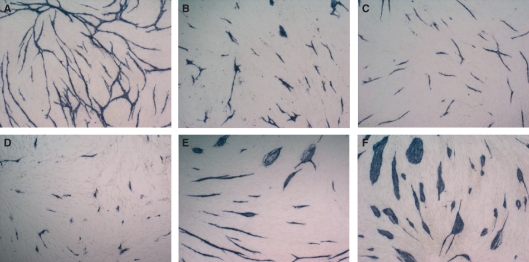
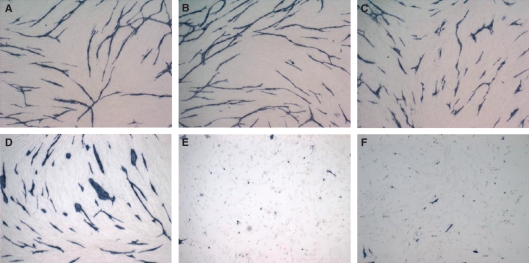
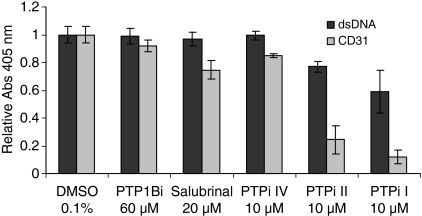
Levamisole has previously been identified as an inhibitor of angiogenesis in vitro and in vivo, but the mechanism behind the anti-angiogenic behavior has not yet been established. However, one known effect of levamisole is the inhibition of alkaline phosphatase, and this fact encouraged us to test other phosphatase inhibitors for their anti-angiogenic effects by using the same method as used to identify levamisole: an ELISA-based co-culture angiogenesis assay giving quantitative and qualitative results. Historically, intracellular phosphatases have been associated with the downregulation of signaling pathways, and kinases with their upregulation, but lately, the phospatases have also been coupled to positive signaling, which is why inhibition of phosphatases has become associated with anti-tumorigenic and anti-angiogenic effects. The results obtained in this work reveal several agents with anti-angiogenic potential and give a strong indication that phosphatase inhibition is linked to anti-angiogenic activity. An apparent disruption of endothelial tube formation was seen for seven of eight phosphatase inhibitors tested in the angiogenesis assay. By looking at the morphological results, it was seen that most of the inhibitors impaired proliferation and elongation of the endothelial cells, which still had a differentiated appearance. One inhibitor, PTP inhibitor IV, seemed to impair endothelial cell differentiation and induced the same morphology as when cells were treated with levamisole, although at a 200 times lower concentration than that of levamisole. Hence, our work points out compounds with a potential that may be of use in the search for new medical products for the treatment of malignant tumors, or other conditions where angiogenesis plays a central role.
Figures
References
-
- Folkman J. What is the evidence that tumors are angiogenesis dependent? J Natl Cancer Inst. 1990;82:4–6. - PubMed
-
- Hanahan D, Folkman J. Patterns and emerging mechanisms of the angiogenic switch during tumorigenesis. Cell. 1996;86:353–64. - PubMed
-
- Carmeliet P, Jain RK. Angiogenesis in cancer and other diseases. Nature. 2000;407:249–57. - PubMed
-
- Klagsbrun M, Moses MA. Molecular angiogenesis. Chem Biol. 1999;6:R217–24. - PubMed
-
- Papetti M, Herman IM. Mechanisms of normal and tumor-derived angiogenesis. Am J Physiol Cell Physiol. 2002;282:C947–70. - PubMed
MeSH terms
Substances
LinkOut - more resources
Full Text Sources