


Chronic morphine administration delays wound healing by inhibiting immune cell recruitment to the wound site
- PMID: 20042674
- PMCID: PMC2808085
- DOI: 10.2353/ajpath.2010.090457
Chronic morphine administration delays wound healing by inhibiting immune cell recruitment to the wound site
Abstract
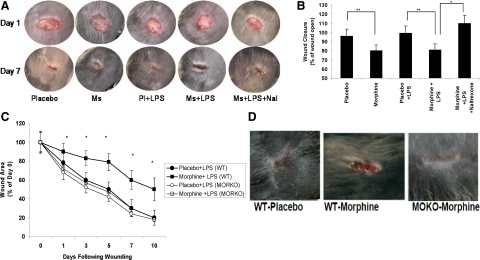
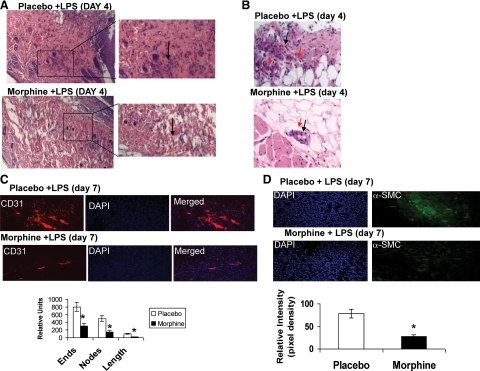
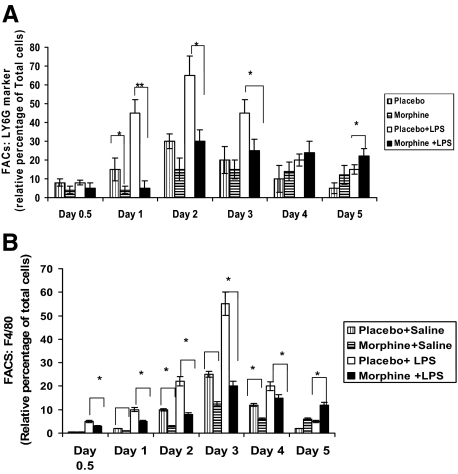
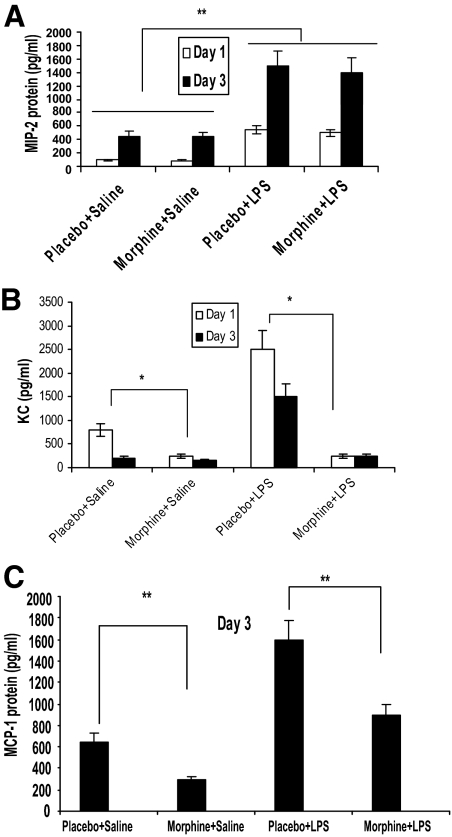
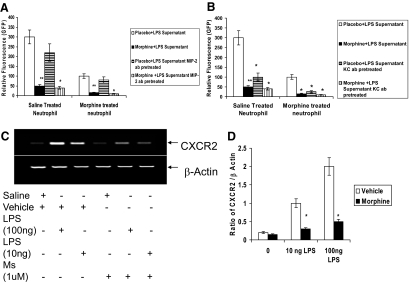
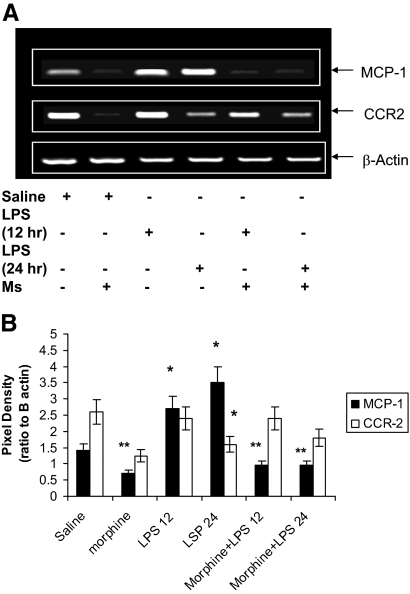
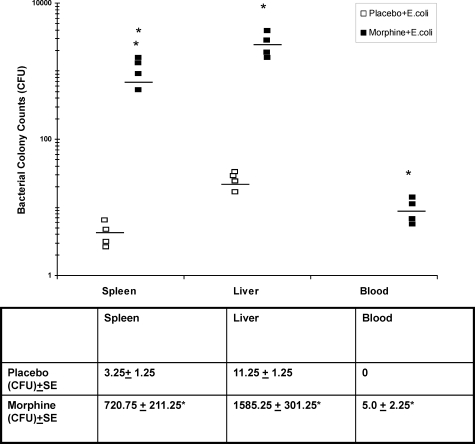
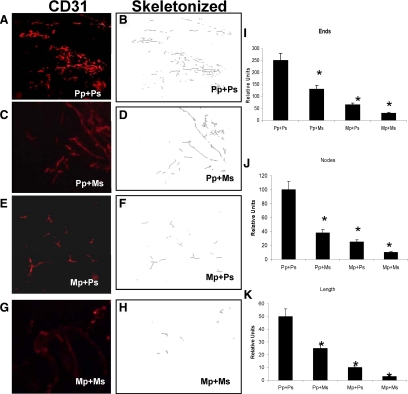
Patients prescribed morphine for the management of chronic pain, and chronic heroin abusers, often present with complications such as increased susceptibility to opportunistic infections and inadequate healing of wounds. We investigated the effect of morphine on wound-healing events in the presence of an infection in an in vivo murine model that mimics the clinical manifestations seen in opioid user and abuser populations. We show for the first time that in the presence of an inflammatory inducer, lipopolysaccharide, chronic morphine treatment results in a marked decrease in wound closure, compromised wound integrity, and increased bacterial sepsis. Morphine treatment resulted in a significant delay and reduction in both neutrophil and macrophage recruitment to the wound site. The delay and reduction in neutrophil reduction was attributed to altered early expression of keratinocyte derived cytokine and was independent of macrophage inflammatory protein 2 expression, whereas suppression of macrophage infiltration was attributed to suppressed levels of the potent macrophage chemoattractant monocyte chemotactic protein-1. When the effects of chronic morphine on later wound healing events were investigated, a significant suppression in angiogenesis and myofibroblast recruitment were observed in animals that received chronic morphine administration. Taken together, our findings indicate that morphine treatment results in a delay in the recruitment of cellular events following wounding, resulting in a lack of bacterial clearance and delayed wound closure.
Figures
References
-
- Abbadie C, Pan YX, Pasternak GW. Immunohistochemical study of the expression of exon11-containing mu opioid receptor variants in mouse brain. Neuroscience. 2004;127:419–430. - PubMed
-
- Peckys D, Landwehrmeyer GB. Expression of mu, kappa, and delta opioid receptor messenger RNA in the human CNS: a 33P in situ hybridization study. Neuroscience. 1999;88(4):1093–135. - PubMed
-
- Zastawny RL, George SR, Nguyen T, Cheng R, Tsatsos J, Briones-Urbina R, O'Dowd BF. Cloning, characterization, and distribution of a mu-opioid receptor in rat brain. J Neurochem. 1994;62:2099–2105. - PubMed
-
- Börner C, Stumm R, Höllt V, Kraus J. Comparative analysis of mu-opioid receptor expression in immune and neuronal cells. J Neuroimmunol. 2007;188:56–63. - PubMed
-
- Chuang TK, Killam KF, Jr, Chuang LF, Kung HF, Sheng WS, Chao CC, Yu L, Chuang RY. Mu opioid receptor gene expression in immune cells. Biochem Biophys Res Commun. 1995;216:922–930. - PubMed
Publication types
MeSH terms
Substances
Grants and funding
LinkOut - more resources
Full Text Sources
Medical
Molecular Biology Databases
Research Materials
