


Vitamin D receptor ligands, adenomatous polyposis coli, and the vitamin D receptor FokI polymorphism collectively modulate beta-catenin activity in colon cancer cells
- PMID: 20043299
- PMCID: PMC3074190
- DOI: 10.1002/mc.20603
Vitamin D receptor ligands, adenomatous polyposis coli, and the vitamin D receptor FokI polymorphism collectively modulate beta-catenin activity in colon cancer cells
Abstract
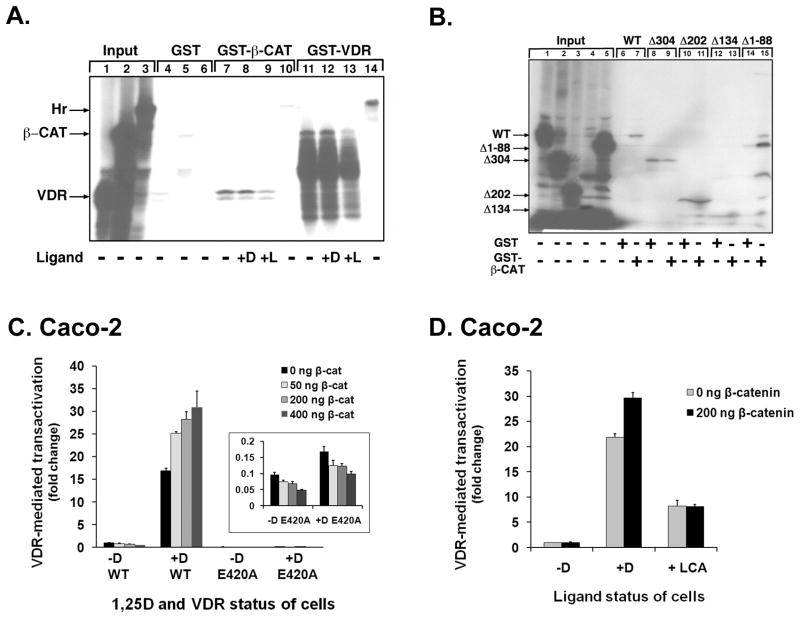
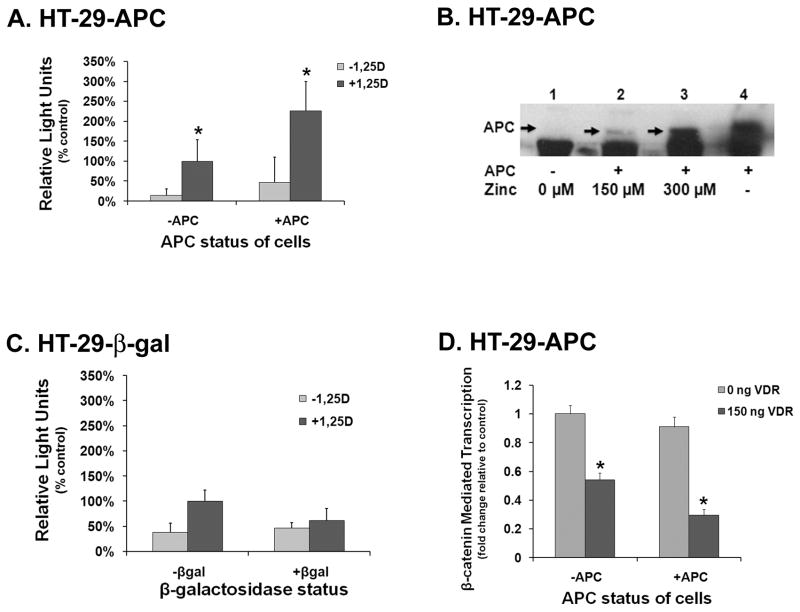
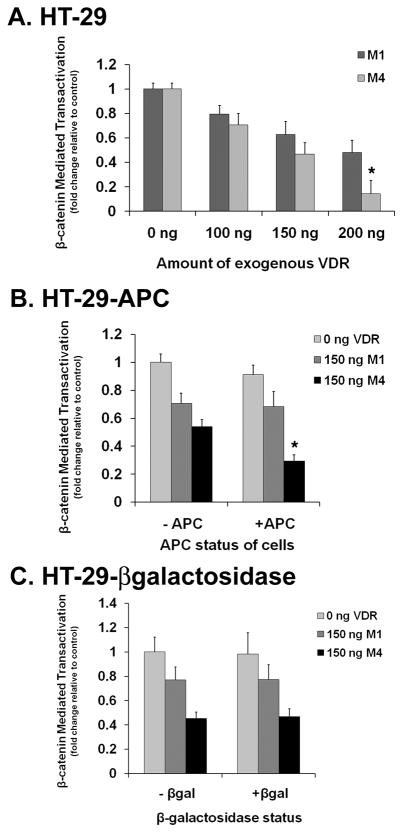
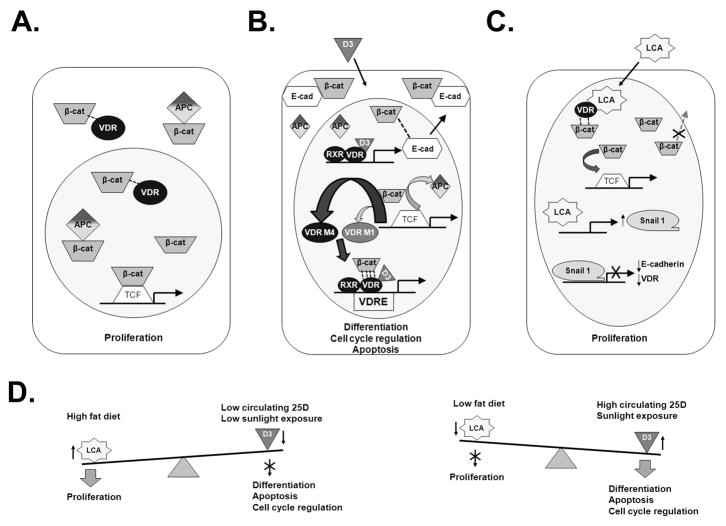
The activity of beta-catenin, commonly dysregulated in human colon cancers, is inhibited by the vitamin D receptor (VDR), and this mechanism is postulated to explain the putative anti-cancer activity of vitamin D metabolites in the colon. We investigated the effect of a common FokI restriction site polymorphism (F/f) in the human VDR gene as well as the effect of anti-tumorigenic 1,25-dihydroxyvitamin D(3) (1,25D) and pro-tumorigenic lithocholic acid (LCA) VDR ligands on beta-catenin transcriptional activity. Furthermore, the influence of a major regulatory protein of beta-catenin, the APC tumor suppressor gene, on VDR-dependent inhibition of beta-catenin activity was examined. We report herein that beta-catenin-mediated transcription is most effectively suppressed by the VDR FokI variant F/M4 when 1,25D is limiting. Using Caco-2 colorectal cancer (CRC) cells, it was observed that VDR ligands, 1,25D and LCA, both suppress beta-catenin transcriptional activity, though 1,25D exhibited significantly greater inhibition. Moreover, 1,25D, but not LCA, suppressed endogenous expression of the beta-catenin target gene DKK-4 independent of VDR DNA-binding activity. These results support beta-catenin sequestration away from endogenous gene targets by 1,25D-VDR. This activity is most efficiently mediated by the FokI gene variant F/M4, a VDR allele previously associated with protection against CRC. Interestingly, we found the inhibition of beta-catenin activity by 1,25D-VDR was significantly enhanced by wild-type APC. These results reveal a previously unrecognized role for 1,25D-VDR in APC/beta-catenin cross talk. Collectively, these findings strengthen evidence favoring a direct effect on the Wnt-signaling molecule beta-catenin as one anti-cancer target of 1,25D-VDR action in the colorectum.
Figures

References
-
- Wood RJ, Fleet JC. The genetics of osteoporosis: vitamin D receptor polymorphisms. Annu Rev Nutr. 1998;18:233–258. - PubMed
-
- Jurutka PW, Remus LS, Whitfield GK, et al. The polymorphic N terminus in human vitamin D receptor isoforms influences transcriptional activity by modulating interaction with transcription factor IIB. Mol Endocrinol. 2000;14(3):401–420. - PubMed
-
- Park K, Woo M, Nam J, Kim JC. Start codon polymorphisms in the vitamin D receptor and colorectal cancer risk. Cancer Lett. 2006;237(2):199–206. - PubMed
Publication types
MeSH terms
Substances
Grants and funding
LinkOut - more resources
Full Text Sources
Medical
Research Materials
