


Adipose tissue-specific dysregulation of angiotensinogen by oxidative stress in obesity
- PMID: 20045538
- PMCID: PMC2891233
- DOI: 10.1016/j.metabol.2009.11.016
Adipose tissue-specific dysregulation of angiotensinogen by oxidative stress in obesity
Abstract
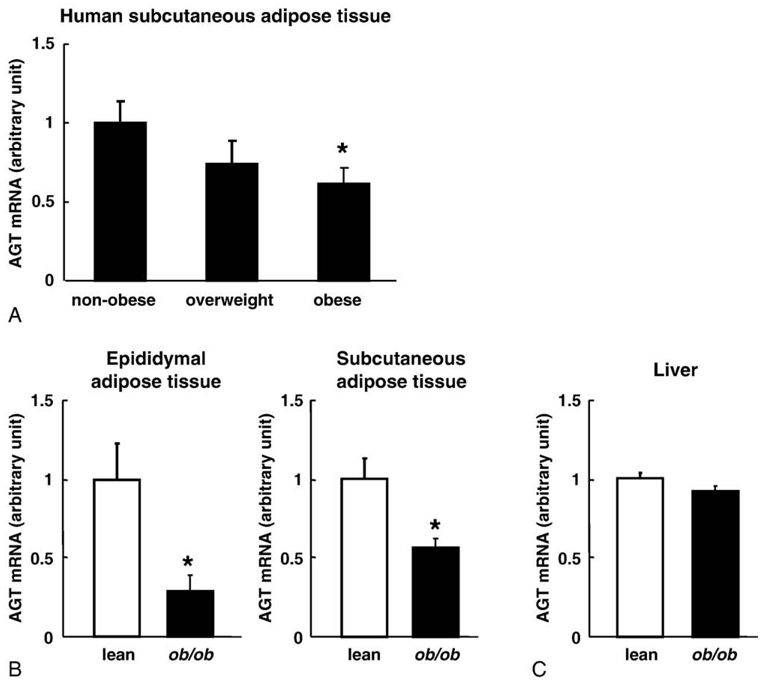
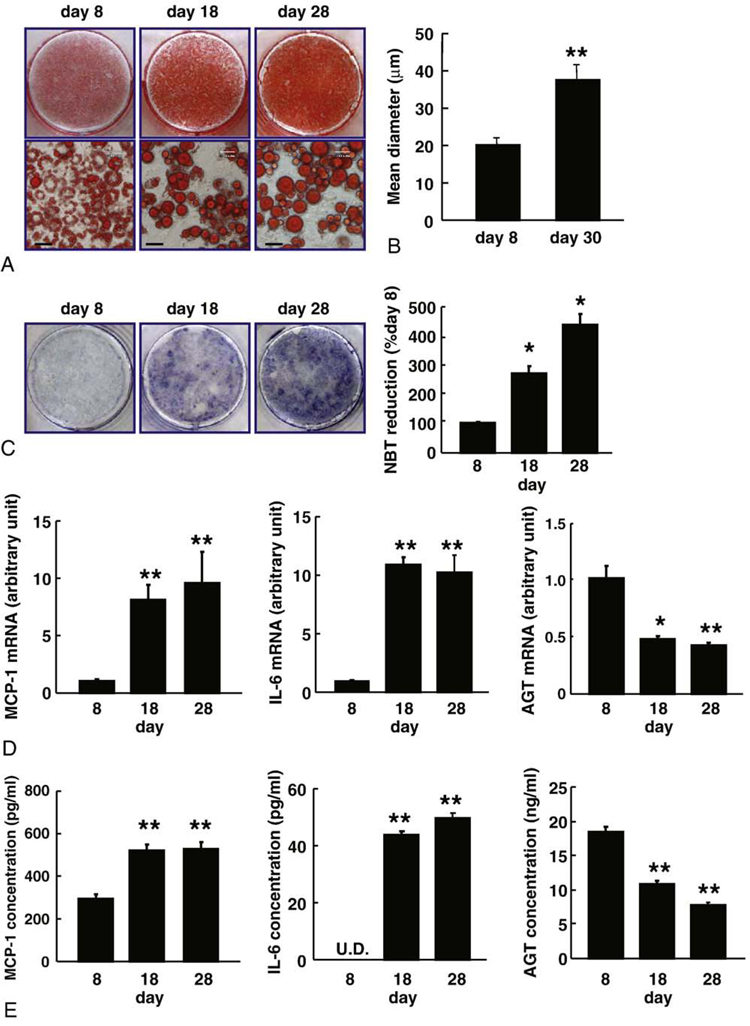
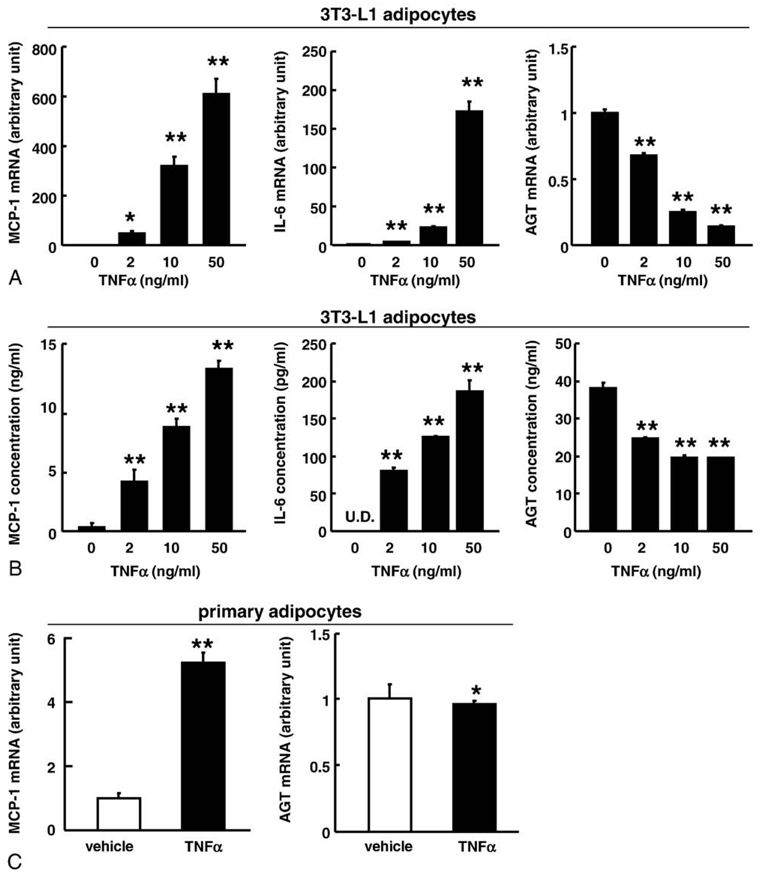
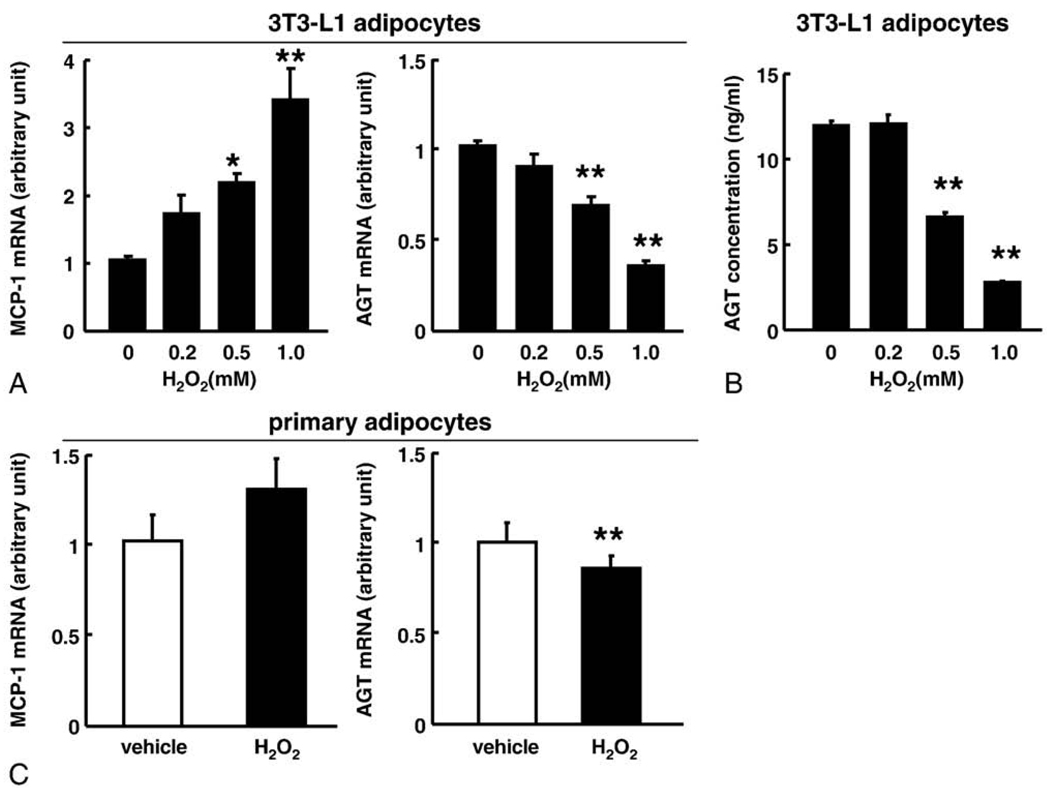
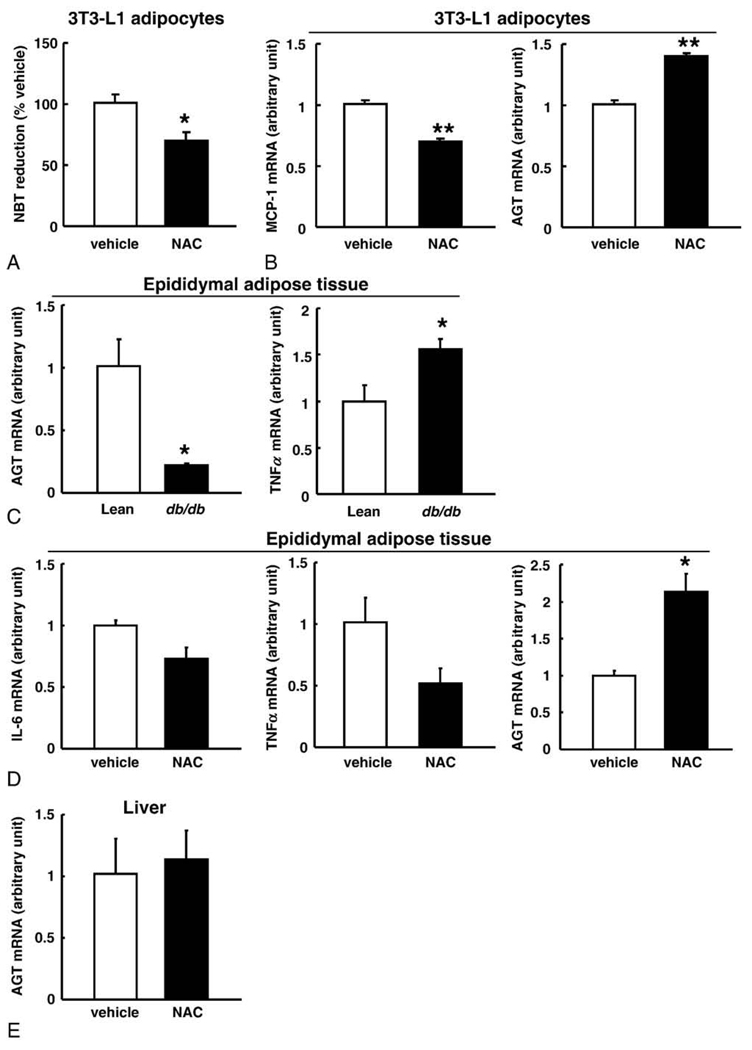
Adipose tissue expresses all components of the renin-angiotensin system including angiotensinogen (AGT). Recent studies have highlighted a potential role of AGT in adipose tissue function and homeostasis. However, some controversies surround the regulatory mechanisms of AGT in obese adipose tissue. In this context, we here demonstrated that the AGT messenger RNA (mRNA) level in human subcutaneous adipose tissue was significantly reduced in obese subjects as compared with nonobese subjects. Adipose tissue AGT mRNA level in obese mice was also lower as compared with their lean littermates; however, the hepatic AGT mRNA level remained unchanged. When 3T3-L1 adipocytes were cultured for a long period, the adipocytes became hypertrophic with a marked increase in the production of reactive oxygen species. Expression and secretion of AGT continued to decrease during the course of adipocyte hypertrophy. Treatment of the 3T3-L1 and primary adipocytes with reactive oxygen species (hydrogen peroxide) or tumor necrosis factor alpha caused a significant decrease in the expression and secretion of AGT. On the other hand, treatment with the antioxidant N-acetyl cysteine suppressed the decrease in the expression and secretion of AGT in the hypertrophied 3T3-L1 adipocytes. Finally, treatment of obese db/db mice with N-acetyl cysteine augmented the expression of AGT in the adipose tissue, but not in the liver. The present study demonstrates for the first time that oxidative stress dysregulates AGT in obese adipose tissue, providing a novel insight into the adipose tissue-specific interaction between the regulation of AGT and oxidative stress in the pathophysiology of obesity.
Copyright 2010 Elsevier Inc. All rights reserved.
Figures
Similar articles
-
Adipose tissue-specific regulation of angiotensinogen in obese humans and mice: impact of nutritional status and adipocyte hypertrophy.Am J Hypertens. 2010 Apr;23(4):425-31. doi: 10.1038/ajh.2009.263. Epub 2010 Jan 7. Am J Hypertens. 2010. PMID: 20057360 Free PMC article.
-
Oxidative stress regulates adipocyte apolipoprotein e and suppresses its expression in obesity.Diabetes. 2008 Nov;57(11):2992-8. doi: 10.2337/db08-0592. Epub 2008 Aug 4. Diabetes. 2008. PMID: 18678613 Free PMC article.
-
Adipose tissue-specific increase in angiotensinogen expression and secretion in the obese (fa/fa) Zucker rat.Am J Physiol Endocrinol Metab. 2002 Jan;282(1):E59-66. doi: 10.1152/ajpendo.2002.282.1.E59. Am J Physiol Endocrinol Metab. 2002. PMID: 11739084
-
Angiotensinogen, angiotensin II and adipose tissue development.Int J Obes Relat Metab Disord. 2000 Nov;24 Suppl 4:S33-5. doi: 10.1038/sj.ijo.0801501. Int J Obes Relat Metab Disord. 2000. PMID: 11126238 Review.
-
Local adipose tissue renin-angiotensin system.Curr Hypertens Rep. 2008 Apr;10(2):93-8. doi: 10.1007/s11906-008-0019-9. Curr Hypertens Rep. 2008. PMID: 18474174 Free PMC article. Review.
Cited by
-
Modulation of Vascular Reactivity by Perivascular Adipose Tissue (PVAT).Curr Hypertens Rep. 2018 May 7;20(5):44. doi: 10.1007/s11906-018-0835-5. Curr Hypertens Rep. 2018. PMID: 29736674 Review.
-
Ectopic and visceral fat deposition in aging, obesity, and idiopathic pulmonary fibrosis: an interconnected role.Lipids Health Dis. 2023 Nov 24;22(1):201. doi: 10.1186/s12944-023-01964-3. Lipids Health Dis. 2023. PMID: 38001499 Free PMC article. Review.
-
Perivascular Adipose Tissue as a Target for Antioxidant Therapy for Cardiovascular Complications.Antioxidants (Basel). 2020 Jul 2;9(7):574. doi: 10.3390/antiox9070574. Antioxidants (Basel). 2020. PMID: 32630640 Free PMC article. Review.
-
Low-fat dairy, but not whole-/high-fat dairy, consumption is related with higher serum adiponectin levels in apparently healthy adults.Eur J Nutr. 2013 Mar;52(2):771-8. doi: 10.1007/s00394-012-0383-8. Epub 2012 May 31. Eur J Nutr. 2013. PMID: 22648202
-
Exposure to PCB52 (2,2',5,5'-tetrachlorobiphenyl) blunts induction of the gene for uncoupling protein 1 (UCP1) in white adipose.Environ Toxicol Pharmacol. 2025 Jan;113:104612. doi: 10.1016/j.etap.2024.104612. Epub 2024 Dec 13. Environ Toxicol Pharmacol. 2025. PMID: 39674530
References
-
- Engeli S. Role of the renin-angiotensin-aldosterone system in the metabolic syndrome. Contrib Nephrol. 2006;151:122–134. - PubMed
-
- Rahmouni K, Correia ML, Haynes WG, Mark AL. Obesity-associated hypertension: new insights into mechanisms. Hypertension. 2005;45:9–14. - PubMed
-
- Dzau VJ. Circulating versus local renin-angiotensin system in cardiovascular homeostasis. Circulation. 1988;77(6 Pt 2):I4–I13. - PubMed
-
- Raizada V, Skipper B, Luo W, Griffith J. Intracardiac and intrarenal renin-angiotensin systems: mechanisms of cardiovascular and renal effects. J Investig Med. 2007;55:341–359. - PubMed
-
- Cassis LA, Saye J, Peach MJ. Location and regulation of rat angiotensinogen messenger RNA. Hypertension. 1988;11(6 Pt 2):591–596. - PubMed
Publication types
MeSH terms
Substances
Grants and funding
LinkOut - more resources
Full Text Sources
Medical
Miscellaneous
