


Type I interferons: crucial participants in disease amplification in autoimmunity
- PMID: 20046205
- PMCID: PMC3622245
- DOI: 10.1038/nrrheum.2009.237
Type I interferons: crucial participants in disease amplification in autoimmunity
Abstract
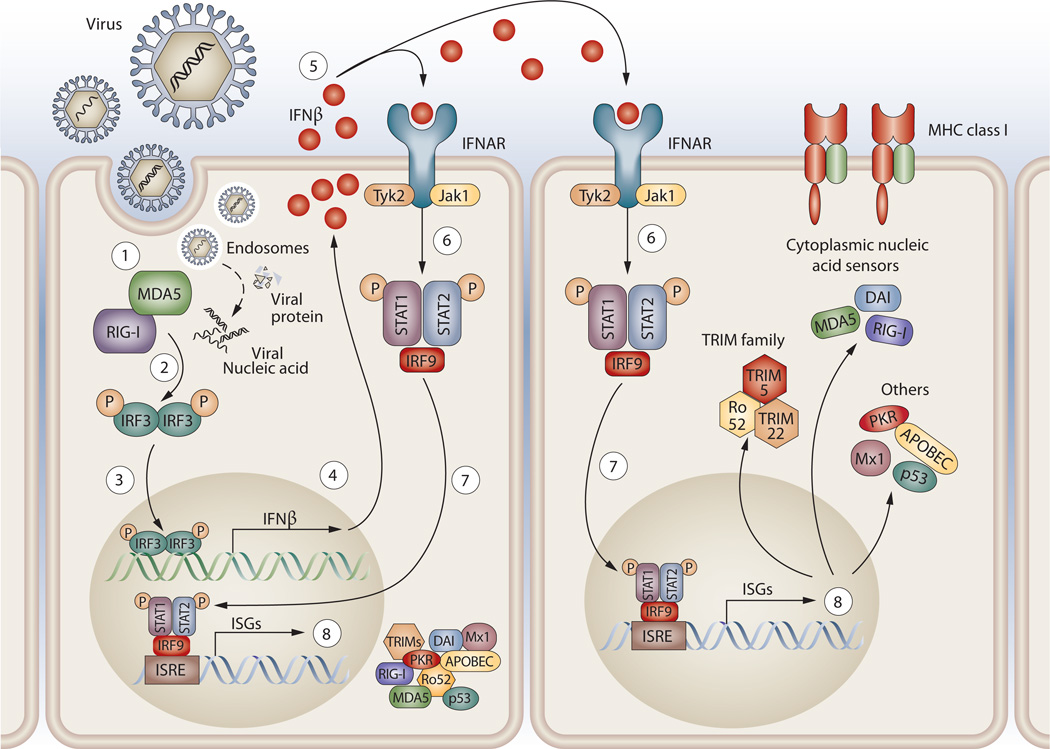
A significant body of data implicates the type I interferon (IFN) pathway in the pathogenesis of autoimmune rheumatic diseases. In these disorders, a self-reinforcing cycle of IFN production can contribute to immunopathology through multiple mechanisms. Type I IFN cytokines are pleiotropic in their effects, mediating antiviral and antitumor activities, and possess numerous immunomodulatory functions for both the innate and adaptive immune responses. A key principle of the type I IFN system is rapid induction and amplification of the signaling pathway, which generates a feed-forward loop of IFN production, ensuring that a vigorous antiviral immune response is mounted. Although such feed-forward pathways are highly adaptive when it comes to rapid and effective virus eradication, this amplification can be maladaptive in immune responses directed against host tissues. Such feed-forward loops, however, create special opportunities for therapy.
Figures

References
-
- Sheppard P, et al. IL-28, IL-29 and their class II cytokine receptor IL-28R. Nat. Immunol. 2003;4:63–68. - PubMed
-
- Kotenko SV, et al. IFN-lambdas mediate antiviral protection through a distinct class II cytokine receptor complex. Nat. Immunol. 2003;4:69–77. - PubMed
-
- Doyle SE, et al. Interleukin-29 uses a type 1 interferon-like program to promote antiviral responses in human hepatocytes. Hepatology. 2006;44:896–906. - PubMed
Publication types
MeSH terms
Substances
Grants and funding
LinkOut - more resources
Full Text Sources
Other Literature Sources
Medical
