


Modular titanium alloy neck adapter failures in hip replacement--failure mode analysis and influence of implant material
- PMID: 20047653
- PMCID: PMC2824687
- DOI: 10.1186/1471-2474-11-3
Modular titanium alloy neck adapter failures in hip replacement--failure mode analysis and influence of implant material
Abstract
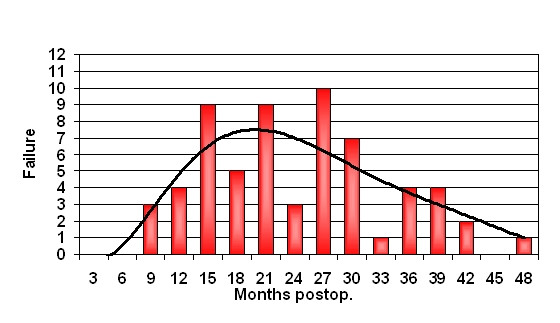
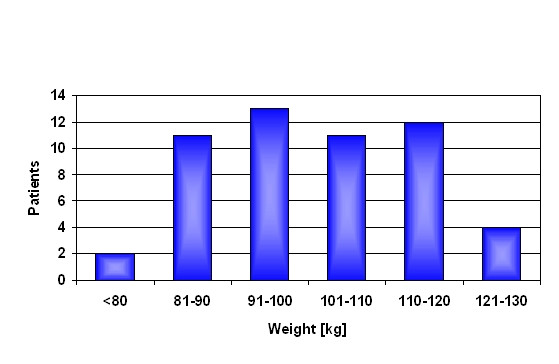
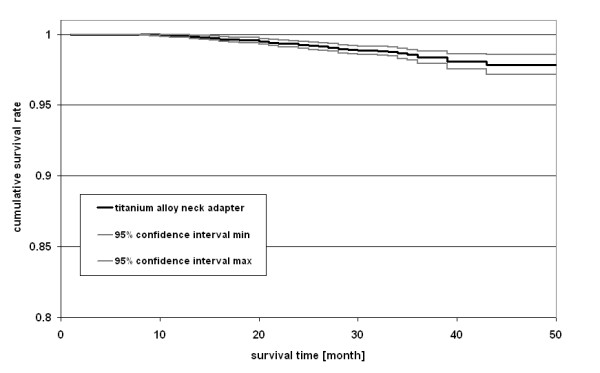
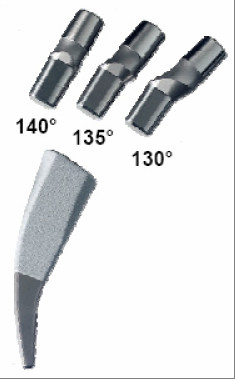
Background: Modular neck adapters for hip arthroplasty stems allow the surgeon to modify CCD angle, offset and femoral anteversion intraoperatively. Fretting or crevice corrosion may lead to failure of such a modular device due to high loads or surface contamination inside the modular coupling. Unfortunately we have experienced such a failure of implants and now report our clinical experience with the failures in order to advance orthopaedic material research and joint replacement surgery.The failed neck adapters were implanted between August 2004 and November 2006 a total of about 5000 devices. After this period, the titanium neck adapters were replaced by adapters out of cobalt-chromium. Until the end of 2008 in total 1.4% (n = 68) of the implanted titanium alloy neck adapters failed with an average time of 2.0 years (0.7 to 4.0 years) postoperatively. All, but one, patients were male, their average age being 57.4 years (36 to 75 years) and the average weight 102.3 kg (75 to 130 kg). The failures of neck adapters were divided into 66% with small CCD of 130 degrees and 60% with head lengths of L or larger. Assuming an average time to failure of 2.8 years, the cumulative failure rate was calculated with 2.4%.
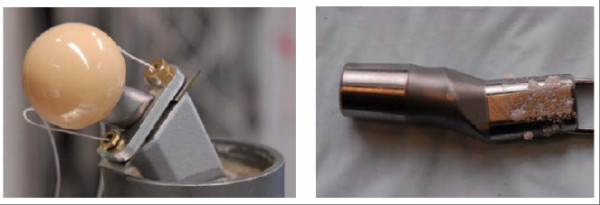
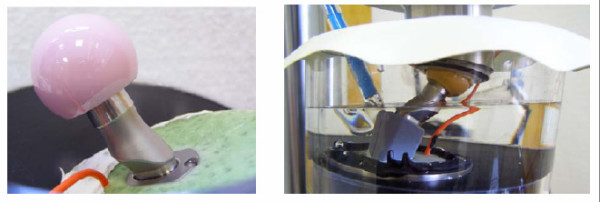
Methods: A series of adapter failures of titanium alloy modular neck adapters in combination with a titanium alloy modular short hip stem was investigated. For patients having received this particular implant combination risk factors were identified which were associated with the occurRence of implant failure. A Kaplan-Meier survival-failure-analysis was conducted. The retrieved implants were analysed using microscopic and chemical methods. Modes of failure were simulated in biomechanical tests. Comparative tests included modular neck adapters made of titanium alloy and cobalt chrome alloy material.
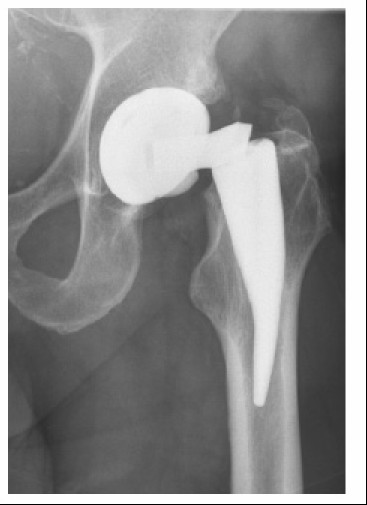
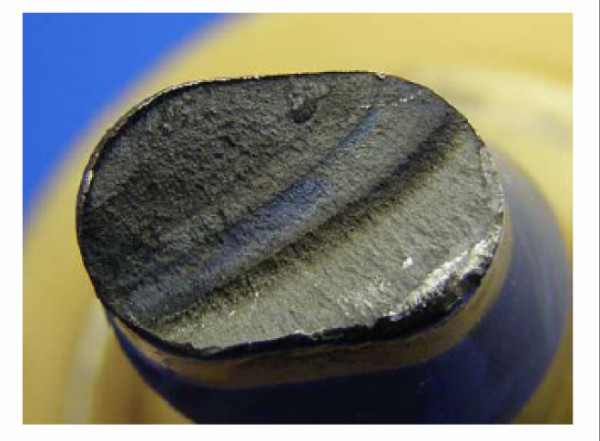
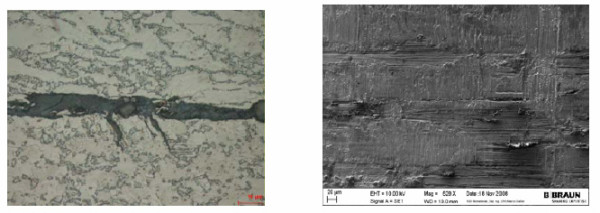
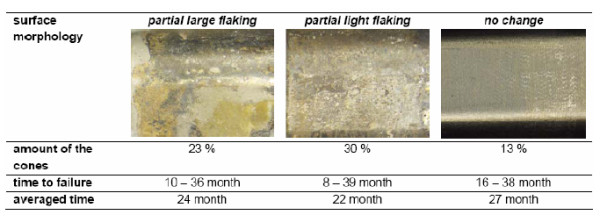
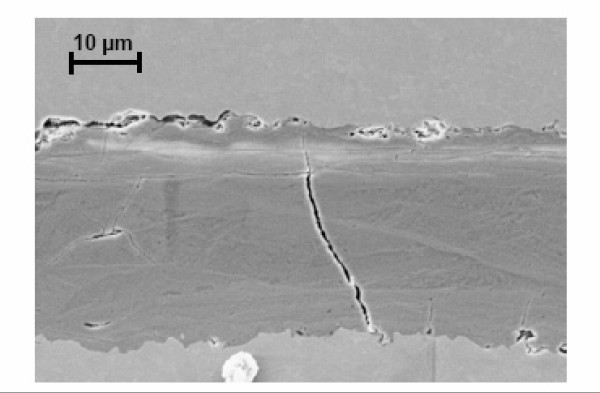
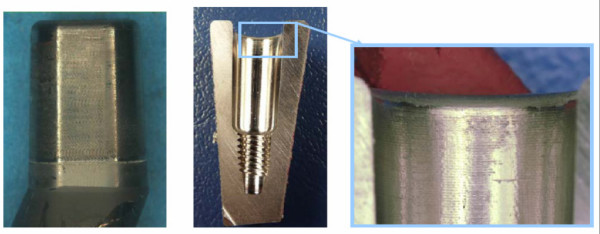
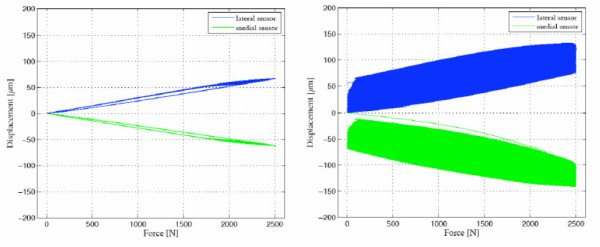
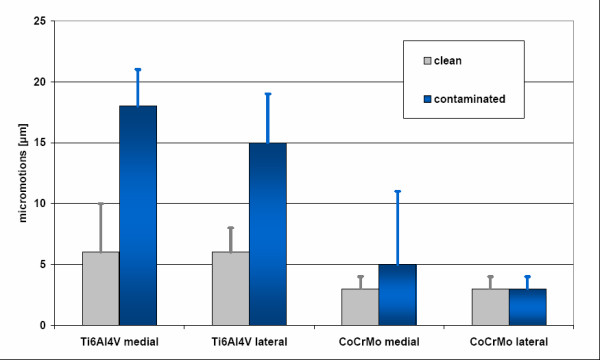
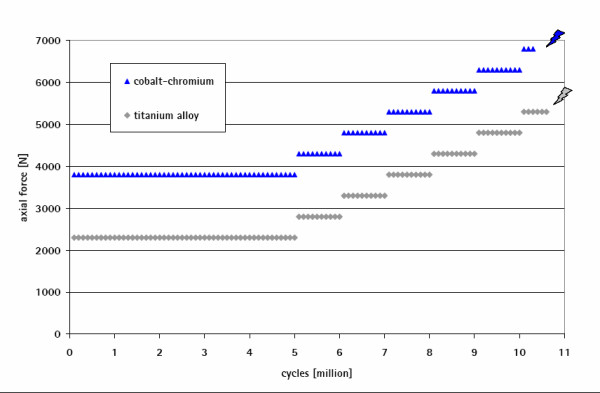
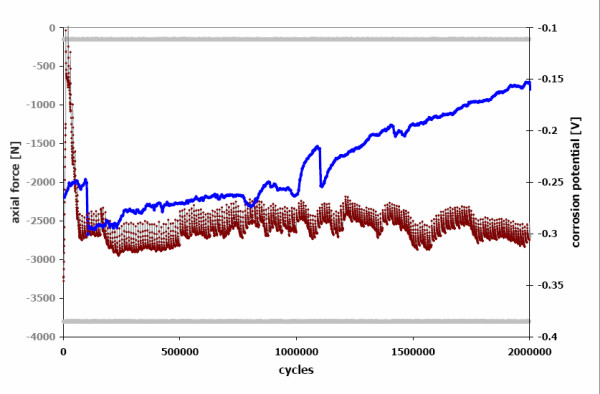
Results: Retrieval examinations and biomechanical simulation revealed that primary micromotions initiated fretting within the modular tapered neck connection. A continuous abrasion and repassivation process with a subsequent cold welding at the titanium alloy modular interface. Surface layers of 10 - 30 microm titanium oxide were observed. Surface cracks caused by fretting or fretting corrosion finally lead to fatigue fracture of the titanium alloy modular neck adapters. Neck adapters made of cobalt chrome alloy show significantly reduced micromotions especially in case of contaminated cone connection. With a cobalt-chromium neck the micromotions can be reduced by a factor of 3 compared to the titanium neck. The incidence of fretting corrosion was also substantially lower with the cobalt-chromium neck configuration.
Conclusions: Failure of modular titanium alloy neck adapters can be initiated by surface micromotions due to surface contamination or highly loaded implant components. In the present study, the patients at risk were men with an average weight over 100 kg. Modular cobalt chrome neck adapters provide higher safety compared to titanium alloy material.
Figures
References
-
- Toni A, Paderni S, Sudanese A, Guerra E, Traina F, Antonietti B, Giunti A. Anatomic cementless total hip arthroplasty with ceramic bearings and modular necks: 3 to 5 years follow-up. Hip International. 2001;11(1):1–17. - PubMed
-
- Traina F, Baleani M, Viceconti M, Toni A. Modular Neck Primary Prosthesis: Experimental and Clinical Outcomes. Scientific Exhibit at the 71st AAOS Annual Meeting, San Francisco. 2004.
-
- Toni A, Sudanese A, Paderni S, Guerra E, Bianchi G, Antonietti B, Giunti A. Artroprotesi d'anca non cementata con collo modulare - Cementless hip arthroplasty with a modular neck. Chir Organi Mov. 2001;LXXXVI:73–85. - PubMed
-
- Braun A, Lazovic D, Zigan R. Modular short stem prosthesis- Implant positioning and the impact of navigation. Orthopedics Suppl. 2007;30(Suppl 10):144–147. - PubMed
-
- Keggi KJ. My experience with proximal modular stems. Symposium "Cutting-edge developments on proximal modularity in THA" Annual AAHKS Meeting. 2008. pp. 16–22.
MeSH terms
Substances
LinkOut - more resources
Full Text Sources
Medical
