


Phase I pharmacologic and biologic study of ramucirumab (IMC-1121B), a fully human immunoglobulin G1 monoclonal antibody targeting the vascular endothelial growth factor receptor-2
- PMID: 20048182
- PMCID: PMC2834394
- DOI: 10.1200/JCO.2009.23.7537
Phase I pharmacologic and biologic study of ramucirumab (IMC-1121B), a fully human immunoglobulin G1 monoclonal antibody targeting the vascular endothelial growth factor receptor-2
Abstract
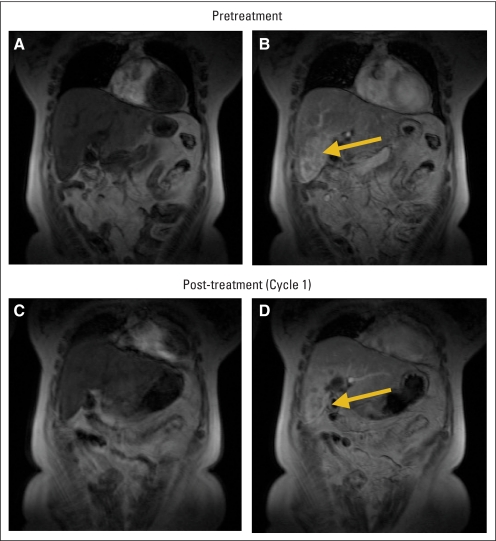
PURPOSE To evaluate the safety, maximum-tolerated dose (MTD), pharmacokinetics (PKs), pharmacodynamics, and preliminary anticancer activity of ramucirumab (IMC-1121B), a fully human immunoglobulin G(1) monoclonal antibody targeting the vascular endothelial growth factor receptor (VEGFR)-2. PATIENTS AND METHODS Patients with advanced solid malignancies were treated once weekly with escalating doses of ramucirumab. Blood was sampled for PK studies throughout treatment. The effects of ramucirumab on circulating vascular endothelial growth factor-A (VEGF-A), soluble VEGFR-1 and VEGFR-2, tumor perfusion, and vascularity using dynamic contrast-enhanced magnetic resonance imaging were assessed. Results Thirty-seven patients were treated with 2 to 16 mg/kg of ramucirumab. After one patient each developed dose-limiting hypertension and deep venous thrombosis at 16 mg/kg, the next lower dose (13 mg/kg) was considered the MTD. Nausea, vomiting, headache, fatigue, and proteinuria were also noted. Four (15%) of 27 patients with measurable disease had a partial response (PR), and 11 (30%) of 37 patients had either a PR or stable disease lasting at least 6 months. PKs were characterized by dose-dependent elimination and nonlinear exposure consistent with saturable clearance. Mean trough concentrations exceeded biologically relevant target levels throughout treatment at all dose levels. Serum VEGF-A increased 1.5 to 3.5 times above pretreatment values and remained in this range throughout treatment at all dose levels. Tumor perfusion and vascularity decreased in 69% of evaluable patients. CONCLUSION Objective antitumor activity and antiangiogenic effects were observed over a wide range of dose levels, suggesting that ramucirumab may have a favorable therapeutic index in treating malignancies amenable to VEGFR-2 inhibition.
Conflict of interest statement
Authors' disclosures of potential conflicts of interest and author contributions are found at the end of this article.
Figures


References
-
- Klagsbrun M, D'Amore PA. Vascular endothelial growth factor and its receptors. Cytokine Growth Factor Rev. 1996;7:259–270. - PubMed
-
- Neufeld G, Cohen T, Gengrinovitch S, et al. Vascular endothelial growth factor (VEGF) and its receptors. FASEB J. 1999;13:9–22. - PubMed
-
- Ferrara N. Molecular and biological properties of vascular endothelial growth factor. J Mol Med. 1999;77:527–543. - PubMed
-
- Aguayo A, Kantarjian H, Manshouri T, et al. Angiogenesis in acute and chronic leukemias and myelodysplastic syndromes. Blood. 2000;96:2240–2245. - PubMed
-
- Carmeliet P, Jain RK. Angiogenesis in cancer and other diseases. Nature. 2000;407:249–257. - PubMed
Publication types
MeSH terms
Substances
Grants and funding
LinkOut - more resources
Full Text Sources
Other Literature Sources
Research Materials
Miscellaneous
