


The implications of patterns in HIV diversity for neutralizing antibody induction and susceptibility
- PMID: 20048705
- PMCID: PMC6426297
- DOI: 10.1097/COH.0b013e32832f129e
The implications of patterns in HIV diversity for neutralizing antibody induction and susceptibility
Abstract
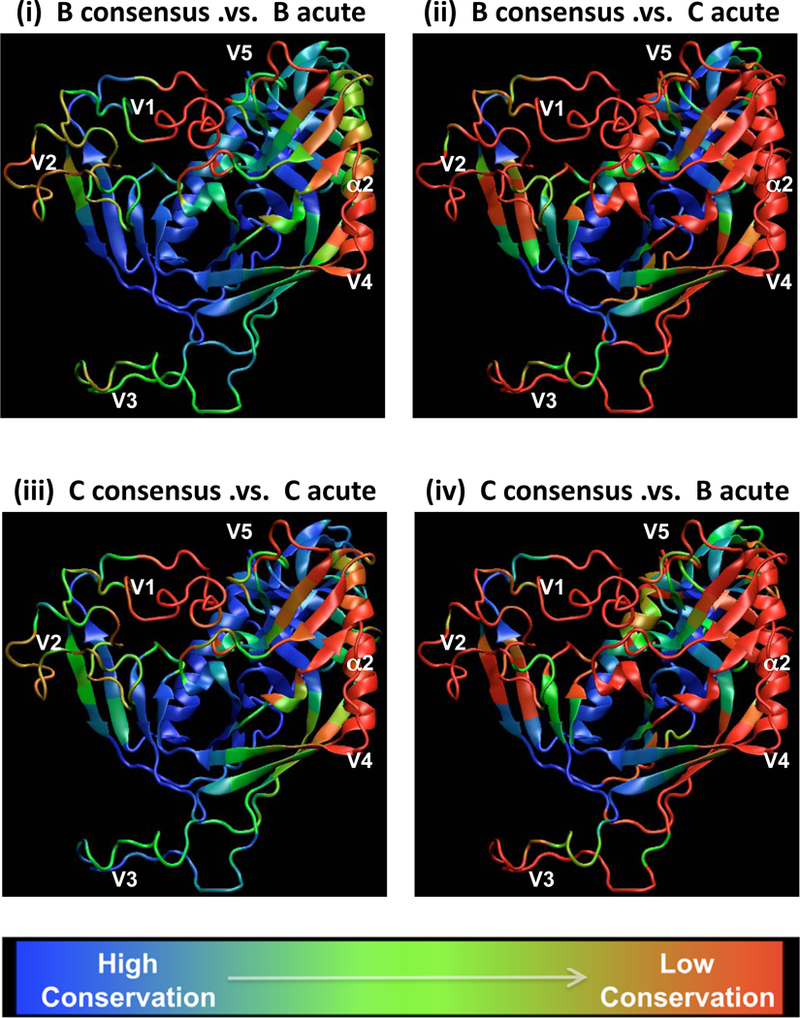
Purpose of review: Designing an HIV vaccine capable of eliciting broadly cross-reactive neutralizing antibodies is an extraordinarily difficult challenge. Here we focus on the implications of HIV diversity for vaccine design, detailing the impact of levels of variation in epitopes of known potent neutralizing antibodies, and summarizing patterns of overall variation in regional domains within gp120. Strategies for rational vaccine design, to enhance coverage of HIV's natural diversity, are considered.
Recent findings: Each amino acid in an envelope gp120 three-dimensional structure was grouped with its 10 nearest neighbors and classified by their natural sequence variability. Within-subtype variation is superimposed on patterns of subtype-specific variation. Regions under selection with moderate diversity are realistic vaccine targets; their variation reflects the value of escape in these regions, whereas the level of diversity is potentially approachable with a vaccine.
Summary: HIV diversity is so extensive that vaccine design strategies may benefit by factoring in diversity from the earliest stages, even for vaccines that target relatively conserved regions.
Figures


References
-
- Eckert DM, Kim PS: Mechanisms of viral membrane fusion and its inhibition. Annu Rev Biochem 2001, 70:777–810 - PubMed
-
- Wyatt R, Sodroski J: The HIV-1 envelope glycoproteins: fusogens, antigens, and immunogens. Science 1998, 280:1884–8 - PubMed
-
- Wyatt R, Kwong PD, Desjardins E et al. : The antigenic structure of the HIV gp120 envelope glycoprotein. Nature 1998, 393:705–11 - PubMed
Publication types
MeSH terms
Substances
Grants and funding
LinkOut - more resources
Full Text Sources
Other Literature Sources
Medical
Research Materials
