N-terminal pro-B-type natriuretic Peptide in overweight and obese patients with and without diabetes: an analysis based on body mass index and left ventricular geometry
- PMID: 20049140
- PMCID: PMC2801462
- DOI: 10.4070/kcj.2009.39.12.538
N-terminal pro-B-type natriuretic Peptide in overweight and obese patients with and without diabetes: an analysis based on body mass index and left ventricular geometry
Abstract
Background and objectives: Several recent studies have shown that there is an inverse relationship between plasma B-type natriuretic peptide (BNP) and body mass index (BMI) in subjects with and without heart failure. Obesity frequently coexists with diabetes, so it is important to consider the relationship between diabetes and natriuretic peptide levels. We evaluated the influence of diabetes on the correlation of BNP and BMI.
Subjects and methods: We examined 933 patients with chest pain and/or dyspnea undergoing cardiac catheterization between Feb. 2006 and Nov. 2007 in the Maryknoll cardiac center who had creatinine levels <2.0 mg/dL and normal systolic heart function. BMI was checked, transthoracic echocardiography was performed, and aminoterminal pro-brain natriuretic peptide (NT-proBNP) was sampled at the start of each case.
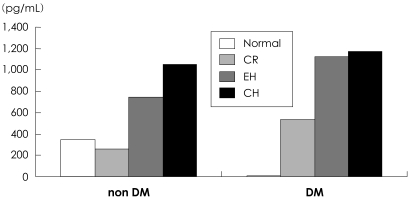
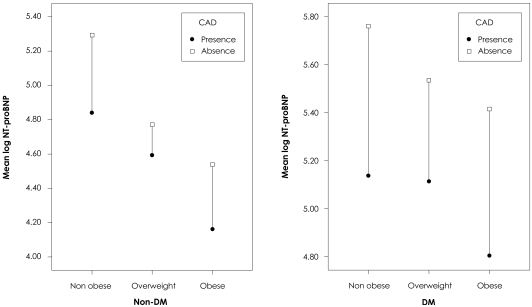
Results: In 733 non-diabetic patients, mean plasma NT-proBNP levels of non obese individuals (BMI <23 kg/m(2)), overweight individuals (23</= BMI <25 kg/m(2)), and obese individuals (BMI >/=25 kg/m(2)) showed a significant negative correlation with increasing BMI (856.39+/-237.3 pg/mL, 601.69+/-159.6 pg/mL, 289.62+/-164.9 pg/mL, respectively, p<0.0001). However, in 200 diabetic patients, the correlation between BMI and NT-proBNP was not significant (r=-0.21, p=0.19), and NT-proBNP did not correlate with mitral E/Ea in obese diabetic patients (r=0.14, p=0.56). NT-proBNP was significantly correlated with mitral E/Ea in the non-obese (r=0.24, p=0.008) and non diabetic (r=0.32, p=0.003) groups. Left ventricular (LV) mass index was significantly correlated with NT-proBNP in all BMI groups (r=0.61, p<0.001), and patients with concentric cardiac hypertrophy showed the highest NT-proBNP levels.
Conclusion: The present study demonstrates that obese patients have reduced concentrations of NT-proBNP compared to non obese patients despite having higher LV filling pressures. However, NT-proBNP is not suppressed in obese patients with diabetes. This suggests that factors other than cardiac status affect NT-proBNP concentrations.
Keywords: B-type natriuretic peptide; Body mass index; Obesity.
Figures
References
-
- Maisel AS, Krishnaswami P, Nowak RM, et al. Rapid measurement of B-type natriuretic peptide in the emergency diagnosis of heart failure. N Engl J Med. 2002;347:161–167. - PubMed
-
- Maeda K, Tsutamoto T, Wada A, et al. Plasma brain natriuretic peptide as a biochemical marker of high left ventricular end diastolic pressure in patients with symptomatic left ventricular dysfunction. Am Heart J. 1998;135:825–832. - PubMed
-
- Maisel AS, Clopton P, Krishnaswamy P, et al. Impact of age, race, and sex on the ability of B-type natriuretic peptide to aid in the emergency diagnosis of heart failure: results from the Breathing Not Properly (BNP) multinational study. Am Heart J. 2004;147:1078–1084. - PubMed
-
- Wang TJ, Larson MG, Levy D, et al. Impact of obesity on plasma natriuretic peptide levels. Circulation. 2004;109:594–600. - PubMed
LinkOut - more resources
Full Text Sources
Research Materials