


Analysis of Schistosoma mansoni population structure using total fecal egg sampling
- PMID: 20049994
- PMCID: PMC2826833
- DOI: 10.1645/GE-1895.1
Analysis of Schistosoma mansoni population structure using total fecal egg sampling
Abstract
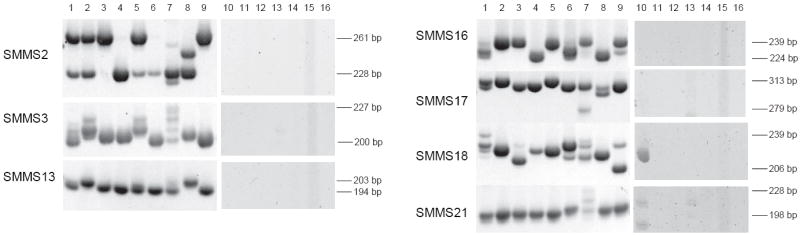
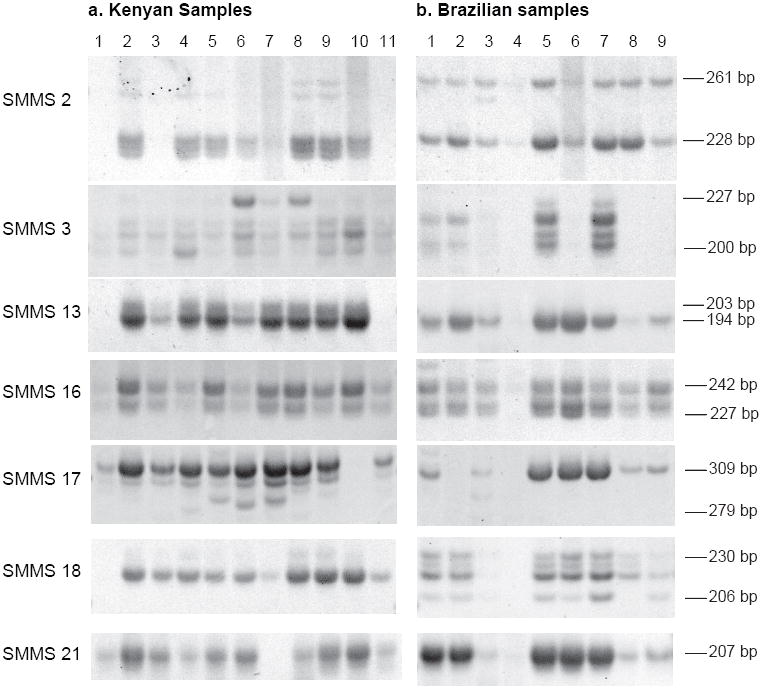
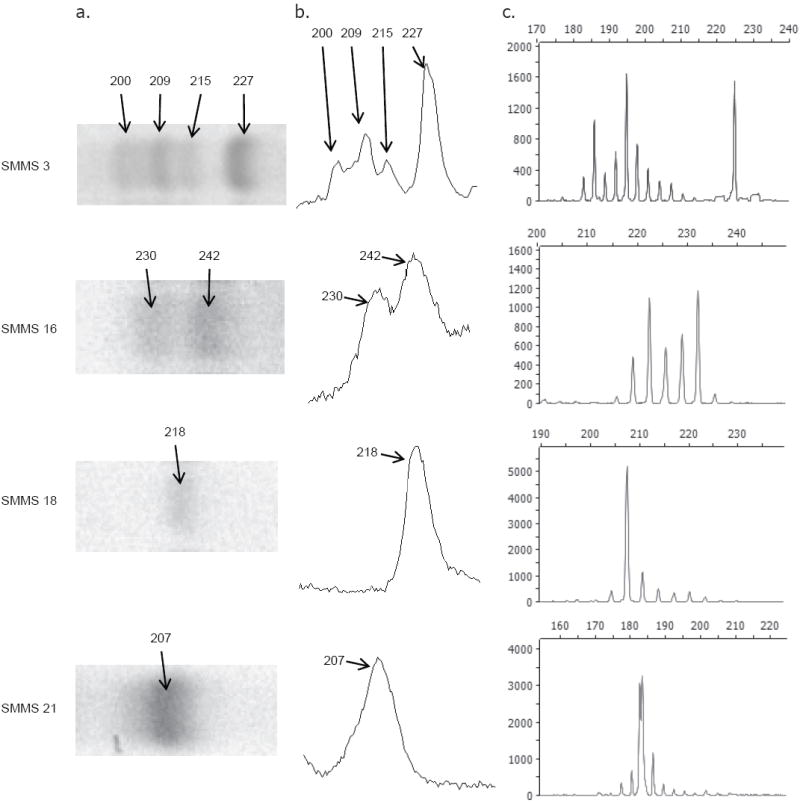
Many parasite populations are difficult to sample because they are not uniformly distributed between several host species and are often not easily collected from the living host, thereby limiting sample size and possibly distorting the representation of the population. For the parasite Schistosoma mansoni, we investigated the use of eggs, in aggregate, from the stools of infected individuals as a simple and representative sample. Previously, we demonstrated that microsatellite allele frequencies can be accurately estimated from pooled DNA of cloned S. mansoni adults. Here, we show that genotyping of parasite populations from reproductively isolated laboratory strains can be used to identify these specific populations based on characteristic patterns of allele frequencies, as observed by polyacrylamide gel electrophoresis and automated sequencer analysis of fluorescently labeled PCR products. Microsatellites used to genotype aggregates of eggs collected from stools of infected individuals produced results consistent with the geographic distribution of the samples. Preferential amplification of smaller alleles, and stutter PCR products, had negligible effect on measurement of genetic differentiation. Direct analysis of total stool eggs can be an important approach to questions of population genetics for this parasite by increasing the sample size to thousands per infected individual and by reducing bias.
Figures
References
-
- Baltz T, Lacassie I, Tribouley-Duret J, Tribouley J. Density-gradient separation of Schistosoma mansoni eggs. Journal of Parasitology. 1982;68:963–965. - PubMed
-
- Collins HE, Li H, Inda SE, Anderson J, Laiho K, Tuomilehto J, Seldin MF. A simple and accurate method for determination of microsatellite total allele content differences between DNA pools. Human Genetics. 2000;106:218–226. - PubMed
-
- Dalton JP, Day SR, Drew AC, Brindley PJ. A method for the isolation of schistosome eggs and miracidia free of contaminating host tissues. Parasitology. 1997;115:29–35. - PubMed
-
- Dias Neto E, de Souza CP, Rollinson D, Katz N, Pena SD, Simpson AJ. The random amplification of polymorphic DNA allows the identification of strains and species of schistosome. Molecular and Biochemical Parasitology. 1993;57:83–88. - PubMed
-
- Dresden MH, Payne DC. A sieving method for the collection of schistosome eggs from mouse intestines. Journal of Parasitology. 1981;67:450–452. - PubMed
Publication types
MeSH terms
Substances
Grants and funding
LinkOut - more resources
Full Text Sources
Medical
