Responses of cultured human keratocytes and myofibroblasts to ethyl pyruvate: a microarray analysis of gene expression
- PMID: 20053976
- PMCID: PMC2891457
- DOI: 10.1167/iovs.09-4498
Responses of cultured human keratocytes and myofibroblasts to ethyl pyruvate: a microarray analysis of gene expression
Abstract
Purpose: Ethyl pyruvate (EP) has pharmacologic effects that remediate cellular stress. In the organ-cultured murine lens, EP ameliorates oxidative stress, and in a rat cataract model, it attenuates cataract formation. However, corneal responses to EP have not been elucidated. In this study, the potential of EP as a therapeutic agent in corneal wound healing was determined by examining its effects on the transition of quiescent corneal stromal keratocytes into contractile myofibroblasts.
Methods: Three independent preparations of cultured human keratocytes were treated with TGF-beta1, to elicit a phenotypic transition to myofibroblasts in the presence or absence of 10 or 15 mM EP. Gene expression profiles of the 12 samples (keratocytes +/- EP +/- TGF-beta1 for three preparations) were produced by using gene microarrays.
Results: TGF-beta1-driven twofold changes in at least two of three experiments defined a group of 1961 genes. Genes showing twofold modulation by EP in at least two experiments appeared exclusively in myofibroblasts (857 genes), exclusively in keratocytes (409 genes), or in both phenotypes (252 genes). Analysis of these three EP-modulated groups showed that EP (1) inhibited myofibroblast proliferation with concomitant modulation of some cell cycle genes, (2) augmented the NRF2-mediated antioxidant response in both keratocytes and myofibroblasts, and (3) modified the TGF-beta1-driven transition of keratocytes to myofibroblasts by inhibiting the upregulation of a subset of profibrotic genes.
Conclusions: These EP-induced phenotypic changes in myofibroblasts indicate the potential of EP as a therapeutic agent in corneal wound healing.
Figures
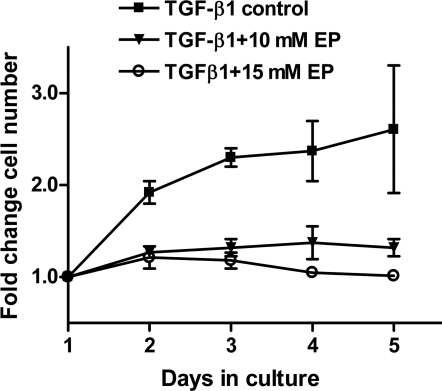
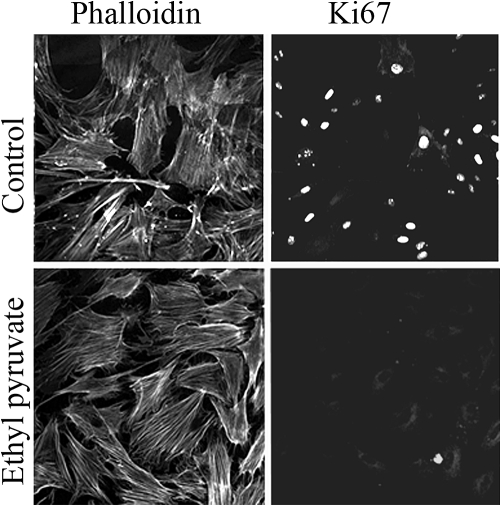
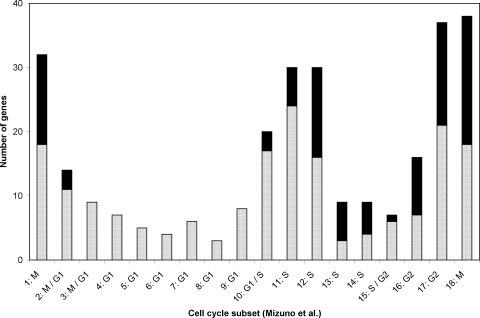
 : 187 occurrences of 170 genes) and those that are EP modulated (■): 97 occurrences of 82 genes). G1 class genes showed no EP modulation except at the M/G1 or G1/S interfaces.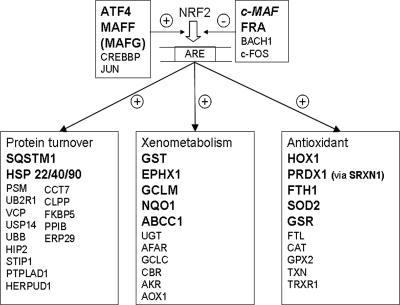
References
-
- Brand K. Aerobic glycolysis by proliferating cells: protection against oxidative stress at the expense of energy yield. J Bioenerg Biomembr 1997;29:355–364 - PubMed
-
- Fink MP. Ethyl pyruvate. Curr Opin Anaesthesiol 2008;21:160–167 - PubMed
-
- Varma SD, Devamanoharan PS, Ali AH. Prevention of intracellular oxidative stress to lens by pyruvate and its ester. Free Radic Res 1998;28:131–135 - PubMed
-
- Varma SD, Hegde KR, Kovtun S. Oxidative damage to lens in culture: reversibility by pyruvate and ethyl pyruvate. Ophthalmologica 2006;220:52–57 - PubMed
Publication types
MeSH terms
Substances
Grants and funding
LinkOut - more resources
Full Text Sources