


Preliminary Evaluations of a Self-Contained Anthropomorphic Transfemoral Prosthesis
- PMID: 20054424
- PMCID: PMC2801882
- DOI: 10.1109/TMECH.2009.2032688
Preliminary Evaluations of a Self-Contained Anthropomorphic Transfemoral Prosthesis
Abstract
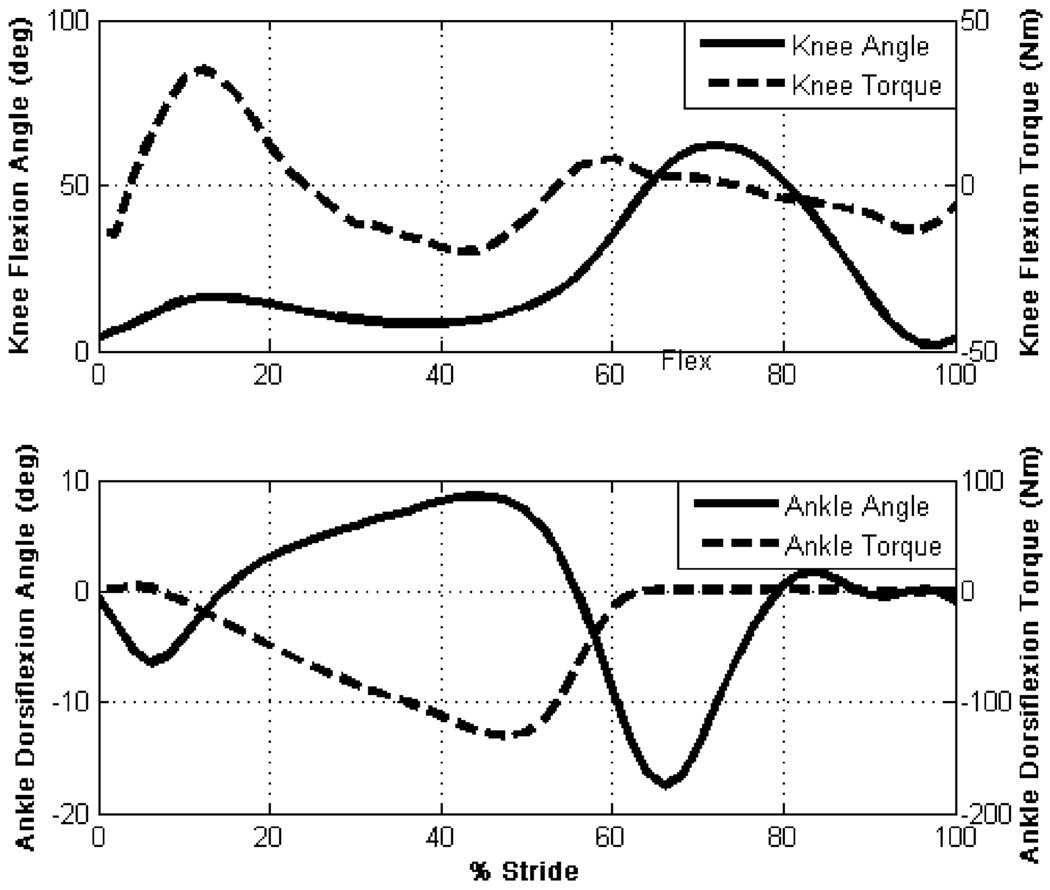
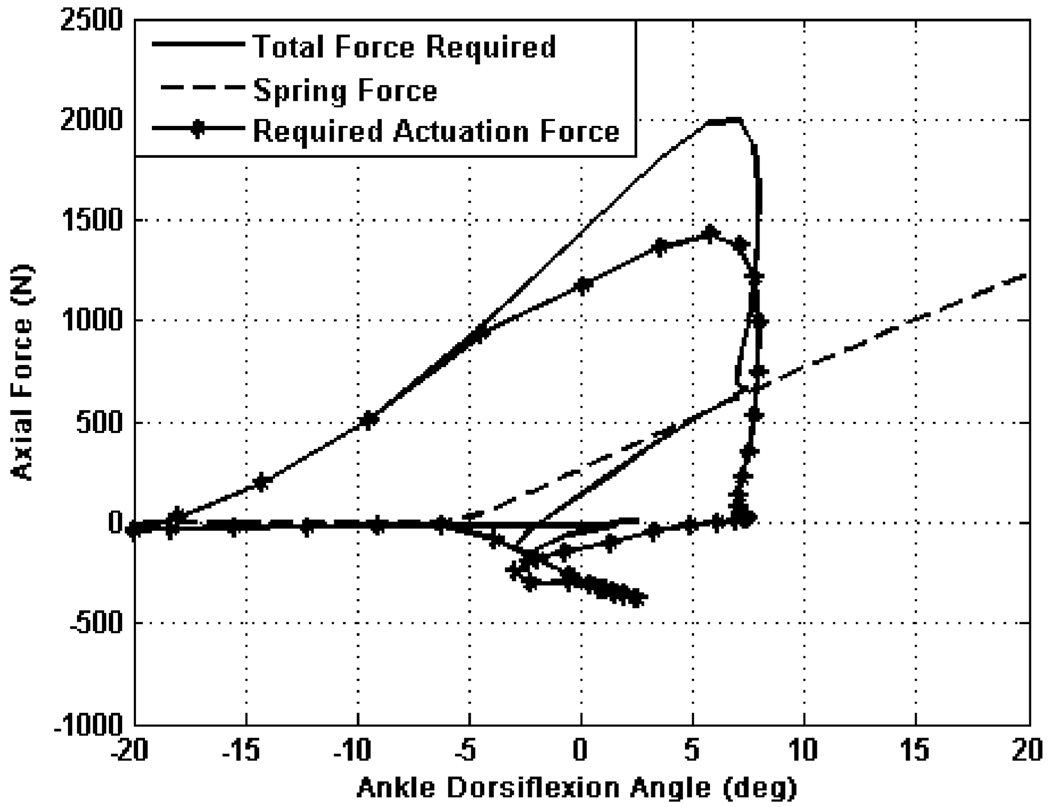
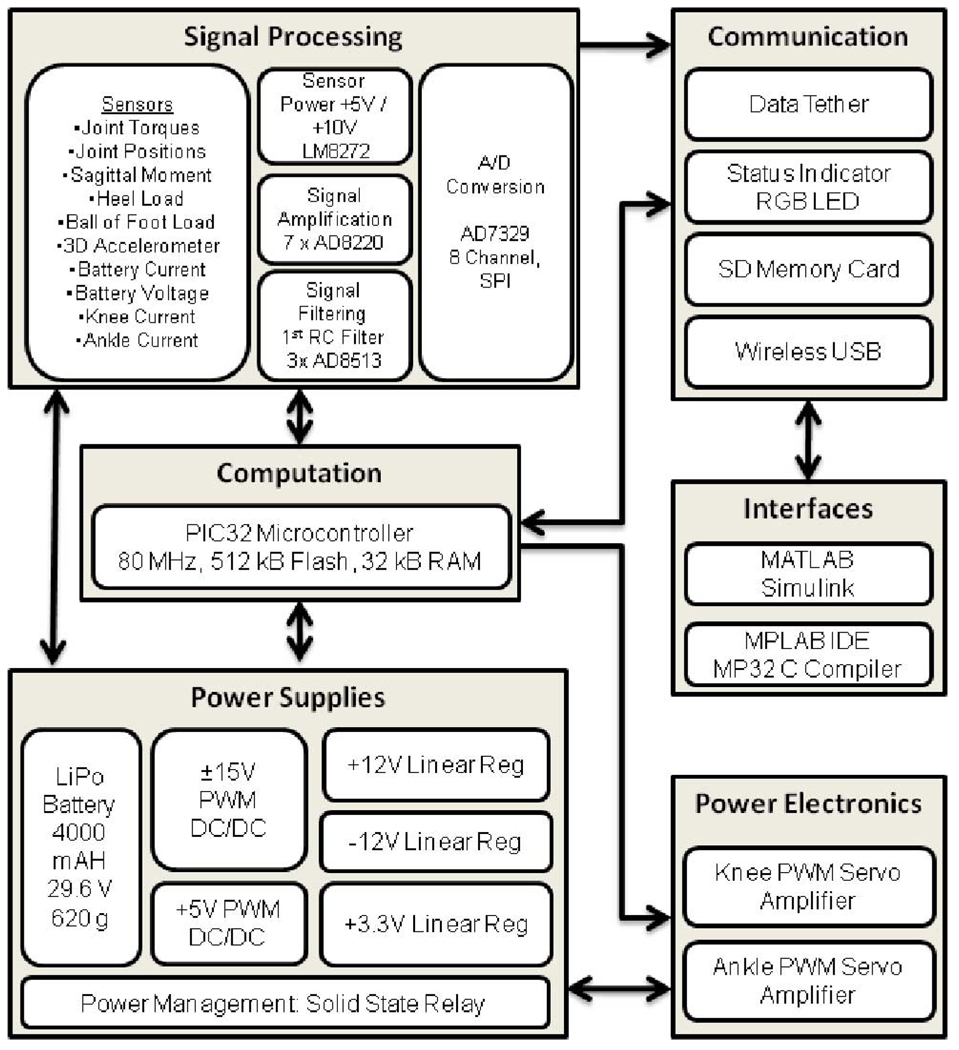
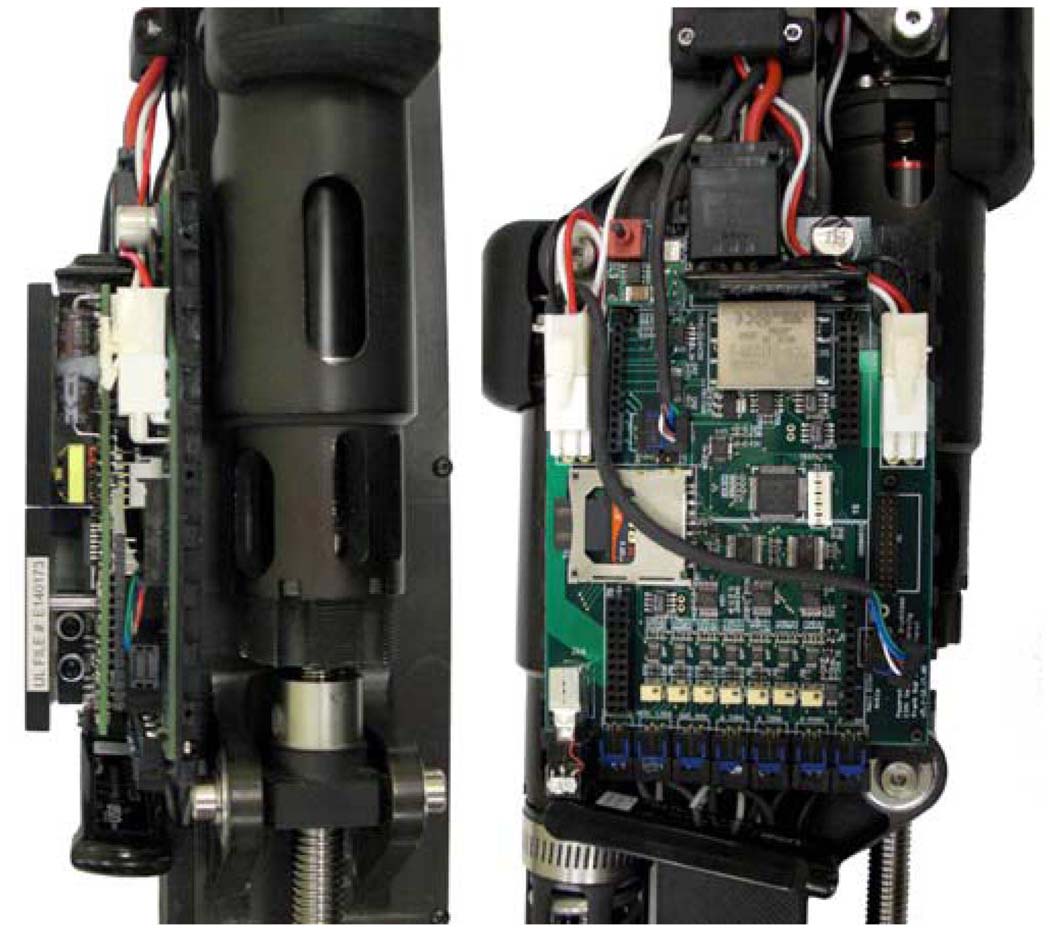
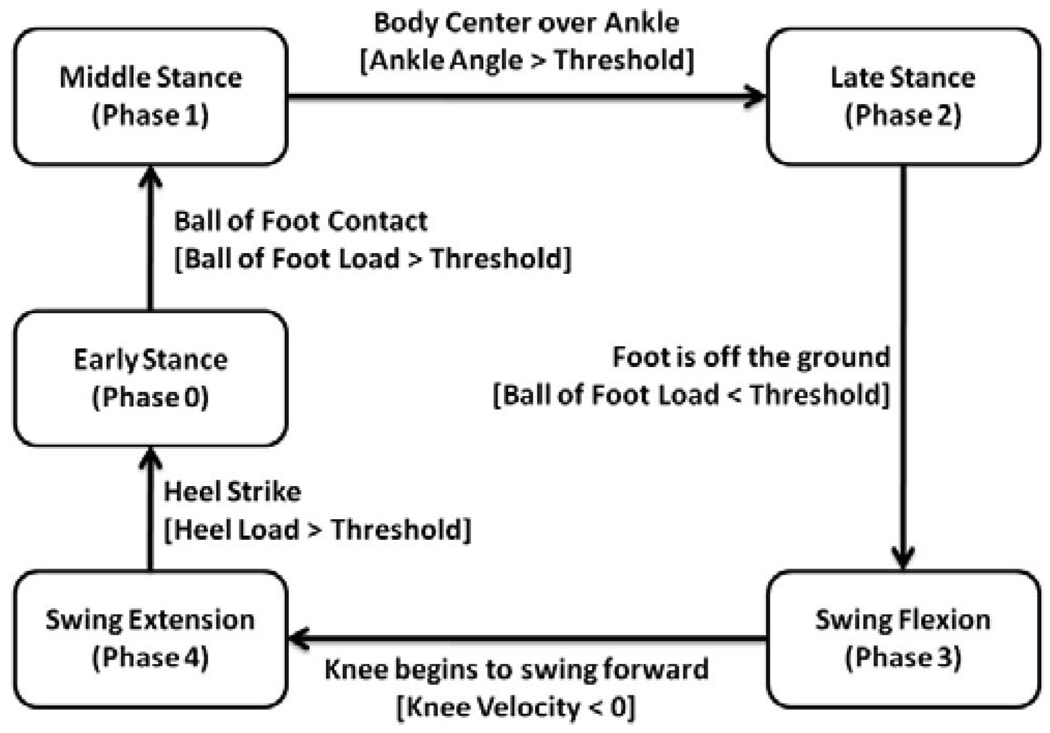
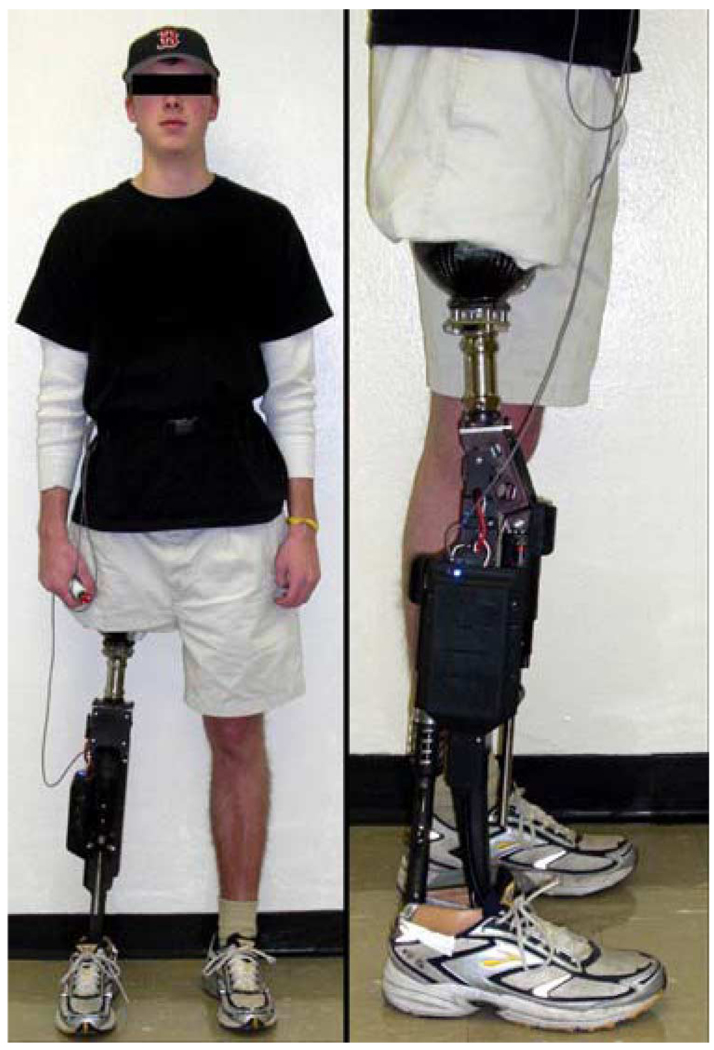
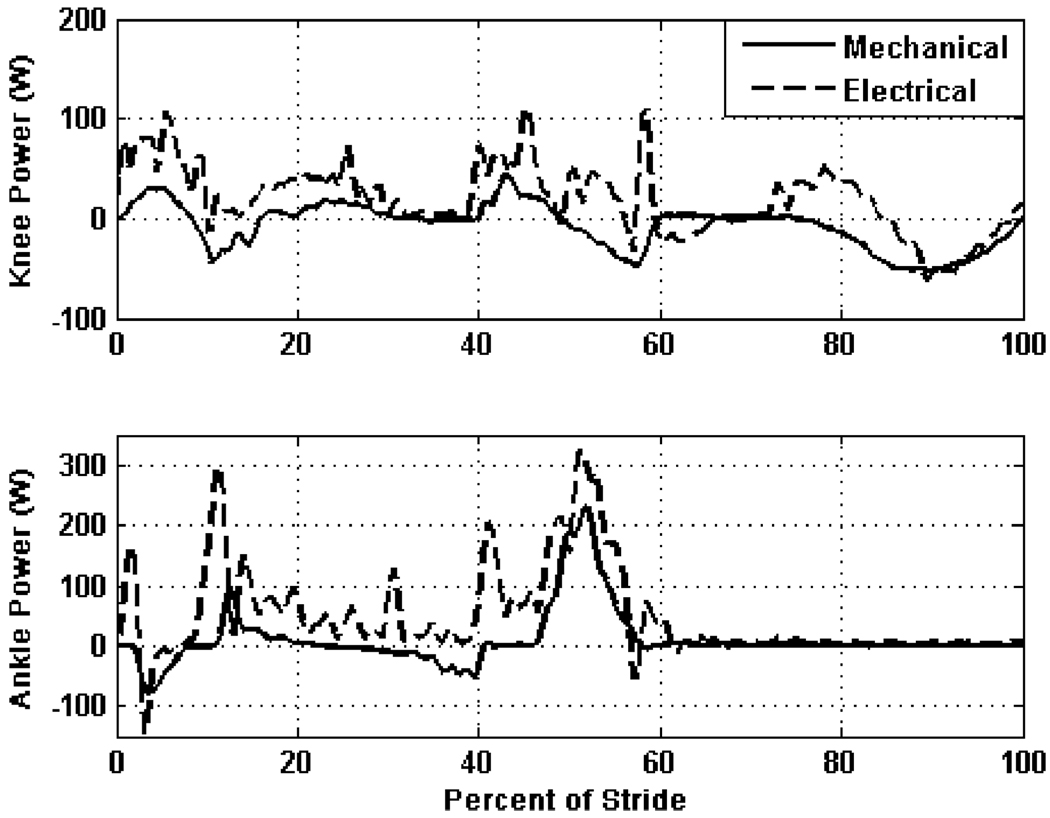
This paper presents a self-contained powered knee and ankle prosthesis, intended to enhance the mobility of transfemoral amputees. A finite-state based impedance control approach, previously developed by the authors, is used for the control of the prosthesis during walking and standing. Experiments on an amputee subject for level treadmill and overground walking are described. Knee and ankle joint angle, torque, and power data taken during walking experiments at various speeds demonstrate the ability of the prosthesis to provide a functional gait that is representative of normal gait biomechanics. Measurements from the battery during level overground walking indicate that the self-contained device can provide more than 4500 strides, or 9 km, of walking at a speed of 5.1 km/h between battery charges.
Figures








References
-
- Adams PF, Hendershot GE, Marano MA. Current Estimates From the National Health Interview Survey, 1996. Hyattsville, Md: National Center for Health Statistics; 1999. (Vital and Health Statistics Series 10) - PubMed
-
- DeVita P, Torry M, Glover KL, Speroni DL. A functional knee brace alters joint torque and power patterns during walking and running. J. Biomech. 1996 May;vol. 29(no. 5):583–588. - PubMed
-
- Jacobs R, Bobbert MF, van Ingen Schenau GJ. Mechanical output from individual muscles during explosive leg extensions: The role of biarticular muscles. J. Biomech. 1996 Apr;vol. 29(no. 4):513–523. - PubMed
-
- Nadeau S, McFadyen BJ, Malouin F. Frontal and sagittal plane analyses of the stair climbing task in healthy adults aged over 40 years: what are the challenges compared to level walking? Clin. Biomech. 2003 Dec;vol. 18(no. 10):950–959. - PubMed
Grants and funding
LinkOut - more resources
Full Text Sources
Other Literature Sources