


T helper 17 cells: discovery, function, and physiological trigger
- PMID: 20054607
- PMCID: PMC11115816
- DOI: 10.1007/s00018-009-0248-3
T helper 17 cells: discovery, function, and physiological trigger
Abstract
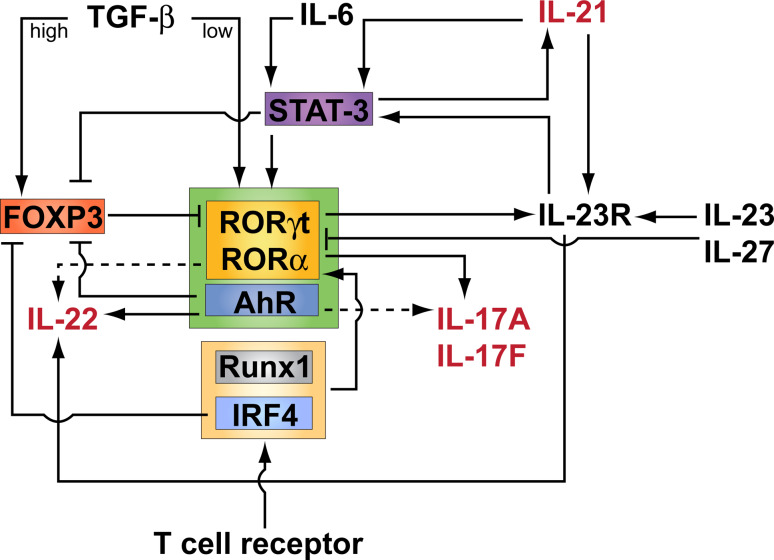
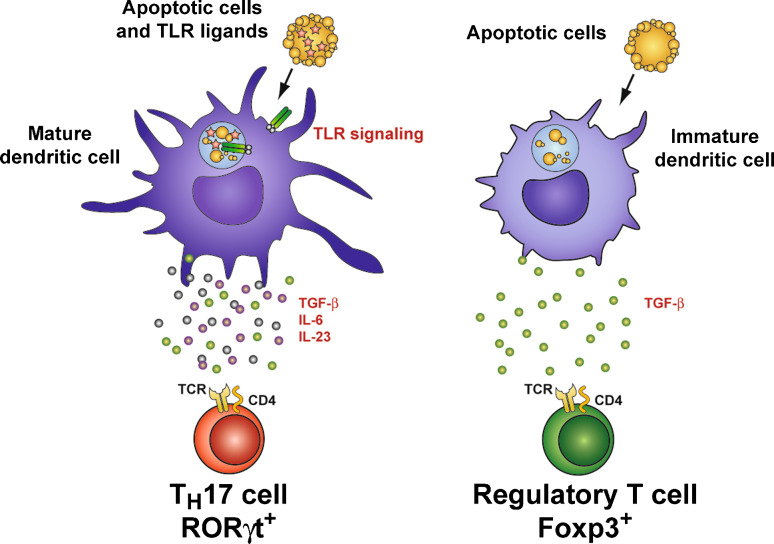
In the few years since their discovery, T helper 17 cells (T(H)17) have been shown to play an important role in host defense against infections, and in tissue inflammation during autoimmunity. T(H)17 cells produce IL-17, IL-21, IL-10, and IL-22 cytokines, and thus have broad effects on a variety of tissues. Notably, the requirement for the immunosuppressive cytokine TGF-beta along with the pro-inflammatory cytokine IL-6 for T(H)17 differentiation supports the intimate relationship between the T(H)17 subset and FOXP3(+) regulatory T cells. Here, we discuss current knowledge on effector functions and differentiation of the T(H)17 lineage. Furthermore, we now know of a physiological stimulus for T(H)17 differentiation: innate immune recognition of cells undergoing apoptosis as a direct result of infection induces unique development of this subset. As our knowledge of T(H)17 and T regulatory cells grows, we are building on a new framework for the understanding of effector T cell differentiation and the biology of CD4(+) T cell adaptive immune responses.
Figures
References
-
- Mosmann TR, Cherwinski H, Bond MW, Giedlin MA, Coffman RL. Two types of murine helper T cell clone. I. Definition according to profiles of lymphokine activities and secreted proteins. J Immunol. 1986;136:2348–2357. - PubMed
-
- Coffman RL, Carty J. A T cell activity that enhances polyclonal IgE production and its inhibition by interferon-gamma. J Immunol. 1986;136:949–954. - PubMed
Publication types
MeSH terms
Substances
Grants and funding
LinkOut - more resources
Full Text Sources
Other Literature Sources
Research Materials
