


Heat denatured enzymatically inactive recombinant chlamydial protease-like activity factor induces robust protective immunity against genital chlamydial challenge
- PMID: 20056182
- PMCID: PMC2846592
- DOI: 10.1016/j.vaccine.2009.12.064
Heat denatured enzymatically inactive recombinant chlamydial protease-like activity factor induces robust protective immunity against genital chlamydial challenge
Abstract
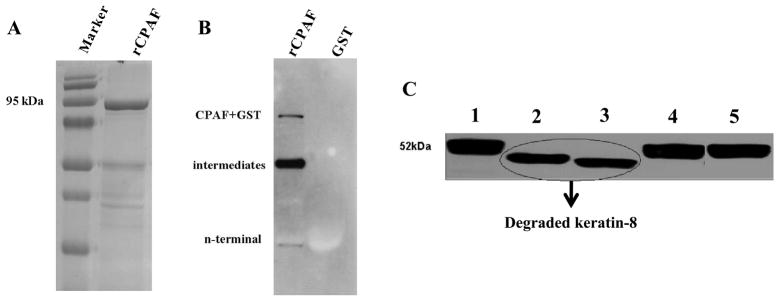
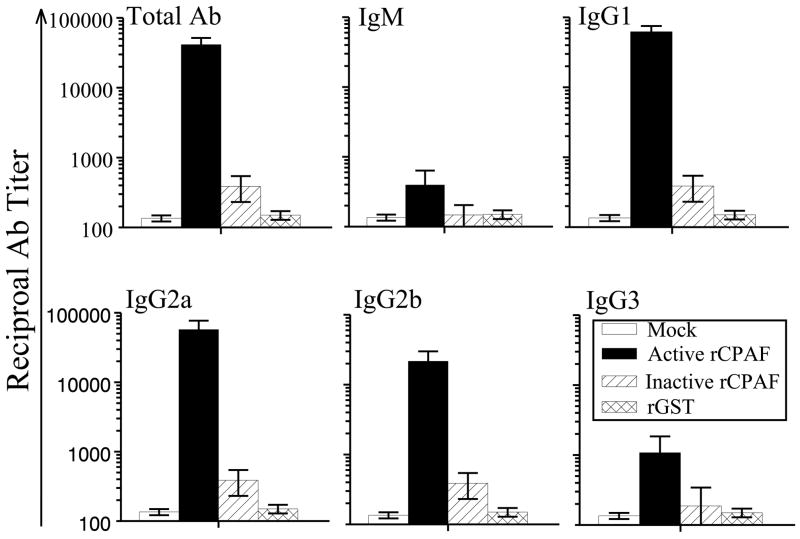
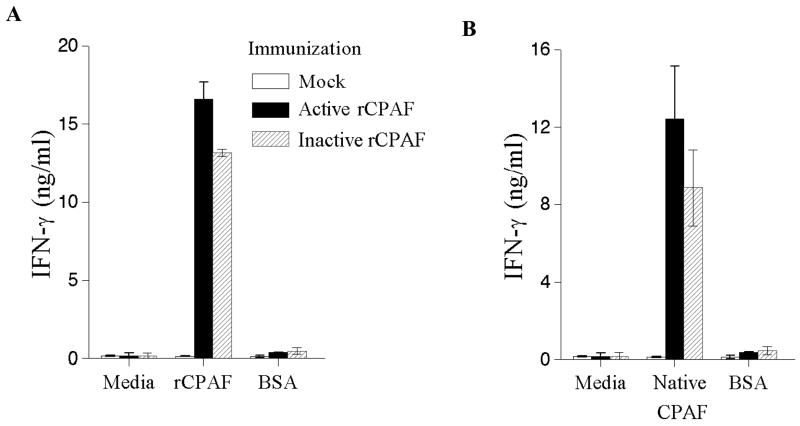
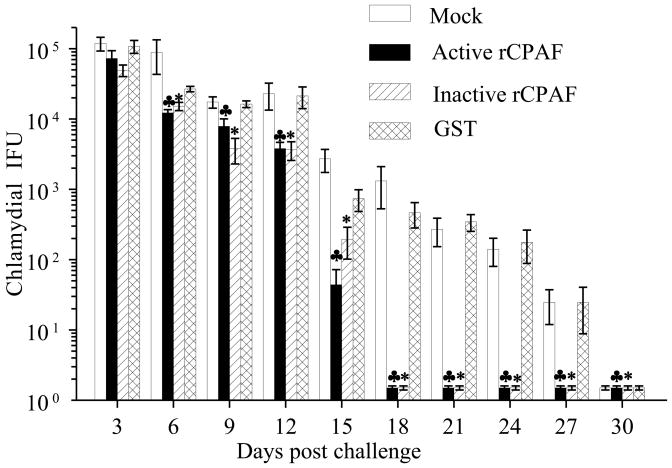
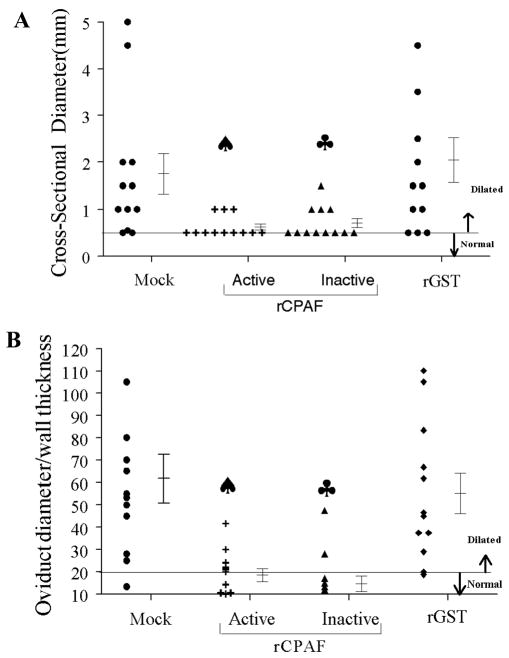
We have shown previously that vaccination with recombinant chlamydial protease-like activity factor (rCPAF) plus interleukin-12 as an adjuvant induces robust protective immunity against primary genital Chlamydia muridarum challenge in mice. Since CPAF is a protease, we compared the effects of enzymatically active and inactive (heat denatured) rCPAF to determine whether proteolytic activity is expendable for the induction of protective immunity against chlamydial challenge. Active, but not inactive, rCPAF immunization induced high levels of anti-active CPAF antibody, whereas both induced robust splenic CPAF-specific IFN-gamma production. Vaccination with active or inactive rCPAF induced enhanced vaginal chlamydial clearance as early as day 6 with complete resolution of infection by day 18, compared to day 30 in mock-vaccinated and challenged animals. Importantly, significant and comparable reductions in oviduct pathology were observed in active and inactive rCPAF-vaccinated mice compared to mock-vaccinated animals. Thus, rCPAF induced anti-chlamydial immunity is largely independent of enzymatic activity and secondary or higher order protein conformation.
Copyright 2009 Elsevier Ltd. All rights reserved.
Figures
References
-
- Brunham RC, Rey-Ladino J. Immunology of Chlamydia infection: implications for a Chlamydia trachomatis vaccine. Nat Rev Immunol. 2005 Feb;5(2):149–161. - PubMed
-
- World Health Organization. Global Prevalence and Incidence of Selected Curable Sexually Transmitted Infections: Overview and Estimates. 2001:11–15.
-
- Kelly KA. Cellular immunity and Chlamydia genital infection: induction, recruitment, and effector mechanisms. Int Rev Immunol. 2003 Jan;22(1):3–41. - PubMed
-
- Rekart ML, Brunham RC. Epidemiology of chlamydial infection: are we losing ground? Sex Transm Infect. 2008 Apr;84(2):87–91. - PubMed
Publication types
MeSH terms
Substances
Grants and funding
LinkOut - more resources
Full Text Sources
Other Literature Sources
Medical
