Occupational exposure to formaldehyde, hematotoxicity, and leukemia-specific chromosome changes in cultured myeloid progenitor cells
- PMID: 20056626
- PMCID: PMC2974570
- DOI: 10.1158/1055-9965.EPI-09-0762
Occupational exposure to formaldehyde, hematotoxicity, and leukemia-specific chromosome changes in cultured myeloid progenitor cells
Abstract
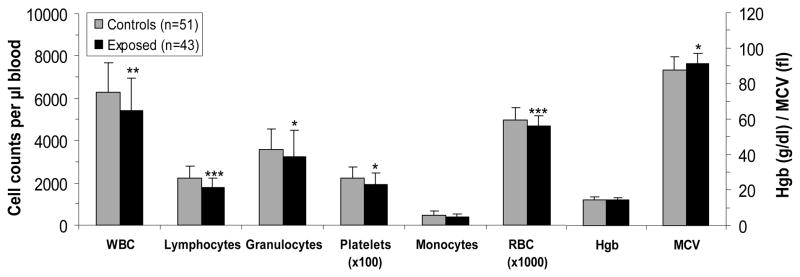
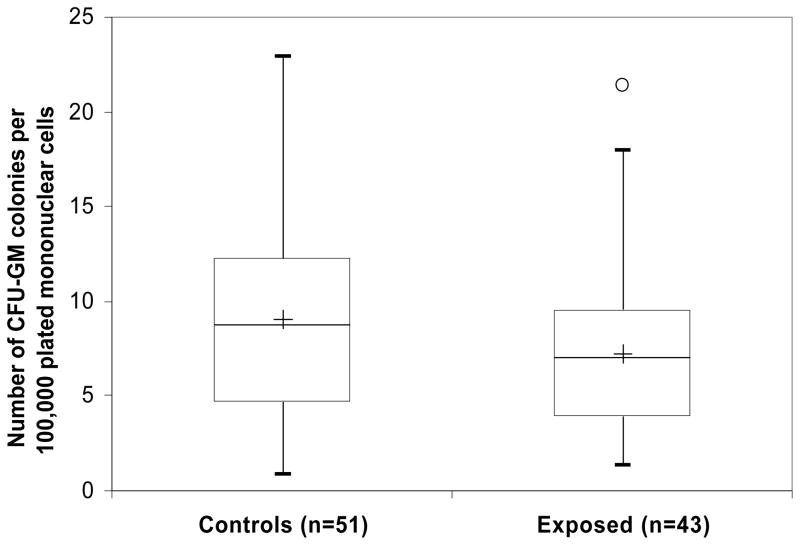
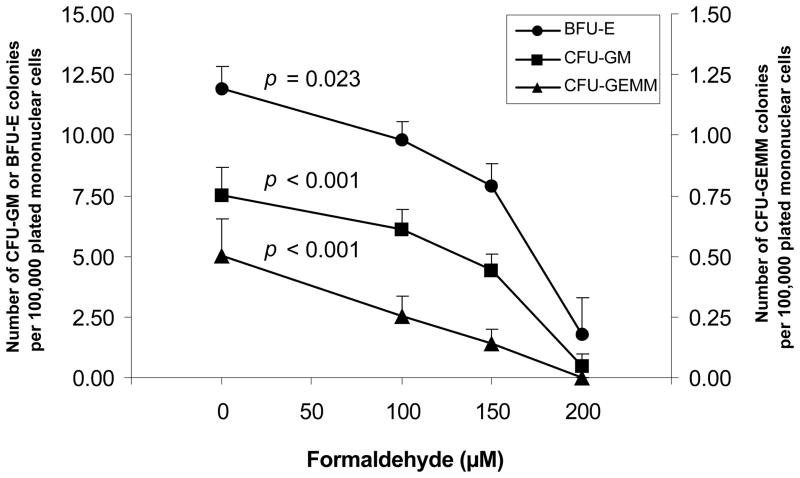
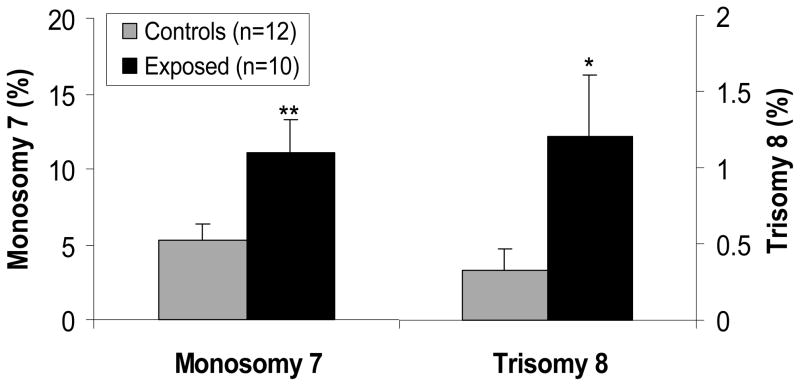
There are concerns about the health effects of formaldehyde exposure, including carcinogenicity, in light of elevated indoor air levels in new homes and occupational exposures experienced by workers in health care, embalming, manufacturing, and other industries. Epidemiologic studies suggest that formaldehyde exposure is associated with an increased risk of leukemia. However, the biological plausibility of these findings has been questioned because limited information is available on the ability of formaldehyde to disrupt hematopoietic function. Our objective was to determine if formaldehyde exposure disrupts hematopoietic function and produces leukemia-related chromosome changes in exposed humans. We examined the ability of formaldehyde to disrupt hematopoiesis in a study of 94 workers in China (43 exposed to formaldehyde and 51 frequency-matched controls) by measuring complete blood counts and peripheral stem/progenitor cell colony formation. Further, myeloid progenitor cells, the target for leukemogenesis, were cultured from the workers to quantify the level of leukemia-specific chromosome changes, including monosomy 7 and trisomy 8, in metaphase spreads of these cells. Among exposed workers, peripheral blood cell counts were significantly lowered in a manner consistent with toxic effects on the bone marrow and leukemia-specific chromosome changes were significantly elevated in myeloid blood progenitor cells. These findings suggest that formaldehyde exposure can have an adverse effect on the hematopoietic system and that leukemia induction by formaldehyde is biologically plausible, which heightens concerns about its leukemogenic potential from occupational and environmental exposures.
Figures
Comment in
-
Occupational exposure to formaldehyde, hematotoxicity and leukemia-specific chromosome changes in cultured myeloid progenitor cells.Cancer Epidemiol Biomarkers Prev. 2010 Jul;19(7):1882-4; author reply 1884-5. doi: 10.1158/1055-9965.EPI-10-0155. Cancer Epidemiol Biomarkers Prev. 2010. PMID: 20615893 No abstract available.
-
Formaldehyde, Hematotoxicity, and Chromosomal Changes-Letter.Cancer Epidemiol Biomarkers Prev. 2018 Jan;27(1):119. doi: 10.1158/1055-9965.EPI-17-0306. Cancer Epidemiol Biomarkers Prev. 2018. PMID: 29311166 No abstract available.
-
Formaldehyde, Hematotoxicity, and Chromosomal Changes-Response.Cancer Epidemiol Biomarkers Prev. 2018 Jan;27(1):120-121. doi: 10.1158/1055-9965.EPI-17-0804. Cancer Epidemiol Biomarkers Prev. 2018. PMID: 29311167 Free PMC article. No abstract available.
References
-
- OSHA. Occupational Safety and Health Administration: Occupational Exposure to Formaldehyde Fact Sheet. Department of Labor; 1995. p. 95.
-
- Turrio-Baldassarri L, Battistelli CL, Conti L, Crebelli R, De Berardis B, Iamiceli AL, et al. Emission comparison of urban bus engine fueled with diesel oil and 'biodiesel' blend. Sci Total Environ. 2004;327:147–62. - PubMed
-
- Formaldehyde Council Inc. Formaldehyde: A Brief History and Its Contributions to Society and the US Economy. Arlington, VA: 2005.
Publication types
MeSH terms
Substances
Grants and funding
LinkOut - more resources
Full Text Sources
Medical