. 2009 Nov-Dec;14(6):060501.
doi: 10.1117/1.3257230.

Combined optical and electrical stimulation of neural tissue in vivo

Combined optical and electrical stimulation of neural tissue in vivo

Austin R Duke et al. J Biomed Opt. 2009 Nov-Dec.

Abstract

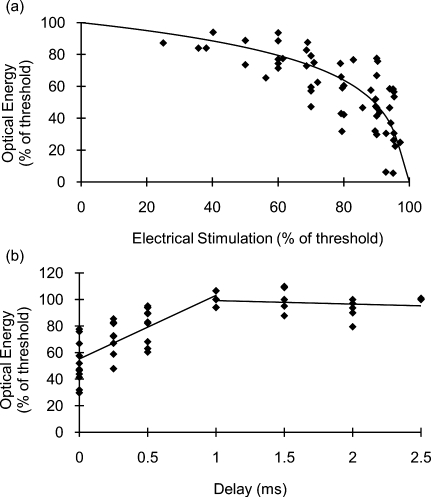
Low-intensity, pulsed infrared light provides a novel nerve stimulation modality that avoids the limitations of traditional electrical methods such as necessity of contact, presence of a stimulation artifact, and relatively poor spatial precision. Infrared neural stimulation (INS) is, however, limited by a 2:1 ratio of threshold radiant exposures for damage to that for stimulation. We have shown that this ratio is increased to nearly 6:1 by combining the infrared pulse with a subthreshold electrical stimulus. Our results indicate a nonlinear relationship between the subthreshold depolarizing electrical stimulus and additional optical energy required to reach stimulation threshold. The change in optical threshold decreases linearly as the delay between the electrical and optical pulses is increased. We have shown that the high spatial precision of INS is maintained for this combined stimulation modality. Results of this study will facilitate the development of applications for infrared neural stimulation, as well as target the efforts to uncover the mechanism by which infrared light activates neural tissue.


Figures
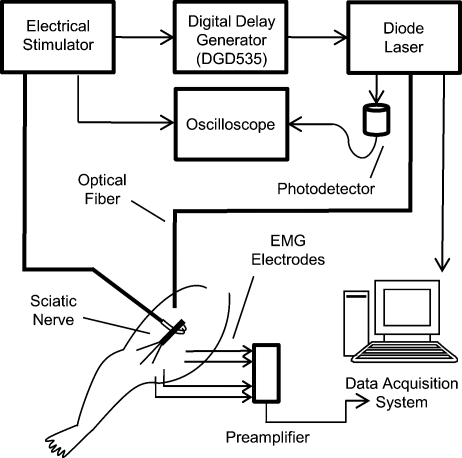
Figure 1
Figure 1
Schematic representation of the experimental setup used for all experiments in this study.
Figure 2
Figure 2
Results of combining optical stimulation with electrical stimulation. (a) Optical energy (% of threshold) required to reach stimulation threshold as a function of subthreshold electrical stimulus; and (b) optical energy (% of threshold) required to reach stimulation threshold as a function of delay between electrical (90% of threshold) and optical stimuli.
Figure 3
Figure 3
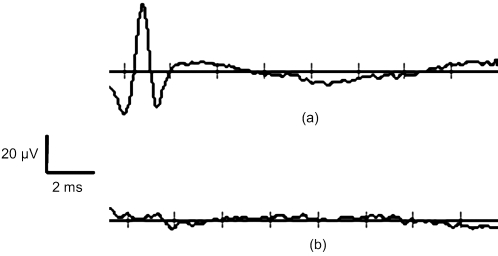
Spatial selectivity is maintained with combined optical and electrical stimulation. (a) Average of 20 consecutive recordings of CMAPs from electrodes placed in biceps femoris; and (b) the same recordings as (a) for electrodes placed in gastrocnemius.

References

    1. Fried N. M., Lagoda G. A., Scott N. J., Su L. M., and Burnett A. L., “Noncontact stimulation of the cavernous nerves in the rat prostate using a tunable-wavelength thulium fiber laser,” J. Endourol 22(3), 409–413 (2008). 10.1089/end.2008.9996 - DOI - PubMed
    1. Izzo A. D., Richter C. P., Jansen E. D., and Walsh J. T., “Laser stimulation of the auditory nerve,” Lasers Surg. Med. 38(8), 745–753 (2006). 10.1002/lsm.20358 - DOI - PubMed
    1. Wells J., Kao C., Jansen E. D., Konrad P., and Mahadevan-Jansen A., “Application of infrared light for in vivo neural stimulation,” J. Biomed. Opt. 10(6), 064003 (2005). 10.1117/1.2121772 - DOI - PubMed
    1. Wells J., Konrad P., Kao C., Jansen E. D., and Mahadevan-Jansen A., “Pulsed laser versus electrical energy for peripheral nerve stimulation,” J. Neurosci. Methods 163(2), 326–337 (2007). 10.1016/j.jneumeth.2007.03.016 - DOI - PMC - PubMed
    1. Wells J., Kao C., Mariappan K., Albea J., Jansen E. D., Konrad P., and Mahadevan-Jansen A., “Optical stimulation of neural tissue in vivo,” Opt. Lett. 30(5), 504–506 (2005). 10.1364/OL.30.000504 - DOI - PubMed

Publication types