


Yoga lifestyle intervention reduces blood pressure in HIV-infected adults with cardiovascular disease risk factors
- PMID: 20059570
- PMCID: PMC2889007
- DOI: 10.1111/j.1468-1293.2009.00801.x
Yoga lifestyle intervention reduces blood pressure in HIV-infected adults with cardiovascular disease risk factors
Abstract
Objective: People living with HIV infection are at increased risk for developing cardiovascular disease (CVD). Safe and effective interventions for lowering CVD risk in HIV infection are high priorities. We conducted a prospective, randomized, controlled study to evaluate whether a yoga lifestyle intervention improves CVD risk factors, virological or immunological status, or quality of life (QOL) in HIV-infected adults relative to standard of care treatment in a matched control group.
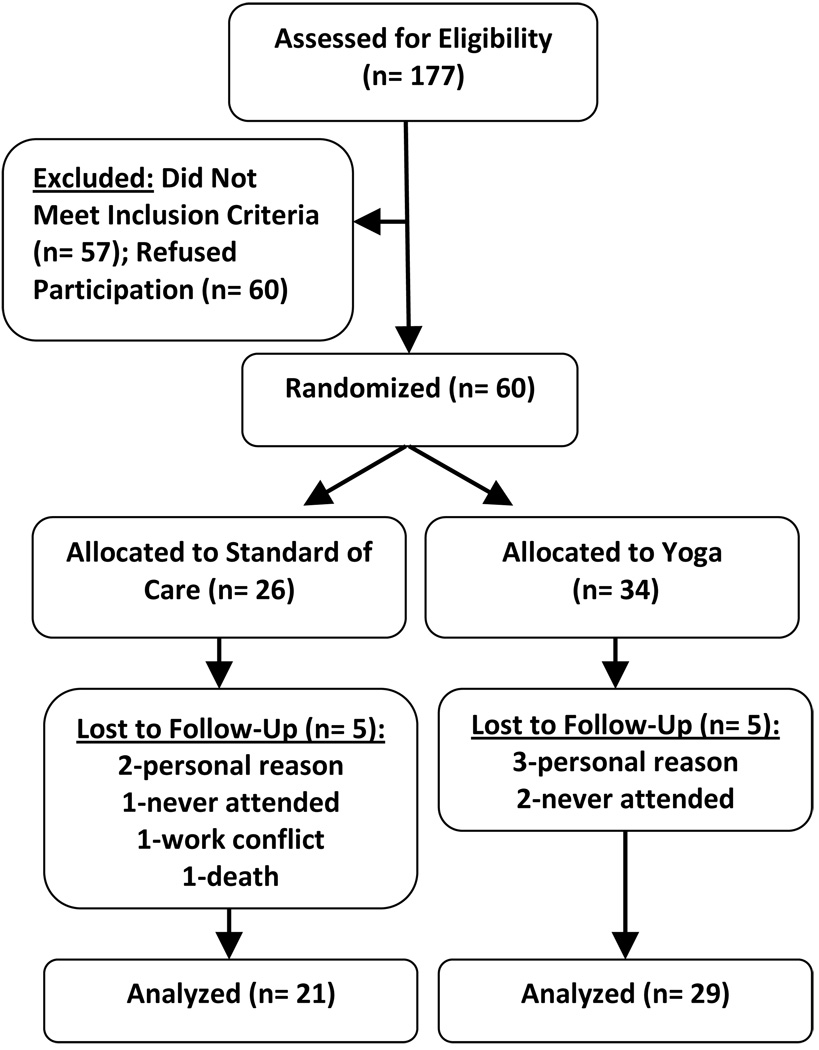
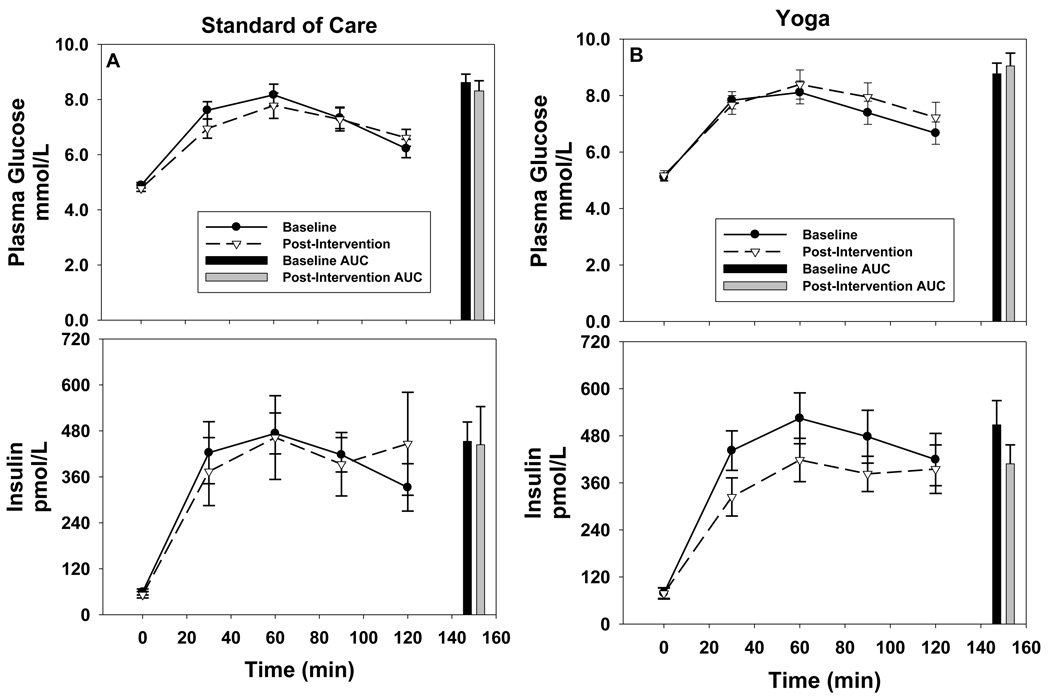
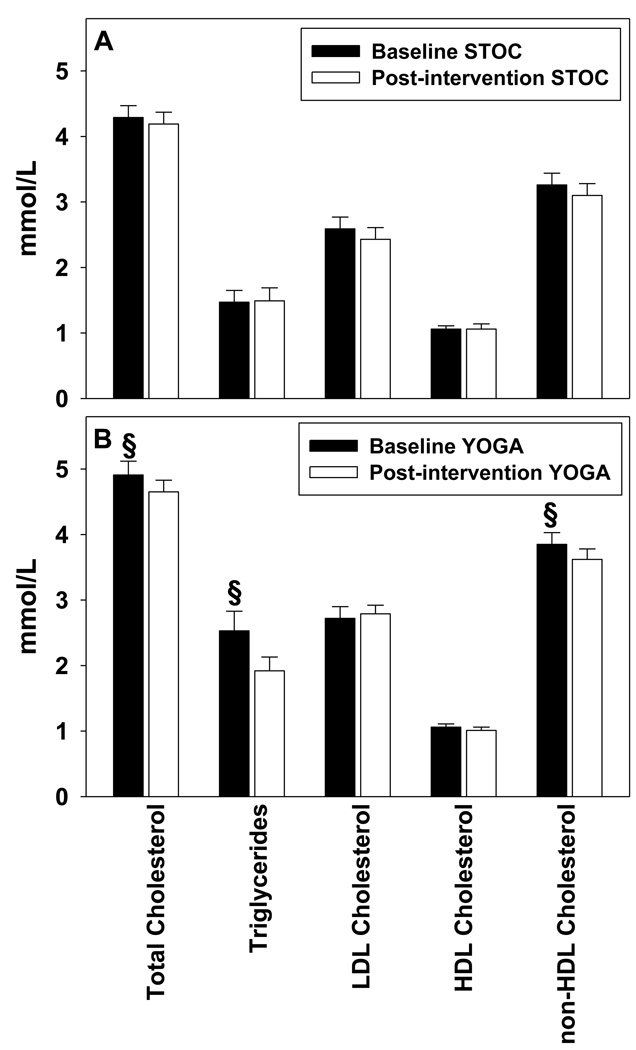
Methods: Sixty HIV-infected adults with mild-moderate CVD risk were assigned to 20 weeks of supervised yoga practice or standard of care treatment. Baseline and week 20 measures were: 2-h oral glucose tolerance test with insulin monitoring, body composition, fasting serum lipid/lipoprotein profile, resting blood pressures, CD4 T-cell count and plasma HIV RNA, and the Medical Outcomes Study Short Form (SF)-36 health-related QOL inventory.
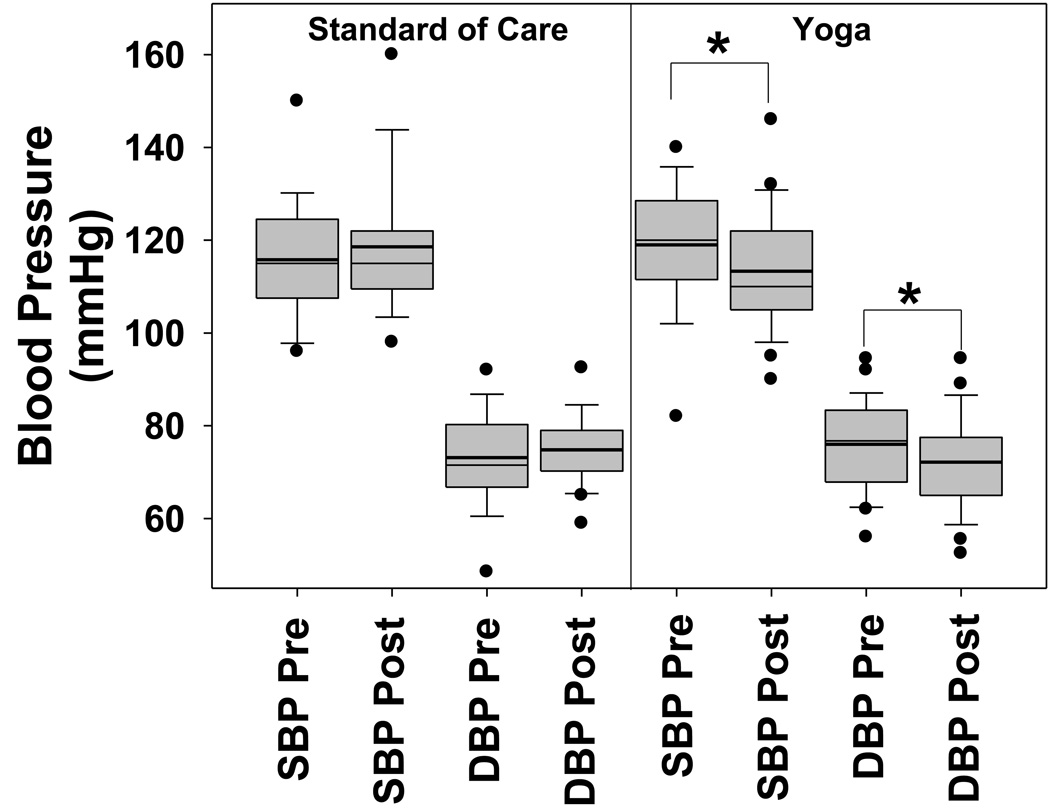
Results: Resting systolic and diastolic blood pressures improved more (P=0.04) in the yoga group (-5 +/- 2 and -3 +/- 1 mmHg, respectively) than in the standard of care group (+1 +/- 2 and+2 +/- 2 mmHg, respectively). However, there was no greater reduction in body weight, fat mass or proatherogenic lipids, or improvements in glucose tolerance or overall QOL after yoga. Immune and virological status was not adversely affected.
Conclusion: Among traditional lifestyle modifications, yoga is a low-cost, simple to administer, nonpharmacological, popular behavioural intervention that can lower blood pressure in pre-hypertensive HIV-infected adults with mild-moderate CVD risk factors.
Figures
References
-
- Grinspoon S, Carr A. Cardiovascular risk and body fat abnormalities in HIV-infected adults. N Engl J Med. 2005;352:48–62. - PubMed
-
- de Visser R, Ezzy D, Bartos M. Alternative or Complementary? Nonallopathic Therapies for HIV/AIDS. Altern Ther Health Med. 2000;6:44–52. - PubMed
-
- Duggan J, Peterson WS, Schutz M, Khuder S, Charkraborty J. Use of Complementary and Alternative Therapies in HIV-Infected Patients. AIDS Patient Care STDS. 2001;15:159–167. - PubMed
-
- Knippels HM, Weiss JJ. Use of alternative medicine in a sample of HIV-positive gay men: an exploratory study of prevalence and user characteristics. AIDS Care. 2000;12:435–446. - PubMed
Publication types
MeSH terms
Substances
Grants and funding
- DK056341/DK/NIDDK NIH HHS/United States
- DK074343/DK/NIDDK NIH HHS/United States
- K23 AI065336/AI/NIAID NIH HHS/United States
- R01 DK059531/DK/NIDDK NIH HHS/United States
- P30 DK056341/DK/NIDDK NIH HHS/United States
- UL1 RR024992/RR/NCRR NIH HHS/United States
- AI069495/AI/NIAID NIH HHS/United States
- AT003083/AT/NCCIH NIH HHS/United States
- P60 DK020579/DK/NIDDK NIH HHS/United States
- DK020579/DK/NIDDK NIH HHS/United States
- RR019508/RR/NCRR NIH HHS/United States
- UM1 AI069495/AI/NIAID NIH HHS/United States
- AI065336/AI/NIAID NIH HHS/United States
- M01 RR000036/RR/NCRR NIH HHS/United States
- R01 DK049393/DK/NIDDK NIH HHS/United States
- R21 DK074345/DK/NIDDK NIH HHS/United States
- DK049393/DK/NIDDK NIH HHS/United States
- K23 RR019508/RR/NCRR NIH HHS/United States
- K01 DK074343/DK/NIDDK NIH HHS/United States
- U01 AI069495/AI/NIAID NIH HHS/United States
- DK059531/DK/NIDDK NIH HHS/United States
- UL1 TR000448/TR/NCATS NIH HHS/United States
- R56 DK049393/DK/NIDDK NIH HHS/United States
- P30 DK020579/DK/NIDDK NIH HHS/United States
- R21 AT003083/AT/NCCIH NIH HHS/United States
- RR024992/RR/NCRR NIH HHS/United States
LinkOut - more resources
Full Text Sources
Medical
Research Materials
