. 2010 Feb 12;86(2):113-25.
doi: 10.1016/j.ajhg.2009.12.006. Epub 2010 Jan 7.

Functional gene group analysis reveals a role of synaptic heterotrimeric G proteins in cognitive ability

Affiliations

Functional gene group analysis reveals a role of synaptic heterotrimeric G proteins in cognitive ability

Dina Ruano et al. Am J Hum Genet. .

Abstract

Although cognitive ability is a highly heritable complex trait, only a few genes have been identified, explaining relatively low proportions of the observed trait variation. This implies that hundreds of genes of small effect may be of importance for cognitive ability. We applied an innovative method in which we tested for the effect of groups of genes defined according to cellular function (functional gene group analysis). Using an initial sample of 627 subjects, this functional gene group analysis detected that synaptic heterotrimeric guanine nucleotide binding proteins (G proteins) play an important role in cognitive ability (P(EMP) = 1.9 x 10(-4)). The association with heterotrimeric G proteins was validated in an independent population sample of 1507 subjects. Heterotrimeric G proteins are central relay factors between the activation of plasma membrane receptors by extracellular ligands and the cellular responses that these induce, and they can be considered a point of convergence, or a "signaling bottleneck." Although alterations in synaptic signaling processes may not be the exclusive explanation for the association of heterotrimeric G proteins with cognitive ability, such alterations may prominently affect the properties of neuronal networks in the brain in such a manner that impaired cognitive ability and lower intelligence are observed. The reported association of synaptic heterotrimeric G proteins with cognitive ability clearly points to a new direction in the study of the genetic basis of cognitive ability.


Figures

Figure 1
Figure 1
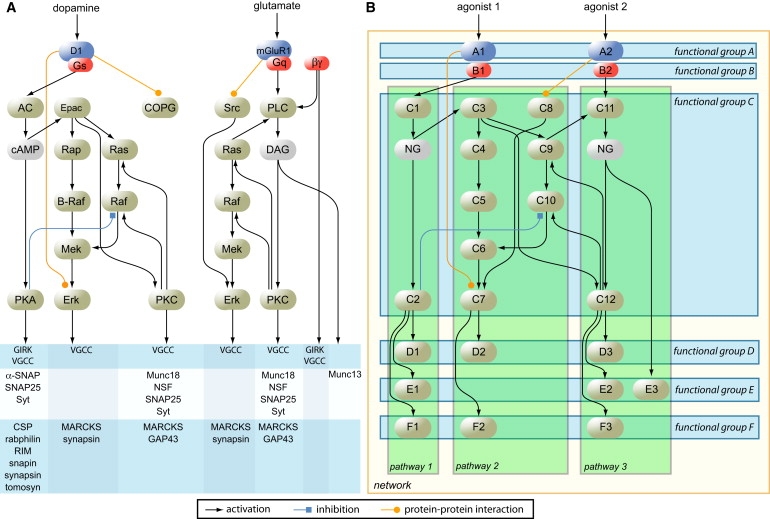
Schematic Representation of Vertical Pathways versus Horizontal Functional Groups (A) Genes that are involved in two different biological pathways (actual dopamine and glutamate pathways) are illustrated. It can be clearly seen that genes are not exclusively active in one pathway, but tend to be part of more than one pathway. (B) Genes are grouped according to similar cellular function, and naturally each gene is exclusively assigned to one functional group.
Figure 2
Figure 2
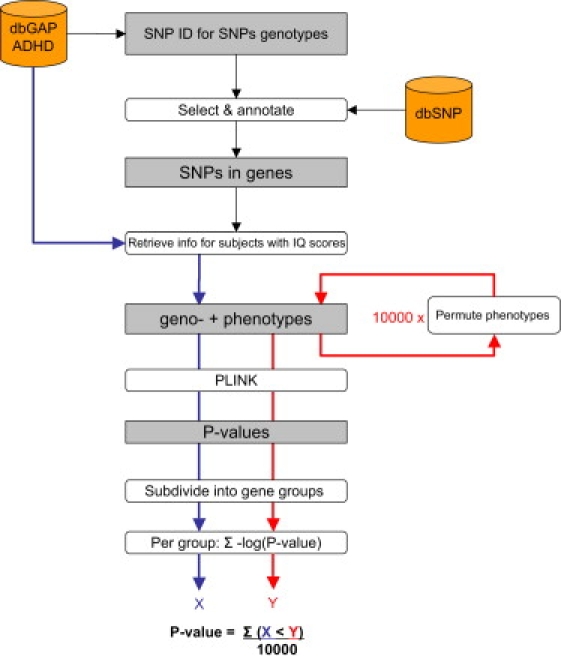
Data-Processing Steps From the dbGAP database, IDs were retrieved for SNPs genotyped in the GAIN-IMAGE study that included IQ phenotypes. From the dbSNP database, those SNPs that occur within and in the vicinity of genes were selected and annotated with the corresponding gene IDs. IQ scores were retrieved from the dbGAP database, as well as genotypes for the selected SNPs. p values were calculated for each SNP with PLINK. The SNPs and their p values were subdivided into functional groups. Per group, the negative log of all p values was summed to obtain value X. The last three steps were repeated after permutation of the IQ scores between subjects, giving a value Y for each permutation and each group. Per group, the number of times that Y was bigger than X was divided by the number of permutations to obtain the group's p value. Grey boxes represent data. Rounded boxes represent data-processing steps. Cylinders represent databases.
Figure 3
Figure 3
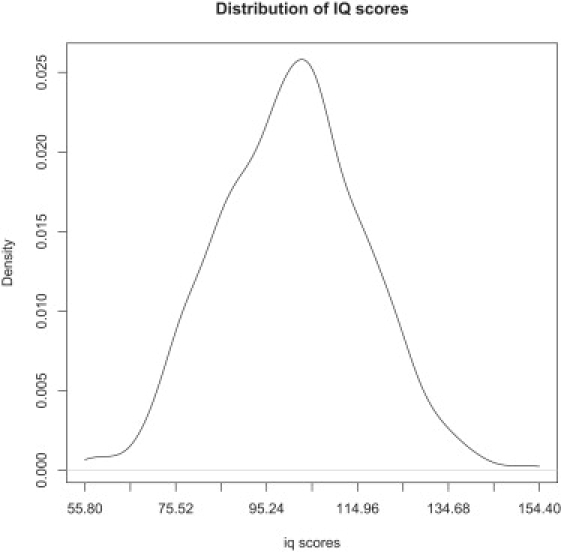
Distribution of the IQ Scores in the 627 Individuals Analyzed in the GAIN-IMAGE Sample
Figure 4
Figure 4
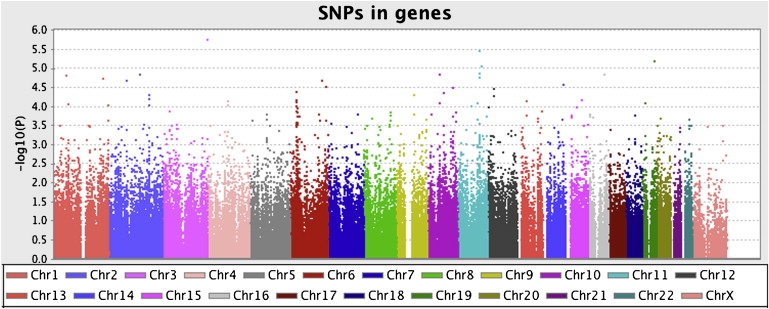
Manhattan Plot Showing Results of SNP-by-SNP Association with Cognitive Ability of the 179,725 SNPs Expressed in Genes Of these SNPs, 10,237 (5.7%) had p values below 0.05. At lower thresholds, the numbers of p values are as follows: 2230 lower than 1 × 10⁻², 272 lower than 1 × 10⁻³, 38 lower than 1 × 10⁻⁴, 4 lower than 1 × 10⁻⁵, and the lowest p value was 1.8 × 10⁻⁶.
Figure 5
Figure 5
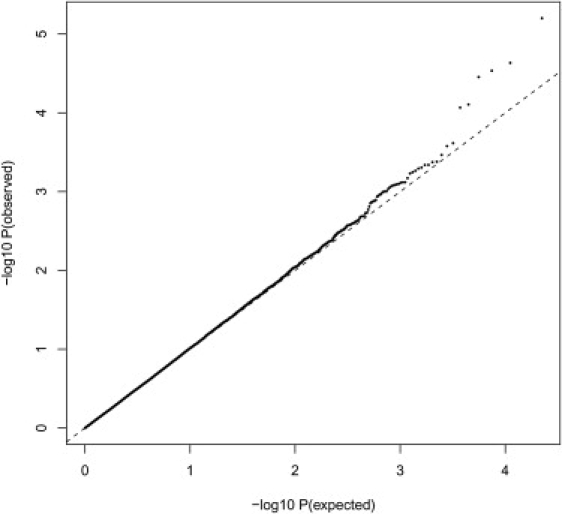
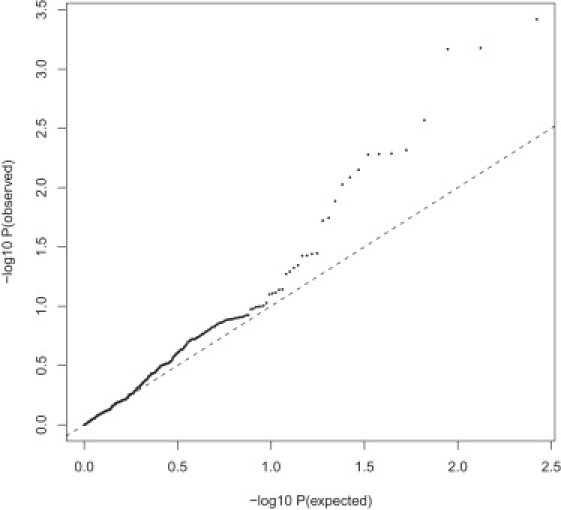
Results of Association Analysis of All Synaptic Genes with Cognitive Ability Distribution of expected (under the null hypothesis) versus observed p values for SNPs in genes expressed in synapses. The dashed diagonal line represents the line obtained if the observed distribution did not deviate from the expected distribution. All p values are corrected for λ.
Figure 6
Figure 6
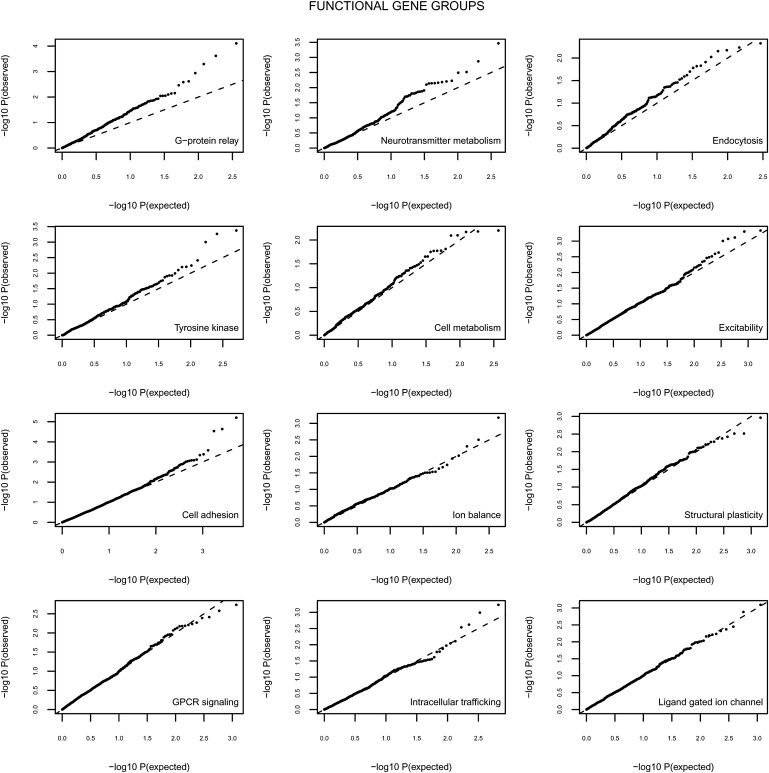
Results of Association Analysis Corrected for λ of the Twelve Most Significant Functional Gene Groups
Figure 7
Figure 7
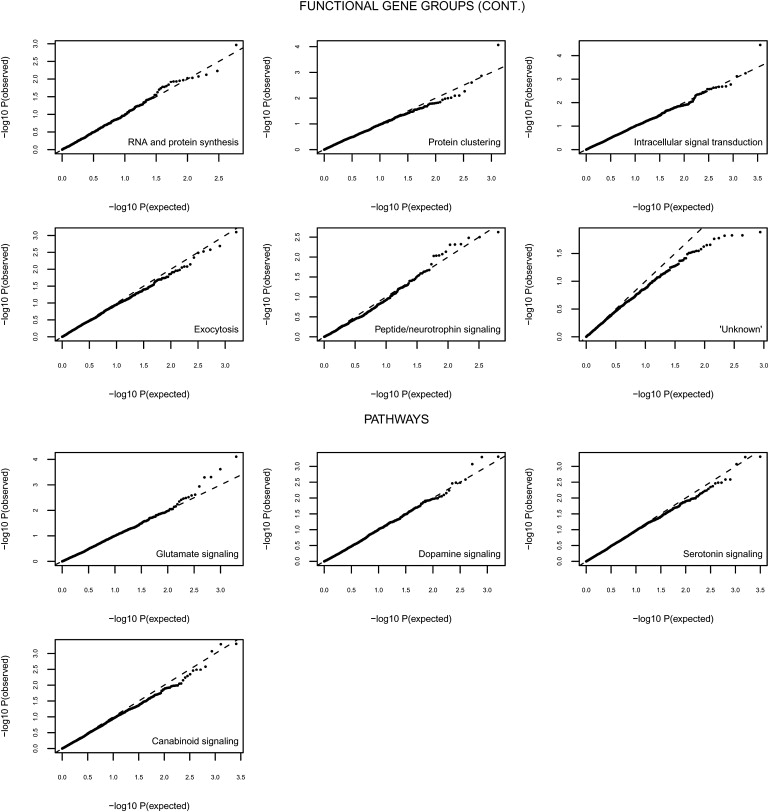
Results of Association Analysis Corrected for λ of the Remaining Functional Gene Groups and All Tested Biological Pathways
Figure 8
Figure 8
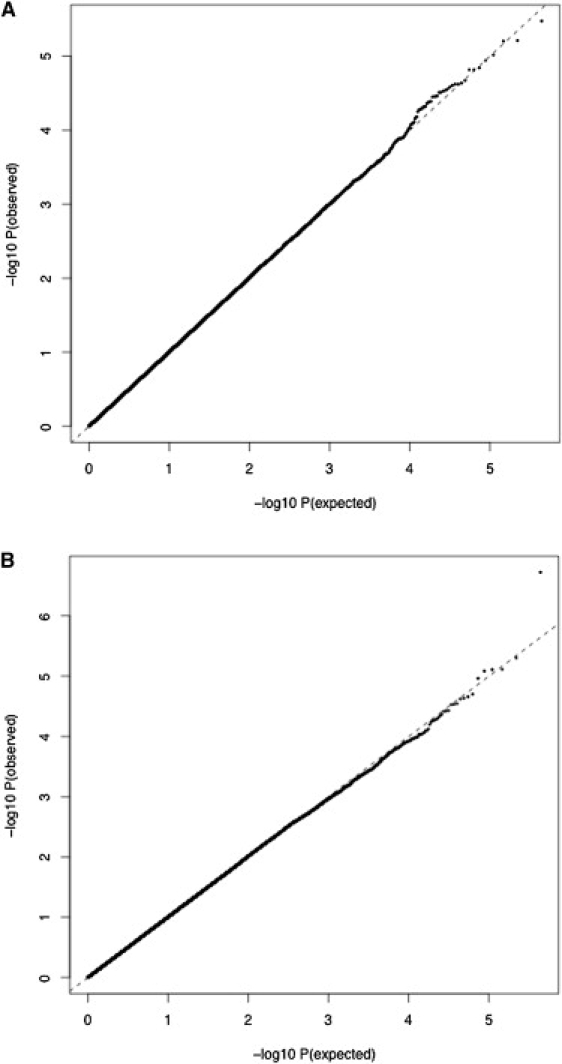
Distribution of Association Results for All SNPs that Survived QC Distribution of expected (under the null hypothesis) versus observed p values for all SNPs on the Perlegen platform that survived QC in the initial sample. The dashed diagonal represents the line obtained if the observed distribution did not deviate from the expected distribution. (A) Results of association with standardized IQ scores according to the IQ test manuals (all p values have been corrected for λ). (B) Standardized IQ scores additionally corrected for differences across collection sites.
Figure 9
Figure 9
Q-Q Plot of All SNPs in the Heterotrimeric G Protein Relay Group in the Validation Sample

References

    1. Bouchard T.J., Jr., McGue M. Familial studies of intelligence: a review. Science. 1981;212:1055–1059. - PubMed
    1. Posthuma D., Baaré W.F., Hulshoff Pol H.E., Kahn R.S., Boomsma D.I., De Geus E.J. Genetic correlations between brain volumes and the WAIS-III dimensions of verbal comprehension, working memory, perceptual organization, and processing speed. Twin Res. 2003;6:131–139. - PubMed
    1. Posthuma D., de Geus E.J., Boomsma D.I. Perceptual speed and IQ are associated through common genetic factors. Behav. Genet. 2001;31:593–602. - PubMed
    1. Plomin R., Kovas Y. Generalist genes and learning disabilities. Psychol. Bull. 2005;131:592–617. - PubMed
    1. Deary I.J., Johnson W., Houlihan L.M. Genetic foundations of human intelligence. Hum. Genet. 2009;126:215–232. - PubMed

Publication types

MeSH terms

Substances

LinkOut - more resources