


Hunger and thirst: issues in measurement and prediction of eating and drinking
- PMID: 20060847
- PMCID: PMC2849909
- DOI: 10.1016/j.physbeh.2009.12.026
Hunger and thirst: issues in measurement and prediction of eating and drinking
Abstract
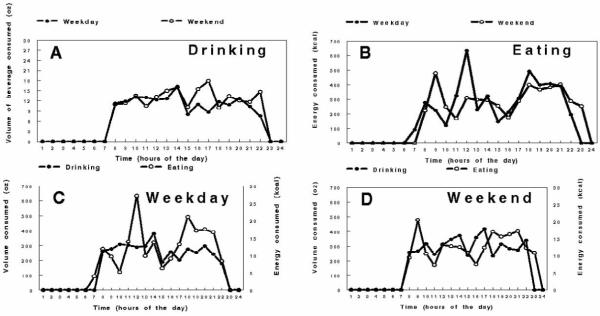
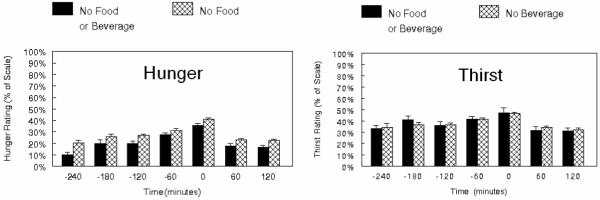
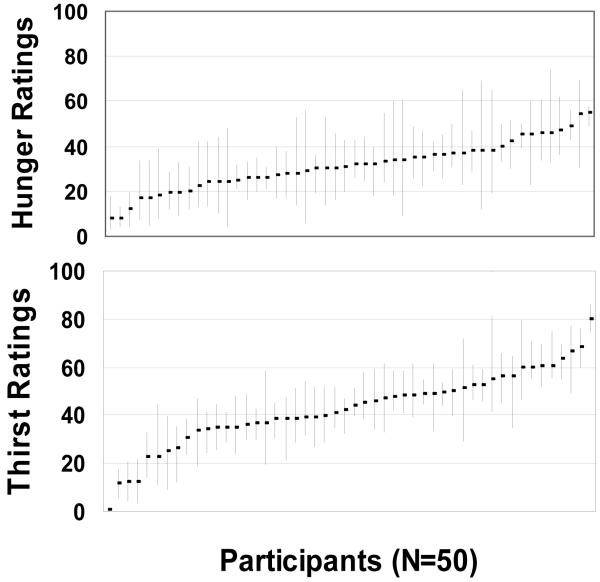
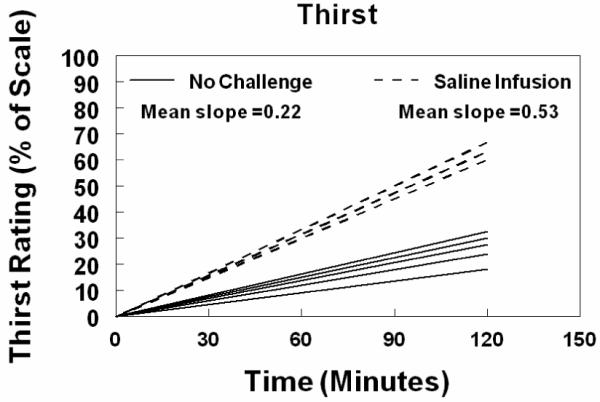
Associations between hunger and eating and between thirst and drinking are generally weak. This stems, in part, from limitations in the measurement of these sensations which generally rely on temporal, motivational, metabolic and/or self-reported descriptive indices. Each is critically reviewed. Also problematic is the fact that the deterministic depletion-repletion concept of ingestive behavior fails to account for influences of a multitude of contravening cognitive, social, sensory and logistical factors. Although hunger and thirst serve some parallel purposes, sharp distinctions are also present with health implications. Of particular note are the observations that thirst ratings are higher and more stable over the day compared to hunger and thirst may be more motivating to drink than hunger is to eat. Coupling these observations with evidence that beverages have limited satiety value, they pose particular challenges and opportunities. Beverages can facilitate the delivery of nutrients to those desiring or requiring them, but also to those where they are not desired or required. The benefits and risks are a function of their use rather than their inherent properties.
Copyright 2010 Elsevier Inc. All rights reserved.
Figures


References
-
- Meier JJ, Nauck MA, Pott A, et al. Glucagon-like peptide 2 stimulates glucagon secretion, enhances lipid absorption, and inhibits gastric acid secretion in humans. Gastroenterology. 2006;130:44–54. - PubMed
-
- Popkin BM, Nielsen SJ. The sweetening of the world’s diet. Obes Res. 2003;11:1325–32. - PubMed
-
- Shirreffs SM, Merson SJ, Fraser SM, Archer DT. The effects of fluid restriction on hydration status and subjective feelings in man. Br J Nutr. 2004;91:951–8. - PubMed
-
- Yeomans MR, Hails NJ, Nesic JS. Alcohol and the appetizer effect. Behav Pharmacol. 1999;10:151–61. - PubMed
Publication types
MeSH terms
Grants and funding
LinkOut - more resources
Full Text Sources
Other Literature Sources
