


Thiazolidinedione use and the longitudinal risk of fractures in patients with type 2 diabetes mellitus
- PMID: 20061432
- PMCID: PMC2840855
- DOI: 10.1210/jc.2009-1385
Thiazolidinedione use and the longitudinal risk of fractures in patients with type 2 diabetes mellitus
Abstract
Context: Thiazolidinedione (TZD) use has recently been associated with an increased risk of fractures.
Objective: The aim of this study was to determine the time-dependent relationship between TZD use and fracture risk.
Design: We conducted a retrospective cohort study in a large health system in southeast Michigan.
Patients: PATIENTS who received care from the health system were included if they were at least 18 yr of age, had a diagnosis of diabetes, and had at least one prescription for an oral diabetes medication. These criteria identified 19,070 individuals (9,620 women and 9,450 men).
Intervention: This study compared patients treated with TZDs to patients without TZD treatment. Cox proportional hazard models were used to assess the relationship between exposure and outcomes.
Main outcome measures: The primary outcome was the time to fracture. Secondary analyses examined the risk of fractures in subgroups defined by sex and age.
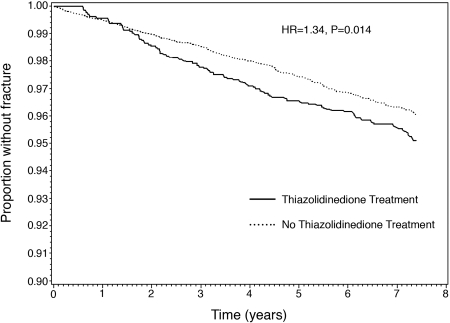
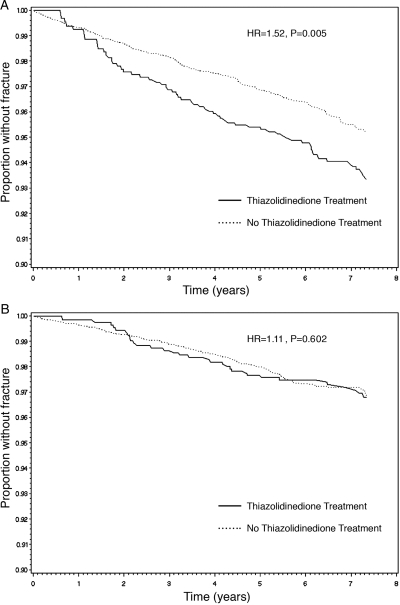
Results: TZD use was associated with an increased risk of fracture in the cohort overall [adjusted hazard ratio (aHR), 1.35; 95% confidence interval (CI), 1.05-1.71] and in women (aHR, 1.57; 95% CI, 1.16-2.14), but not in men (aHR, 1.05; 95% CI, 0.70-1.58). Women more than 65 yr of age appeared to be at greatest risk for fracture (aHR, 1.72; 95% CI, 1.17-2.52). Among women, the increased fracture risk was not apparent until after 1 yr of TZD treatment.
Conclusions: TZD use was associated with an increased risk for fractures in women, particularly at ages above 65 yr. Clinicians should be aware of this association when considering TZD therapy so as to appropriately manage and counsel their patients.
Figures
References
-
- Burge R, Dawson-Hughes B, Solomon DH, Wong JB, King A, Tosteson A 2007 Incidence and economic burden of osteoporosis-related fractures in the United States, 2005–2025. J Bone Miner Res 22:465–475 - PubMed
-
- Schubert C 2009 Bone seems susceptible to range of drugs. Nat Med 15:588 - PubMed
-
- Ensrud KE, Walczak TS, Blackwell T, Ensrud ER, Bowman PJ, Stone KL 2004 Antiepileptic drug use increases rates of bone loss in older women: a prospective study. Neurology 62:2051–2057 - PubMed
Publication types
MeSH terms
Substances
Grants and funding
LinkOut - more resources
Full Text Sources
Other Literature Sources
Medical
