


The cyclic-di-GMP phosphodiesterase BinA negatively regulates cellulose-containing biofilms in Vibrio fischeri
- PMID: 20061475
- PMCID: PMC2820850
- DOI: 10.1128/JB.01048-09
The cyclic-di-GMP phosphodiesterase BinA negatively regulates cellulose-containing biofilms in Vibrio fischeri
Abstract
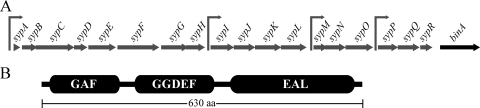
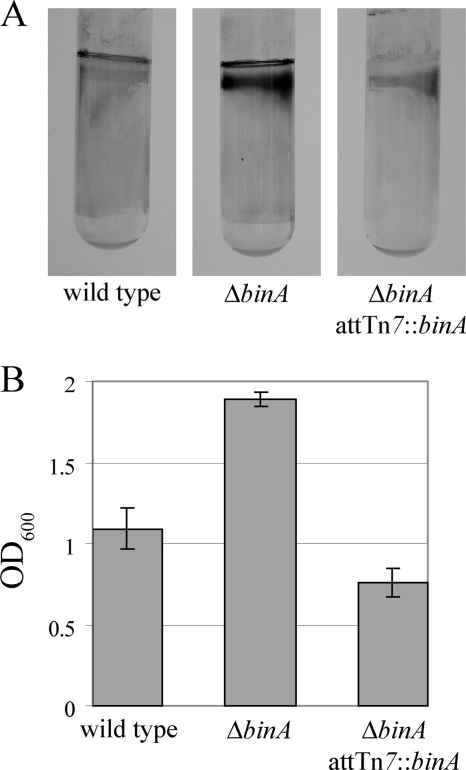
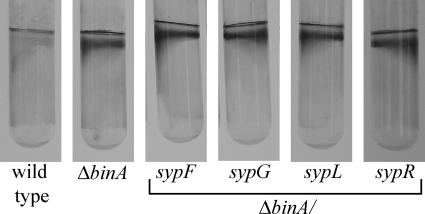
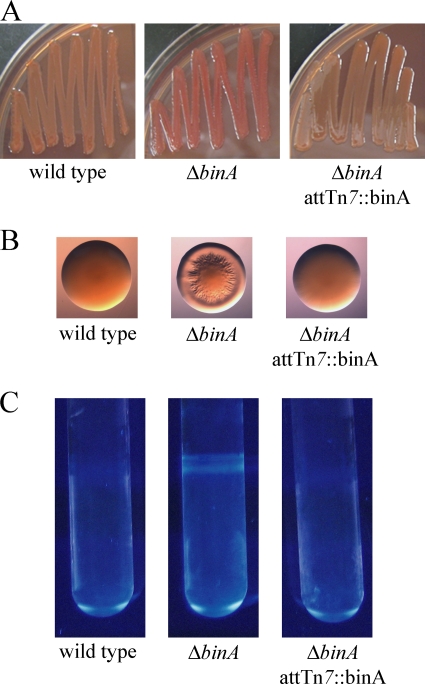
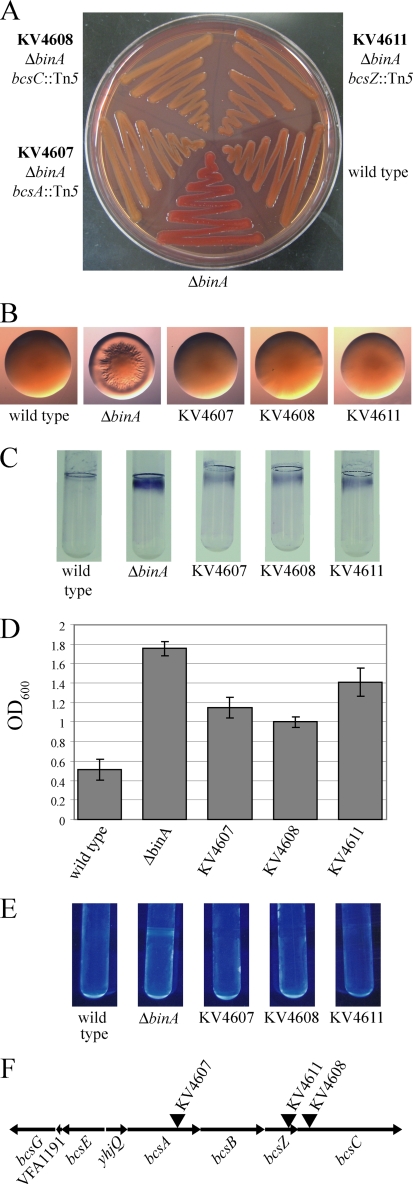
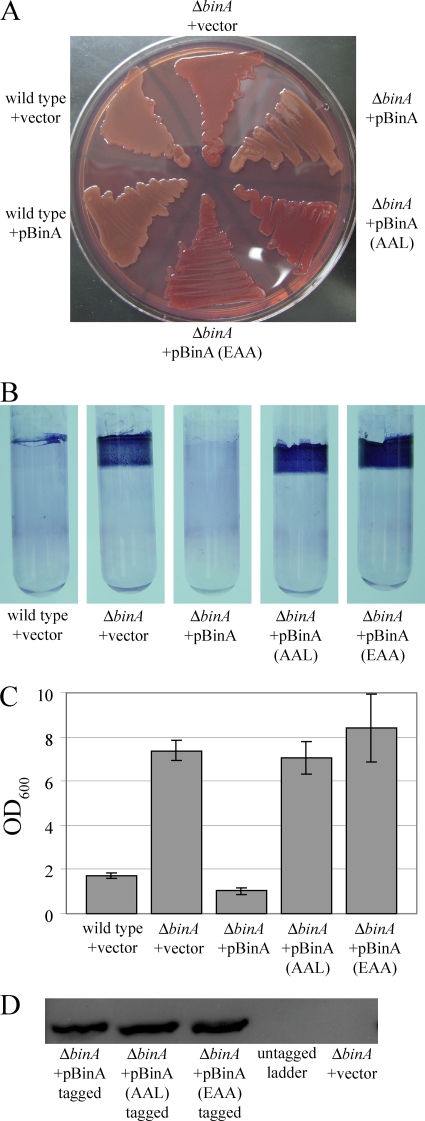
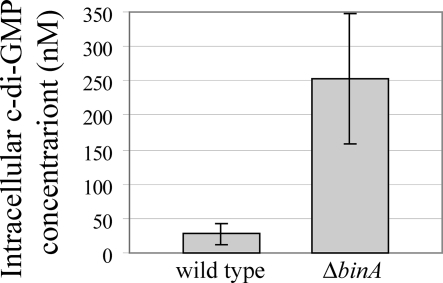
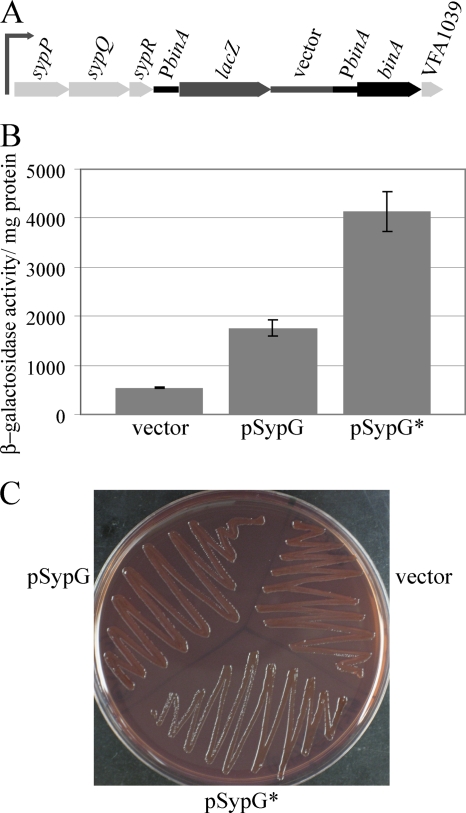
Bacteria produce different types of biofilms under distinct environmental conditions. Vibrio fischeri has the capacity to produce at least two distinct types of biofilms, one that relies on the symbiosis polysaccharide Syp and another that depends upon cellulose. A key regulator of biofilm formation in bacteria is the intracellular signaling molecule cyclic diguanylate (c-di-GMP). In this study, we focused on a predicted c-di-GMP phosphodiesterase encoded by the gene binA, located directly downstream of syp, a cluster of 18 genes critical for biofilm formation and the initiation of symbiotic colonization of the squid Euprymna scolopes. Disruption or deletion of binA increased biofilm formation in culture and led to increased binding of Congo red and calcofluor, which are indicators of cellulose production. Using random transposon mutagenesis, we determined that the phenotypes of the DeltabinA mutant strain could be disrupted by insertions in genes in the bacterial cellulose biosynthesis cluster (bcs), suggesting that cellulose production is negatively regulated by BinA. Replacement of critical amino acids within the conserved EAL residues of the EAL domain disrupted BinA activity, and deletion of binA increased c-di-GMP levels in the cell. Together, these data support the hypotheses that BinA functions as a phosphodiesterase and that c-di-GMP activates cellulose biosynthesis. Finally, overexpression of the syp regulator sypG induced binA expression. Thus, this work reveals a mechanism by which V. fischeri inhibits cellulose-dependent biofilm formation and suggests that the production of two different polysaccharides may be coordinated through the action of the cellulose inhibitor BinA.
Figures
References
-
- Amikam, D., and M. Y. Galperin. 2006. PilZ domain is part of the bacterial c-di-GMP binding protein. Bioinformatics 22:3-6. - PubMed
-
- Aravind, L., and C. P. Ponting. 1997. The GAF domain: an evolutionary link between diverse phototransducing proteins. Trends Biochem. Sci. 22:458-459. - PubMed
-
- Bao, Y., D. P. Lies, H. Fu, and G. P. Roberts. 1991. An improved Tn7-based system for the single-copy insertion of cloned genes into chromosomes of Gram-negative bacteria. Gene 109:167-168. - PubMed
-
- Bobrov, A. G., O. Kirillina, and R. D. Perry. 2005. The phosphodiesterase activity of the HmsP EAL domain is required for negative regulation of biofilm formation in Yersinia pestis. FEMS Microbiol. Lett. 247:123-130. - PubMed
Publication types
MeSH terms
Substances
Grants and funding
LinkOut - more resources
Full Text Sources
